Columbus, Ohio · Recovering wood since 2009
Every pallet we sell has already had a life.
A pallet is forty-eight inches of hardwood that most supply chains treat as packaging. We treat it as inventory. RePallet USA buys, grades, repairs, recycles and hauls used wood pallets across the Midwest — and the ones we cannot save become mulch, not landfill.
- wood diverted
- 99.4%wood diverted
- pallets a year
- 1.6Mpallets a year
- states served
- 6states served
- quote turnaround
- <24hquote turnaround
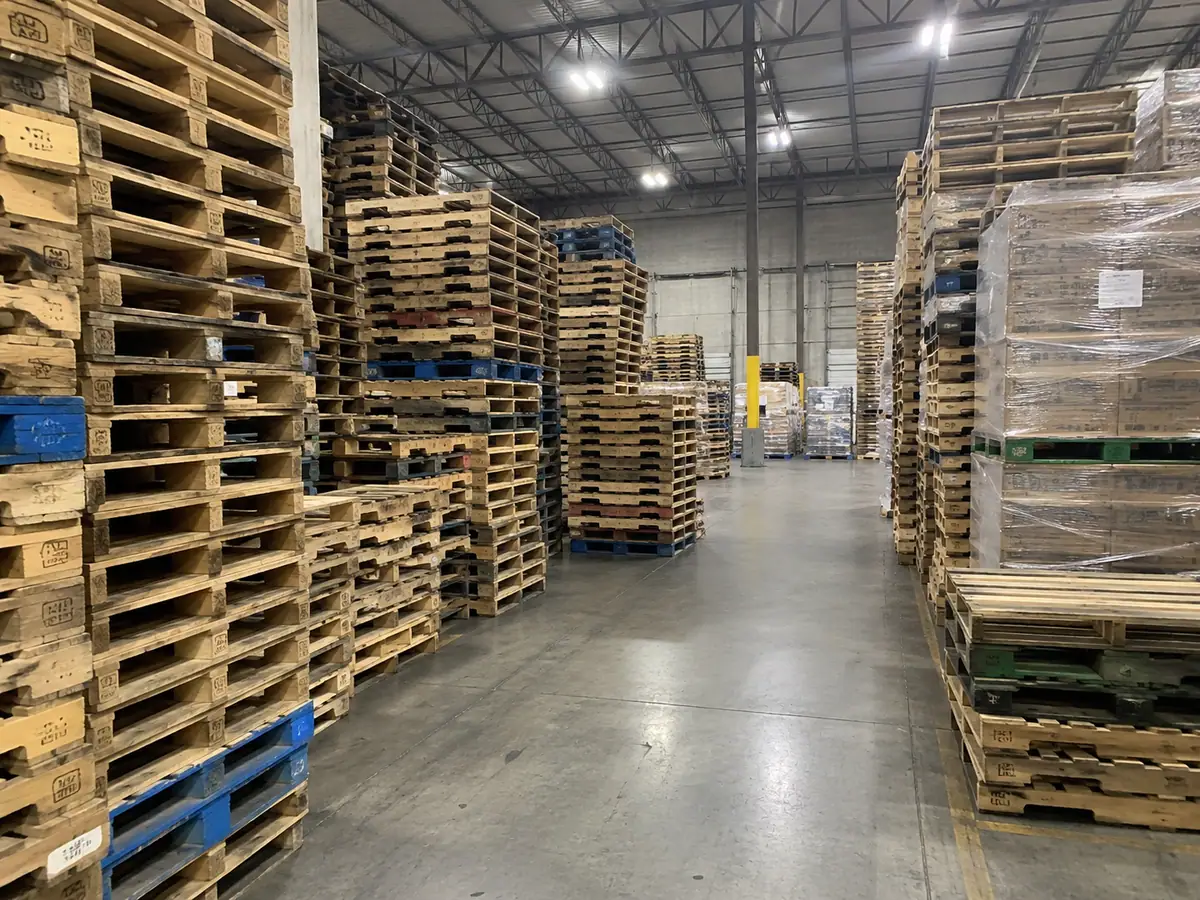
48 × 40 GMA · 7 boards · 3 stringers
Tell us what you need moved
Quantities, sizes, ZIP code. You get a written quote with the grade, the freight and the pickup window — usually the same day, always within one business day.
- Written quotes, usually inside one business day
- Loads from 100 pallets to full 53' trailers
- We buy as readily as we sell — tell us which way it flows
What we do
Eight ways wood moves through this yard.
Buy used pallets
Graded, sorted and banded stock in the sizes that actually move. Pick up in Columbus or take delivery on our trailers.
OpenService02Sell your pallets
We pay for cores by the trailer. Send a photo and a count; we send a price and a pickup window.
OpenService03Pickup & removal
Standing pickups for the docks that generate a wall of empties every week, plus one-off clean-outs.
OpenService04Pallet recycling
Every board sorted, salvaged, remilled or ground. 99.4% of the wood that enters the yard leaves as a product.
OpenService05Repair & remanufacturing
Broken deck boards out, recovered boards in. Repairs stamped, counted and returned to the standard you bought.
OpenService06Custom & new builds
When the load will not sit on anything standard, we cut to your drawing — new lumber or reclaimed.
OpenService07Freight & logistics
Our fleet runs Ohio, Indiana, Kentucky, Michigan, Pennsylvania and West Virginia on a fixed weekly pattern.
OpenService08Managed programs
One counterparty for buying, returning, repairing and reporting. One invoice, one monthly diversion statement.
OpenOur unusual habit
We publish the arithmetic, not the adjectives.
The Reclaim Index
What does your pallet habit actually weigh?
Move the numbers. We’ll show what choosing reclaimed wood over freshly milled lumber does across a year.
That’s 6,000 pallets over twelve months.
92.4
metric tons
CO₂e avoided
135.0
short tons
Kept out of landfill
554
trees
Standing timber spared
$57,000
per year
Not spent on new wood
Every coefficient behind those figures is listed, argued and dated on our carbon methodology page. Where the research disagrees, we use the conservative end.
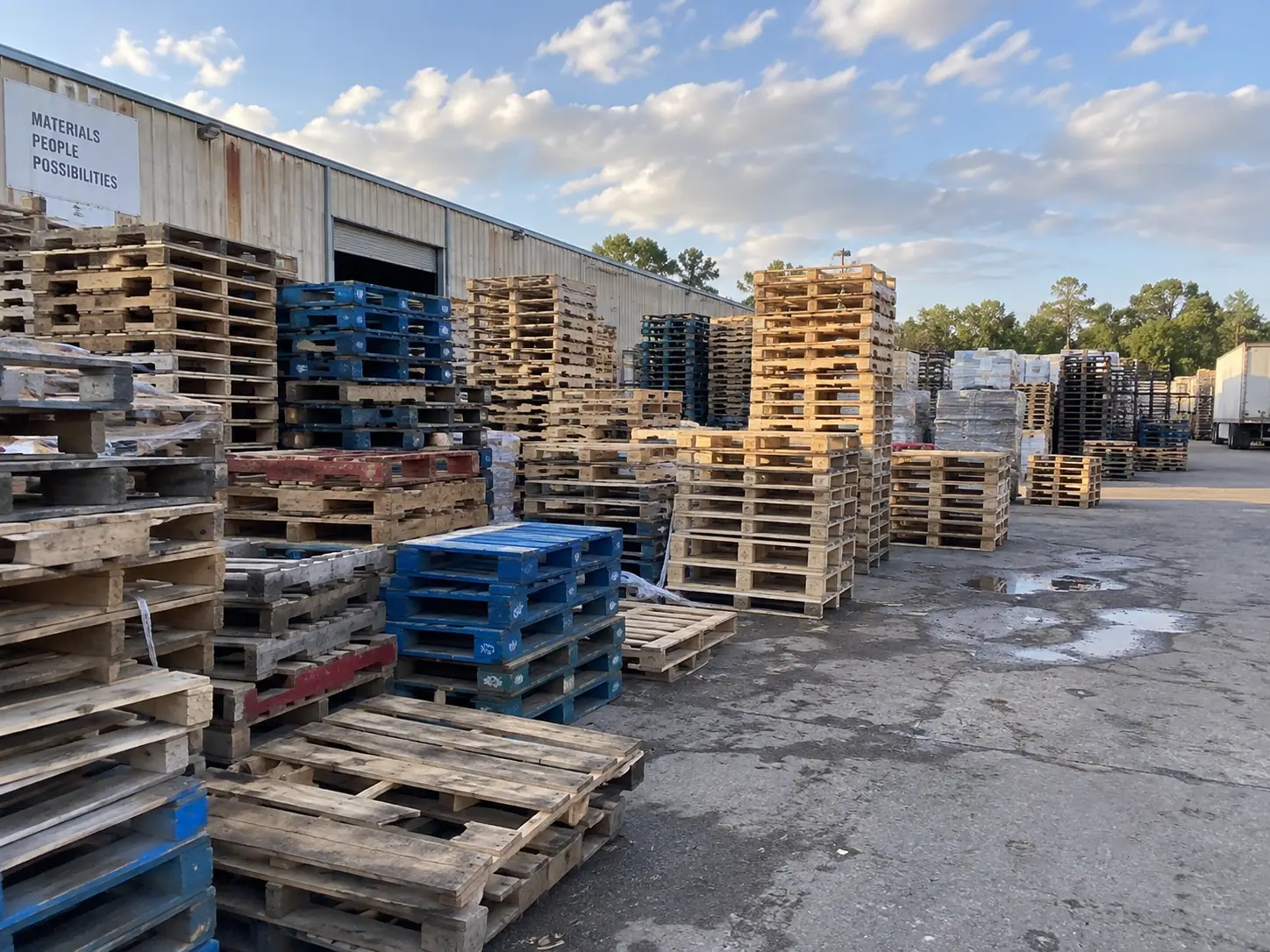
Intake
Every one of these gets a grader’s four-way decision before it goes anywhere.
Walk the nine stationsHow the loop closes
From your dock, back to your dock.
- Step 01
Collect
Our trailers run fixed routes through central Ohio and out along I-70 and I-71. You stack; we count, load and leave a signed ticket.
Standing weekly, biweekly or on-call.
- Step 02
Sort & grade
Every unit is graded by hand against a published standard — A, B, remanufacturable or core. Nothing goes into a bin marked 'mixed'.
Grades match what we publish, not what is convenient.
- Step 03
Repair or remill
Broken boards come off, recovered boards go on. Units too far gone get dismantled and their good lumber becomes the repair stock for the next one.
Recovered boards, not new lumber, wherever the spec allows.
- Step 04
Return to service
Banded, counted, loaded and delivered. What is left — nails, splinters, sawdust — becomes landscape mulch and boiler fibre.
0.6% of intake goes to landfill. We are working on that too.
Off the line
Wood, mostly. Plastic when you insist.
- Recycled wood palletsGrade A and B, every common footprintView
- New wood palletsBuilt to spec when recycled will not doView
- Heat-treated ISPM-15Stamped, documented, export readyView
- Plastic palletsReconditioned HDPE and newView
- Crates, skids & binsFor loads that will not sit flatView
- Collars & accessoriesLids, runners, top caps, corner boardsView
- Upcycled goodsFurniture, panelling, planters, stagingView
- Mulch & wood fibreThe last four per cent of every palletView
Six things that compute an answer
Tools, not a contact form in a costume.
Trailer load planner
Tries every mixed orientation and draws the arrangement that wins.
OpenInteractive02Grade selector
Five questions, one specification, and the reasoning shown.
OpenInteractive03Total cost calculator
What pallets cost beyond the invoice, unit price held constant.
OpenInteractive04ISPM-15 stamp decoder
Set the codes and watch the IPPC mark redraw, explained.
OpenInteractive05The Reclaim Index
Carbon avoided, weight diverted, lumber spared, money saved.
OpenInteractive06Pallet Passport builder
A preview of the traceability document that ships with a load.
OpenSeven photographs
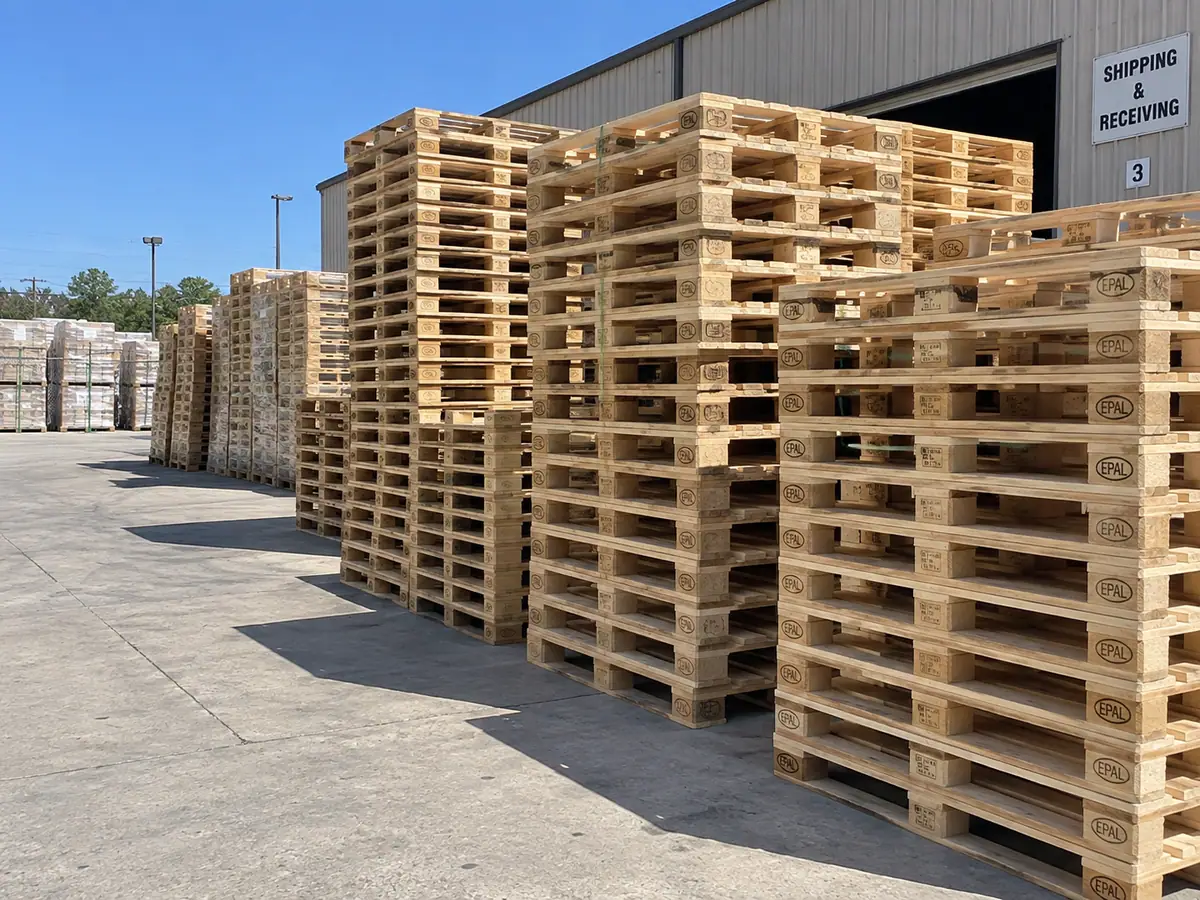
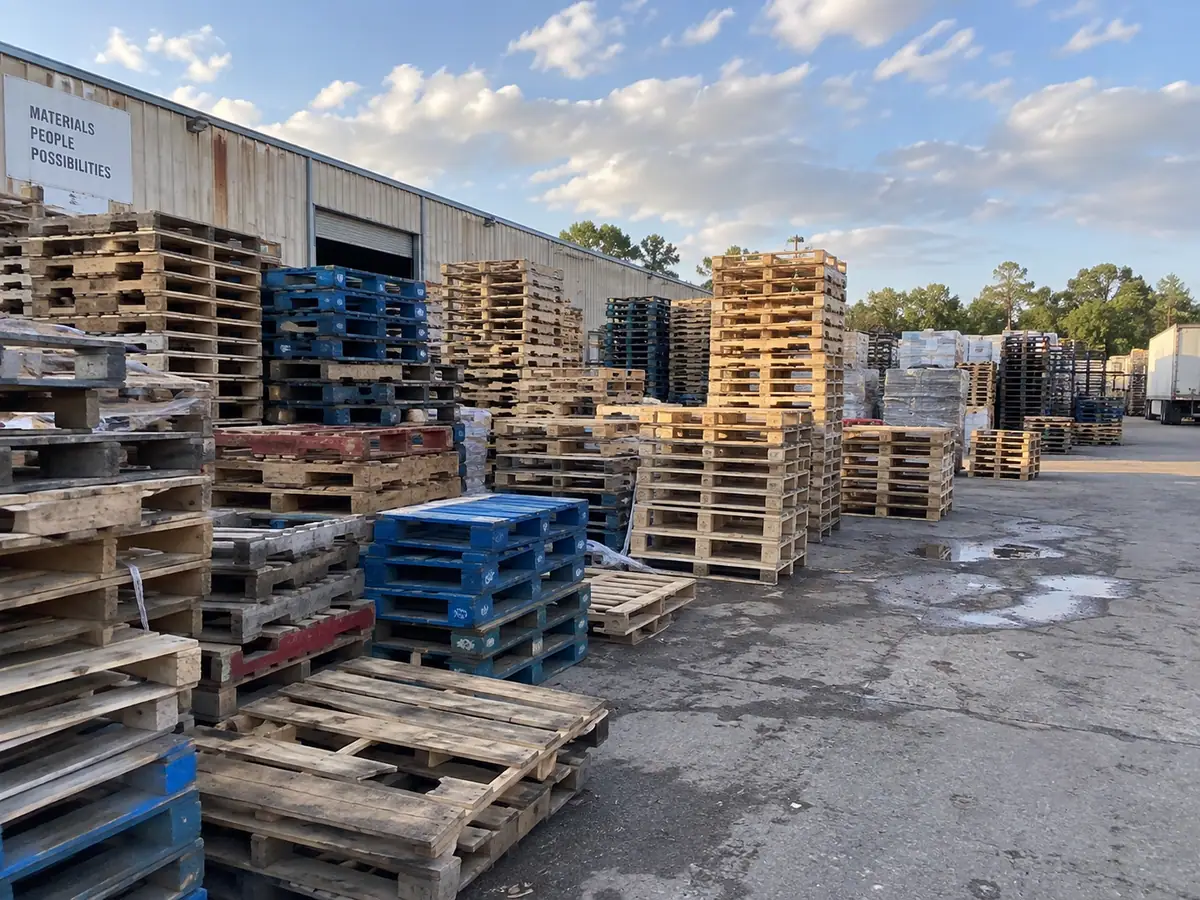
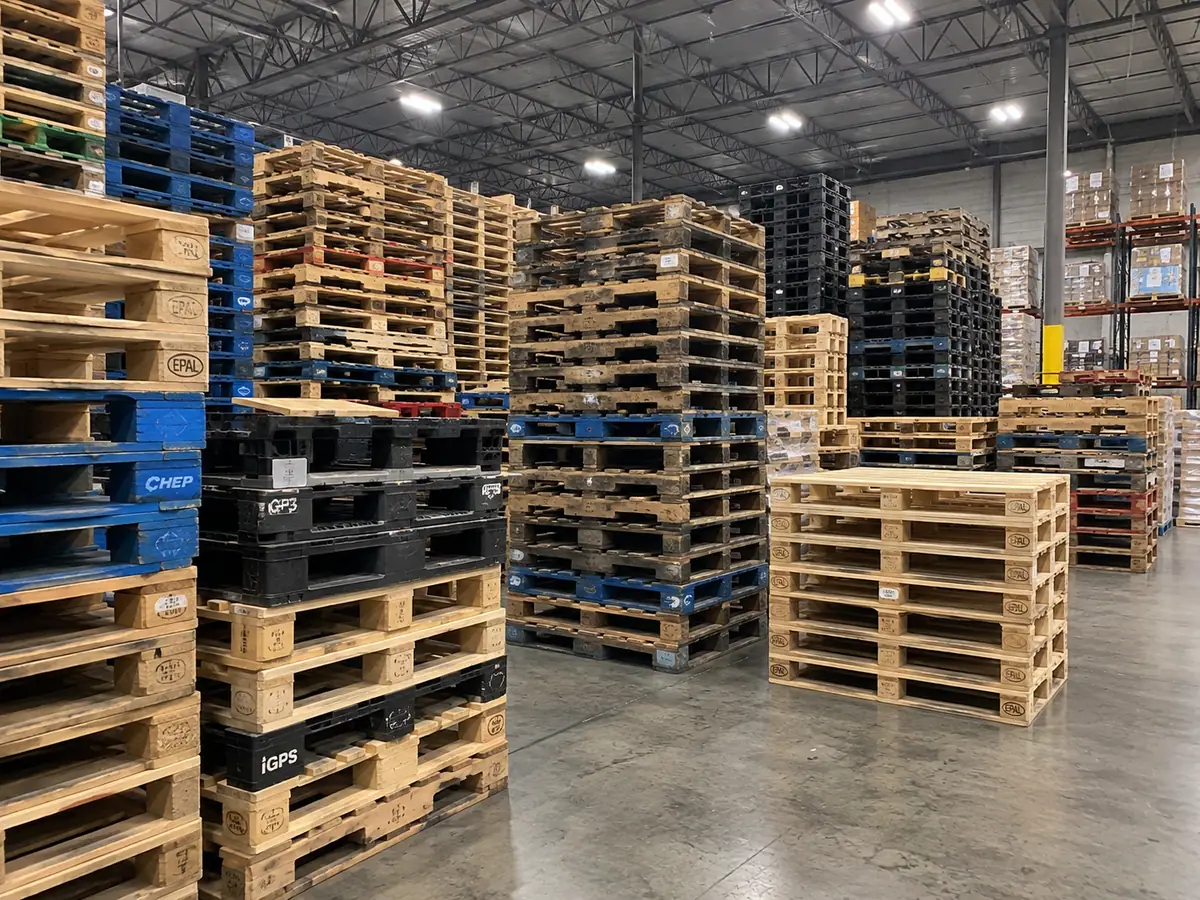
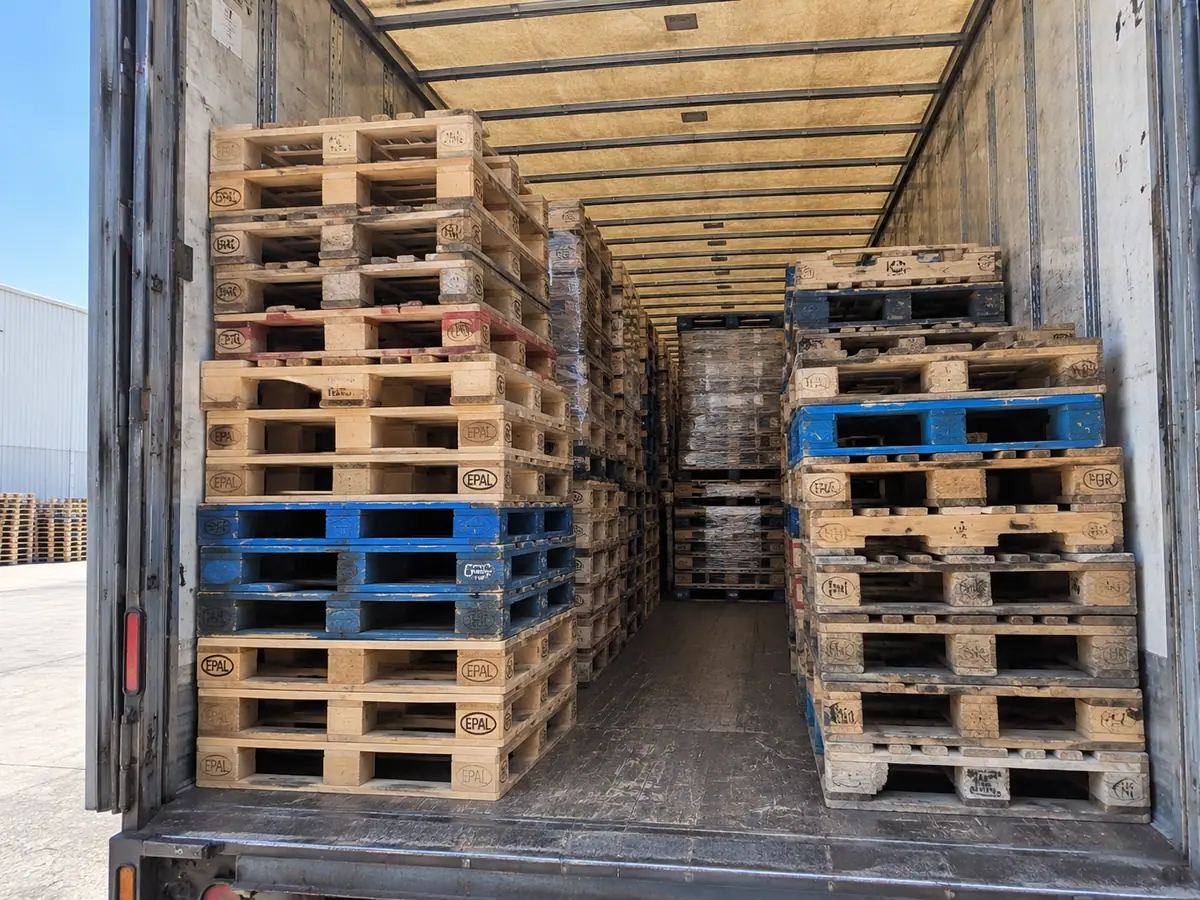
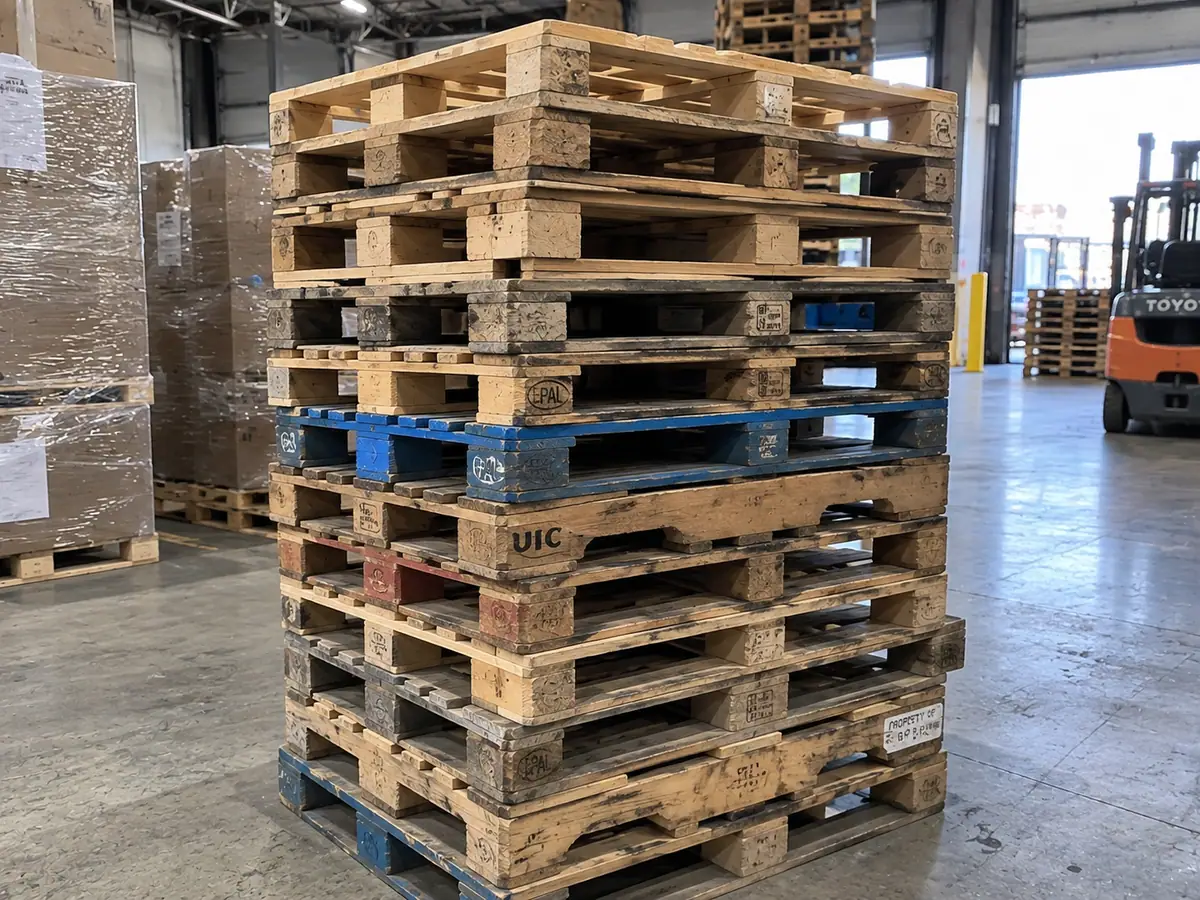
This is the actual yard, not a stock library.
The dimension library
Twenty-two footprints, drawn to scale.
48 × 40
42 × 42
48 × 48
36 × 36
Euro
48 × 45
The thing nobody else does
Every load ships with a passport.
A one-page record that travels with your order: what share of the wood was reused untouched, what was repaired, what was remilled, where the cores were collected and what the whole thing kept out of a landfill. Your sustainability report writes itself.
99.4%
Landfill diversion
Measured by weight across 2025 intake.
1.6M
Pallets handled a year
Bought, sorted, repaired or recycled.
41k
Tons of wood recovered
Across the last three calendar years.
78 mi
Median collection radius
Short hauls keep the carbon honest.
Who we load
Six industries, six different definitions of 'good enough'.
Food & beverage
Clean, dry, odour-free stock with documented handling.
OpenIndustryAgriculture & greenhouse
Seasonal volume, wet-yard tolerance, one-way economics.
OpenIndustryManufacturing
Consistent footprints for line-side racking and returnables.
OpenIndustryRetail & distribution
Display-grade decks and half-pallet formats.
OpenIndustryChemical & industrial
Drum footprints and heavier deck specs.
OpenIndustryConstruction
Dense loads, rough sites, expendable economics.
OpenWritten by people who grade pallets
Guides that answer the question you actually asked.
How to sell used pallets for what they're worth
Grading, counting, staging and the three mistakes that cost you money on pickup day.
OpenGuideISPM-15, explained without the jargon
What the stamp means, when you need it, and why repairs can invalidate it.
OpenGuideRecycled vs new pallets: the real comparison
Cost, strength, availability and carbon, with the cases where new genuinely wins.
OpenStraight answers
The four questions we get every week.
Do you actually pay for used pallets, or just haul them away?
Both, and the difference comes down to grade and quantity. Whole, repairable 48×40 cores have real value and we pay per unit on pickup — in 2025 that has ranged from roughly $1.50 to $6.00 depending on condition, volume and your distance from Columbus. Odd sizes, wet pallets and broken stringers cost money to process, so those move on a removal fee instead.
Send a photo of a stack and a rough count through the form and you’ll get an honest number, including the case where the honest number is zero.
What is the minimum order?
100 pallets for pickup from our yard, or a partial trailer — around 260 units — for delivery. Below that, freight starts to cost more than the pallets. If you need less, ask anyway: we sometimes have a truck already headed your way.
Are recycled pallets strong enough for racking?
A Grade A recycled 48×40 GMA carries about 2,100 lb racked and 3,000 lb dynamic — close enough to new that most operations never notice the change. What matters more than new-versus-recycled is the deck board thickness, the stringer species and whether the pallet has been repaired with full-length boards. We tell you all three before you buy. See pallet grades for the full breakdown.
Can you supply heat-treated pallets for export?
Yes. We stock ISPM-15 compliant heat-treated stock with a legible mark and can heat-treat to order for larger runs. Read what the stamp actually means before you order — a surprising number of shipments get held because the mark was painted over or the pallet was repaired with untreated boards.
Thirty more on the full FAQ page, or ask us something new through the form above.
Where the trailers go
A day’s drive from Columbus — and an honest answer for the other forty-nine states.
Our yard sits on the south side of Columbus, four minutes off I-270 and inside a one-day radius of roughly sixty per cent of the United States population. Beyond that radius we tell you plainly whether we are the right supplier, because a coverage map that says “nationwide” and nothing else is marketing rather than information.
Fifty states and the District of Columbia, each with city pages underneath — 301 of them, with local corridors and industry mix.