Resources
Nine guides to buying, selling and specifying pallets.
Ask a question these do not cover
Put the question in the message field and a partner supplier follows up.
- Buy, sell, recycle or remove: tell us which way it flows
- Add the size, grade and quantity if you know them
- A partner supplier follows up
- Availability depends on partner suppliers
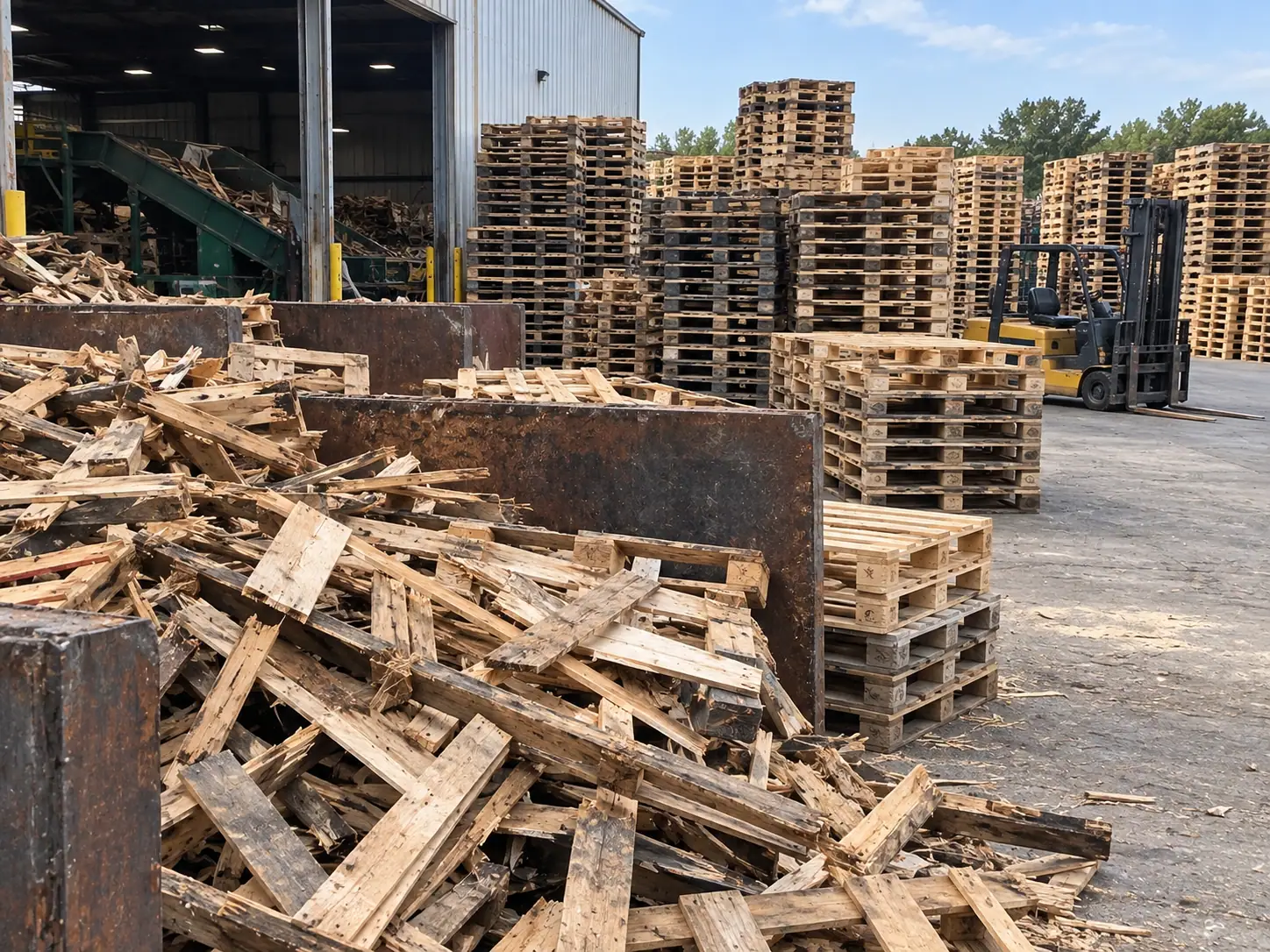
Past repair
Broken pallet wood headed for a grinder, where it can become mulch, bedding or fuel.
Cluster 01
Buying and selling
The commercial side: what things are worth and how to compare quotes.
How to sell used pallets for what they are actually worth
Most sellers lose money in the twenty minutes before the truck arrives, not at the negotiating table. Here is how buyers actually value a load, and what you can do about it.
OpenComparison · 10 min readRecycled vs new pallets: the comparison, including where new wins
Recycled is usually cheaper, but not always the better buy. Here is the comparison, including the four situations where recycled is the wrong answer.
OpenCost guide · 9 min readReducing pallet costs: where the money actually leaks
Unit price is where everyone looks and it is rarely where the money is. Here are the five costs that are usually larger, in rough order of size.
OpenCluster 02
Specification and standards
The technical side: grades, load ratings and compliance.
Pallet grades explained: why nobody agrees on what Grade A means
There is no certifying body and no legal definition. Two honest quotes for the same grade can be far apart. Here is how to compare them properly.
OpenTechnical guide · 9 min readPallet load capacity: static, dynamic and racked, and why the third one matters
Three numbers, and the one people quote is almost never the one that matters. Racked capacity is typically a third of static — and racking is where pallets fail.
OpenCompliance guide · 8 min readISPM-15 explained without the jargon
The rule is one sentence long. The failures are almost always administrative — a repair with untreated lumber, or a label over the stamp.
OpenCluster 03
Decisions and comparisons
Structural decisions: pooling, materials and recycling.
Pallet pooling vs buying: an honest comparison
Pooling wins in several specific situations and buying wins in others. Here is how to tell which one you are in.
OpenComparison · 9 min readWood vs plastic pallets: the loop decides it
Plastic wins in a genuine closed loop and loses badly almost everywhere else. The loss rate decides which one you are in.
OpenOperations guide · 10 min readA practical guide to pallet recycling for operations managers
Written for the person who has been handed 'sort out the pallet situation' and a wall of empties behind the dock.
OpenReference
Not an article, but you probably want it.
Four reference pages for looking something up.
Questions
Using the library.
Do I have to give an email address to read these?
No. There are no gated PDFs here, no lead-capture wall on the content and no download form. Every one of the nine guides is a web page you can read, print or send to a colleague without telling us who you are.
Which guide should I start with?
It depends on the problem. If you have pallets piling up, start with how to sell used pallets. If the spend looks wrong, start with reducing pallet costs. If you are writing a specification, start with pallet grades explained.
What is the difference between the guides and the reference pages?
The nine guides argue a case and take about ten minutes to read. The reference pages are for looking something up: the size library holds twenty-two footprints with the loading maths, the grades page sets out the common definitions and the glossary defines every term used on this site.
What if my question is not covered by any of the nine?
Put it in the message field on the form and a partner supplier follows up.