Service 01 — Buying
Buy used pallets by size, grade and count.
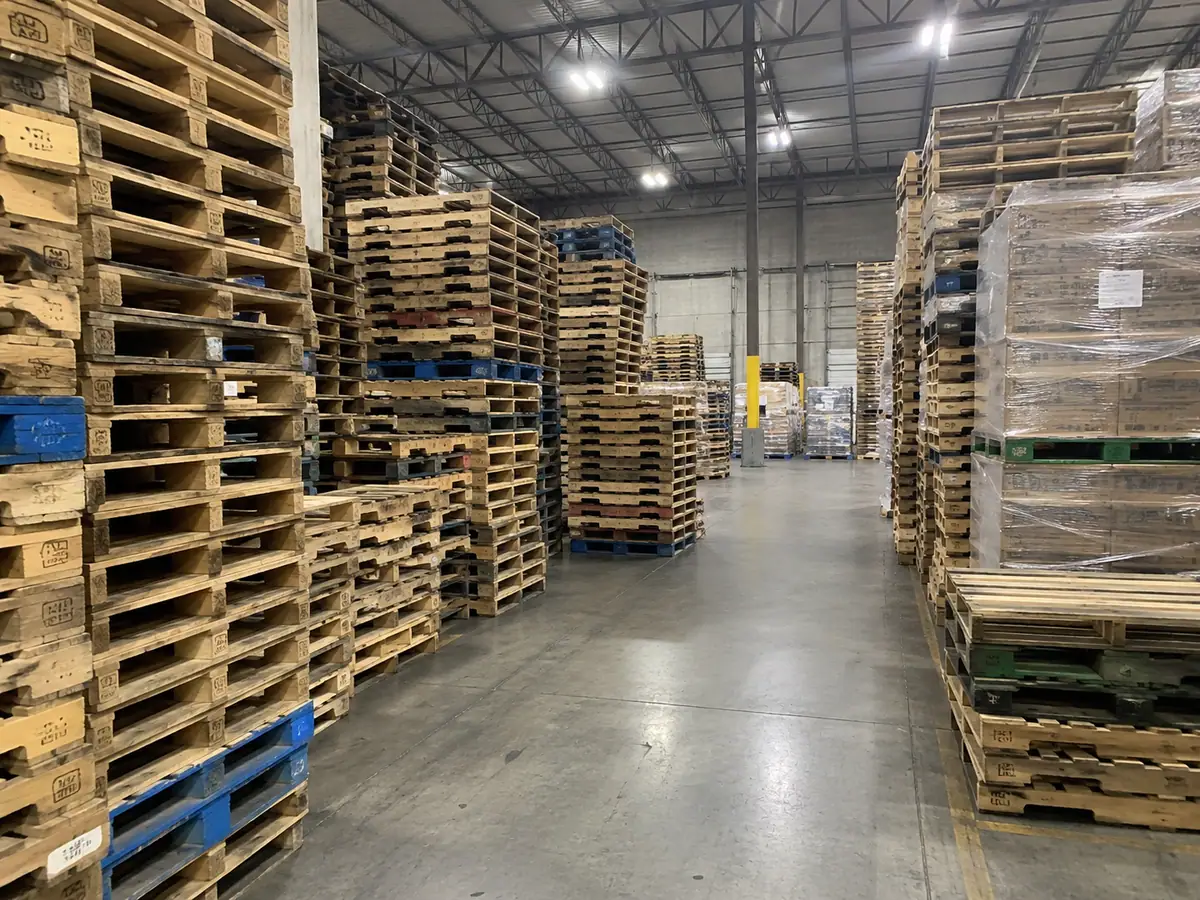
Ask for recycled stock
Give the quantity, the size and the ZIP code. We pass your request to a partner supplier, who follows up.
- Buy, sell, recycle or remove: tell us which way it flows
- Add the size, grade and quantity if you know them
- A partner supplier follows up
- Availability depends on partner suppliers
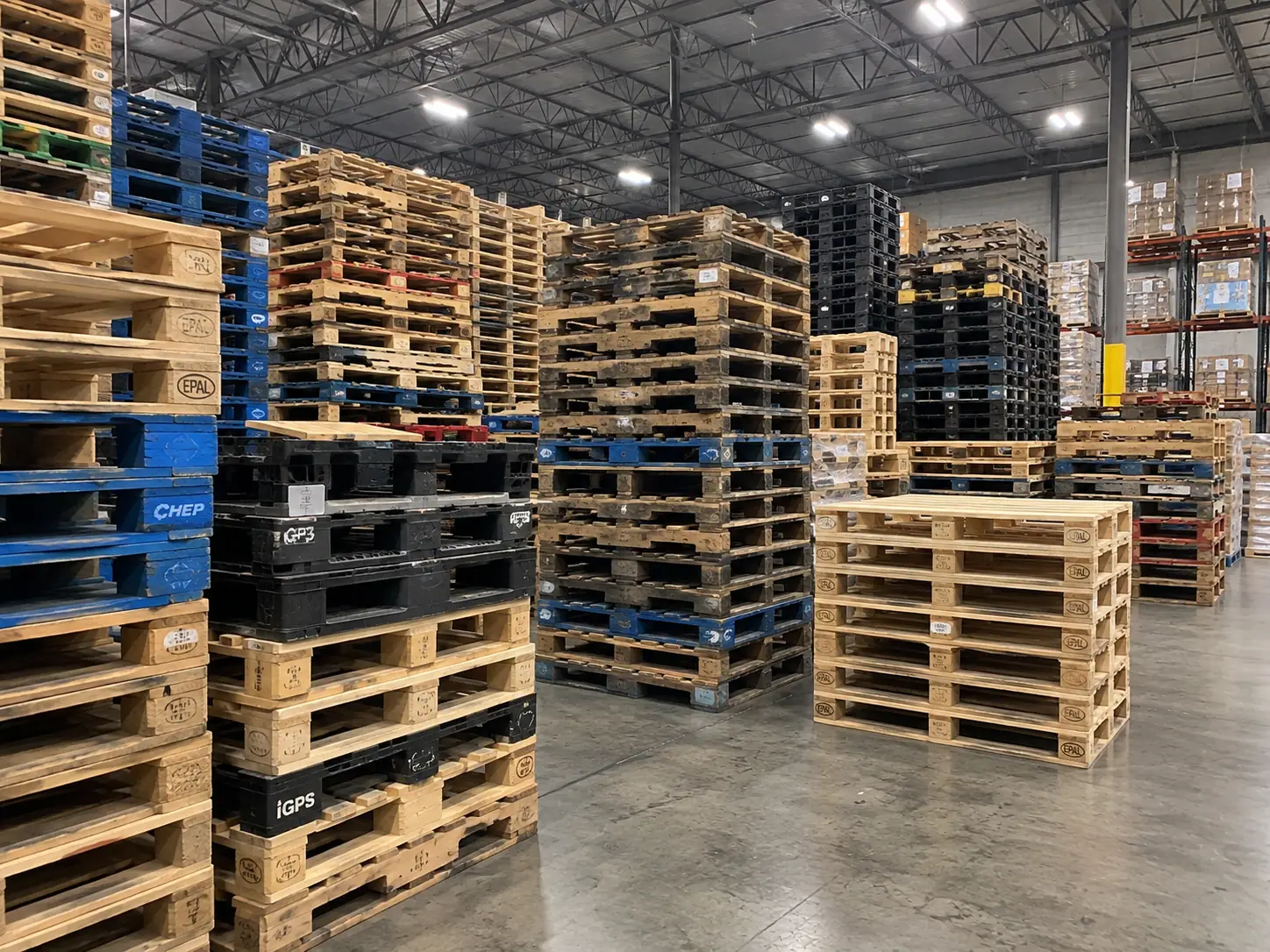
Segregation
Pallets sorted by type: natural wood, pooled units, plastic and EPAL.
Why it matters
Why used pallets get a bad reputation
It is almost never the wood. It is the sorting.
A used pallet that fails on a line usually failed for one of four reasons: a cracked stringer nobody caught, a deck board nailed on short, moisture that softened the fibre, or a footprint a fraction of an inch off that jammed the racking. All four are sorting failures, not material failures.
That is why the grade matters more than the word “used”. The pallet grades page sets out what Grade A and Grade B normally mean.
Before you ask
Five questions that decide which grade you actually need
- 01Does it go into a rack?Racked storage is the load case that breaks pallets. If it racks, you want Grade A with full-length deck boards and no repaired stringers under the fork openings.
- 02Does it leave your building?One-way shipments to a customer who will not return the pallet rarely justify Grade A. Grade B usually does the job.
- 03Does it go near food or pharma?Then ask for clean, dry, odour-free stock with no visible staining, and check your own requirements with your compliance lead. See food and beverage.
- 04Does an automated system handle it?Automated storage and conveyor lines are unforgiving about bottom-board placement and overall height. Put the tolerance in the message; sometimes the right answer is new pallets.
- 05How long will it live?A pallet that cycles internally many times a year is worth buying better. One that ships out once is worth buying cheap.
How a request works
Send the form; a partner supplier follows up.
- Step 01
Pick the service
Choose the service on the form. Nothing is chosen for you.
- Step 02
Describe the pallets
The product, the size and grade if you know them, and roughly how many.
- Step 03
Add where and when
The ZIP code for delivery or pickup, and how soon you need it.
- Step 04
Hear from a supplier
We pass your request to a partner supplier, who follows up with a quote or a next step.
Tell us the size, the grade and the ZIP.
That is enough to start. Send the form and a partner supplier follows up.