Skip to content

Standards

Pallet grades, and why almost nobody defines them the same way.

There is no legal definition of a Grade A pallet. There is no certifying body. The words mean whatever each yard decides they mean — which is precisely why we publish ours in full and will replace any load that does not meet it.
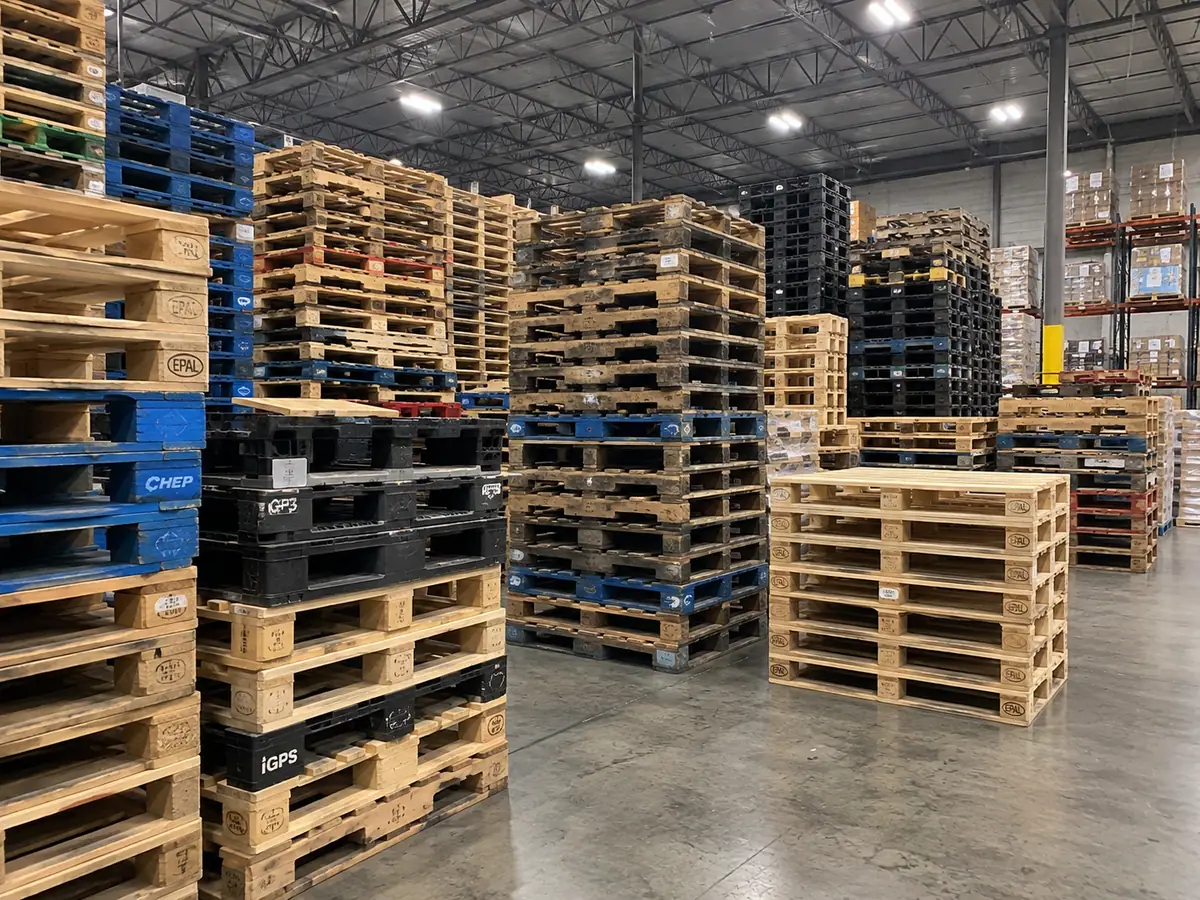
Warehouse interior with pallets sorted by type — natural wood, blue pooled units, black plastic and EPAL stamped stacks
SegregationSorted by type, not by convenience. Pooled units go back to the pool; plastic runs a separate stream entirely.

Order to a specific grade

Pick the grade in the form. If you are not sure which one you need, describe the application in the message and we will tell you — including when a lower grade would do.

  • Written quotes, usually inside one business day
  • Loads from 100 pallets to full 53' trailers
  • We buy as readily as we sell — tell us which way it flows

We reply by email, so this needs to be a working address.

US or Canadian 10-digit number. Formats itself as you type.

Two-letter code or full name.

US ZIP (43217) or Canadian postal code (K1A 0B1).

Whole units, digits only.

No phone number required from us — we quote by email so you have the numbers in writing.

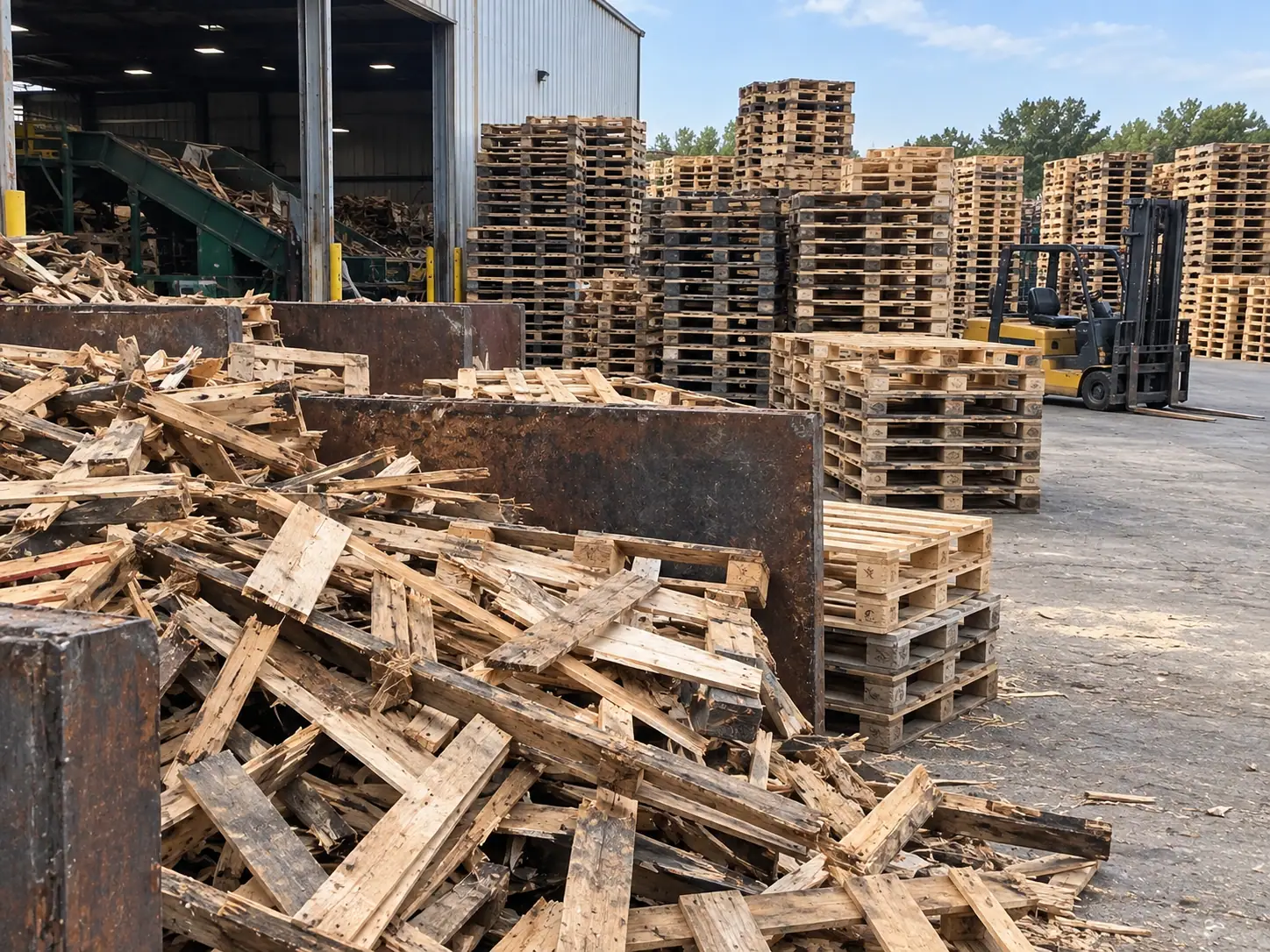
Recycling yard with a steel bin full of broken pallet wood, a grinder conveyor, stacks of pallets and a forklift beyond

The last four per cent

Everything the sort deck rejected, on its way to the grinder. It leaves as mulch, bedding and boiler fibre — not as landfill.

The absence of a standard is the single biggest source of dispute in the used pallet trade. Two quotes for “Grade A 48×40” can be twenty per cent apart and both be honest, because one yard permits a companion stringer and the other does not.

Our standard is deliberately at the strict end. We do not allow any stringer repair in Grade A, because racked loads are exactly where repaired stringers get tested and a failure there is a dropped load, not an inconvenience.

The full inspection criteria are on the Grade A specification sheet, which is the internal document our sort deck works from.

The four grades

What each one is, honestly.

Grade A (#1)

$7.50 – $12.00

All members original or replaced full-length. No stringer repairs of any kind. Uniform appearance, under 19% moisture, square to within a quarter inch.

Racked ≈ 2,100 lb

Use for Racking, food and pharmaceutical handling, automated systems, anything that has to come back.

Grade B (#2)

$5.00 – $8.50

Up to two replaced deck boards, or one stringer repaired with a full-length companion. Mixed colour acceptable. Structurally sound, cosmetically obviously used.

Racked ≈ 1,500 lb

Use for One-way outbound shipping, floor stacking, internal movement where appearance is irrelevant.

Remanufactured

$4.50 – $7.00

Built from recovered lumber, usually a five-board deck rather than seven, often cut down from a larger orphan footprint. Sound, light, visibly rebuilt.

Racked ≈ 1,200 lb

Use for Expendable outbound loads, light product, anything where the pallet will not come back.

Core / scrap

$1.50 – $6.00 (we pay)

Unsorted incoming stock, sold by us only to other processors. Includes broken units destined for dismantling or grinding.

Racked Not rated

Use for Not a product you should be buying to ship on. If someone offers you 'cores' as usable pallets, walk away.

Side by side

The inspection criteria in full.

This is what a grader is checking, in the order they check it. Anything that fails a row drops the unit to the next grade.
Load figures are indicative for a 48×40 hardwood unit with a uniformly distributed load.
CriterionGrade A (#1)Grade B (#2)Remanufactured
Top deck boards7, all full length7, up to 2 replaced5–7, recovered lumber
Board splitsNone over ¼″None over 2″None structural
Stringer conditionNo cracks, no repairsOne companion repair permittedRecovered, docked to length
Stringer plugsNonePermittedPermitted
Squareness± ¼″± ½″± ½″
MoistureUnder 19%Under 19%Under 19%
AppearanceUniform, no heavy stainingMixed acceptableVisibly rebuilt
Protruding nailsNoneNoneNone
Odour / residueNoneNoneNone
Static load≈ 6,000 lb≈ 4,500 lb≈ 3,500 lb
Dynamic load≈ 3,000 lb≈ 2,200 lb≈ 1,800 lb
Racked load≈ 2,100 lb≈ 1,500 lb≈ 1,200 lb

Terms you will hear elsewhere

“A/B mix” — an unsorted blend, priced between the two. Fine if you know the ratio; a gamble if you do not. “Premium A” or “A+” — usually Grade A plus an appearance sort. “Economy” — almost always Grade B or below. “Recon” — remanufactured.

The one question to ask any supplier

“Does your Grade A permit a repaired stringer?” The answer tells you more about a yard than any brochure. There is no wrong answer — plenty of good operations allow it — but a supplier who cannot answer immediately is not grading to a standard at all.

Questions

Grading, answered.

Is there an official pallet grading standard?

No. There are widely-used conventions and there are industry bodies that publish guidance, but there is no certifying authority and no legal definition. Grade A means what the seller says it means, which is why comparing quotes requires comparing definitions.

Which grade do I actually need?

If it goes into a rack, or touches food, or goes through an automated system, Grade A. If it leaves your building once and never comes back, Grade B or remanufactured. The full decision logic is in Grade A vs Grade B.

Does a repaired pallet always drop a grade?

In our system, a deck board replaced full-length does not; a stringer repair does. A unit repaired to the deck only can return as Grade A provided every other criterion is met. See repair standards.

What is a 'core'?

Unsorted incoming stock, bought by weight or by the trailer and sold between processors. Cores are raw material, not a product. If a supplier offers you cores as shippable pallets, that is the whole warning.

How do you handle disputes over grade?

Tell us within five business days, send photographs of the units in question, and we replace or credit the shortfall. We do not argue about it — the cost of the occasional replaced load is lower than the cost of a reputation for arguing.

Keep reading