Industry
Pallets for agriculture, where the season decides everything.
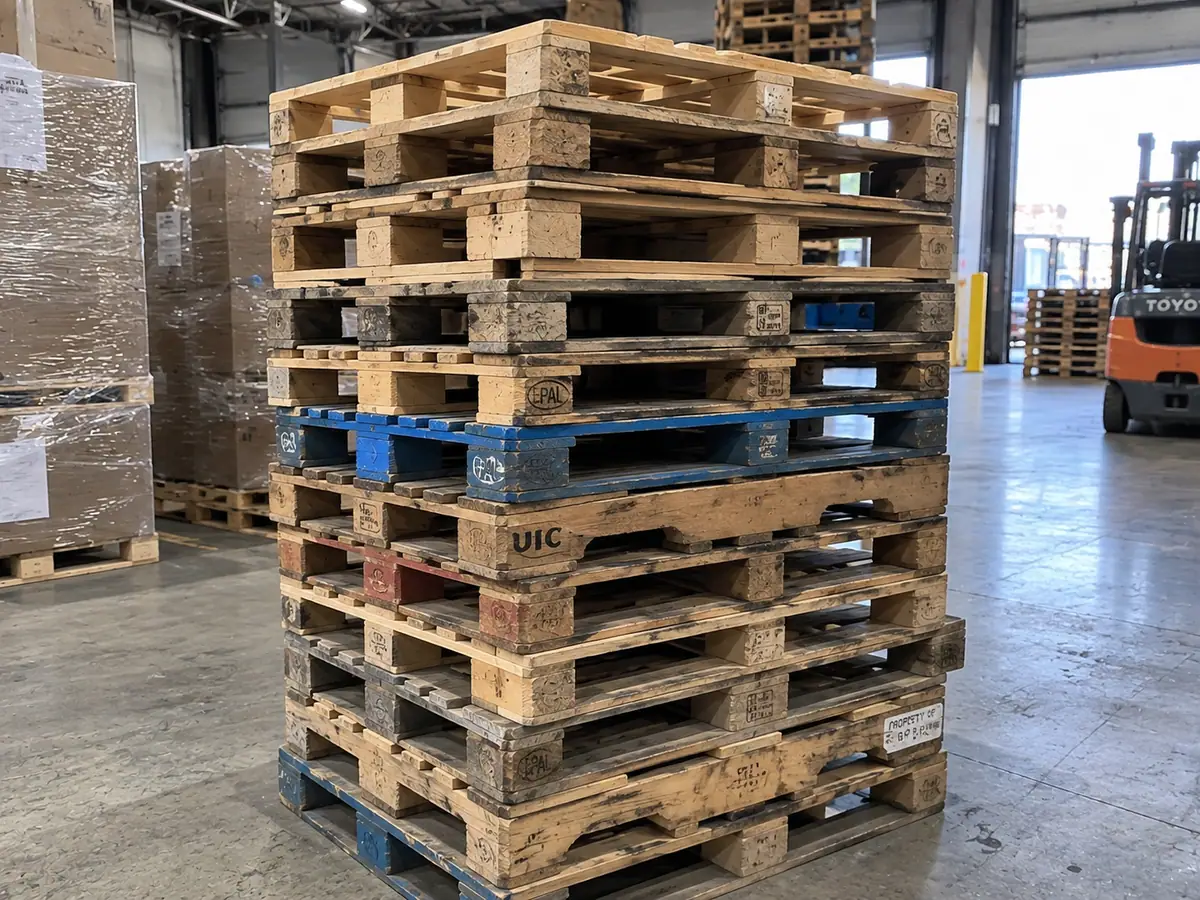
Talk to us about agriculture & greenhouse
Give us the quantity, the size and the ZIP. You'll get a written quote with the grade, the freight and the pickup window — not a sales call.
- Written quotes, usually inside one business day
- Loads from 100 pallets to full 53' trailers
- We buy as readily as we sell — tell us which way it flows
Outbound
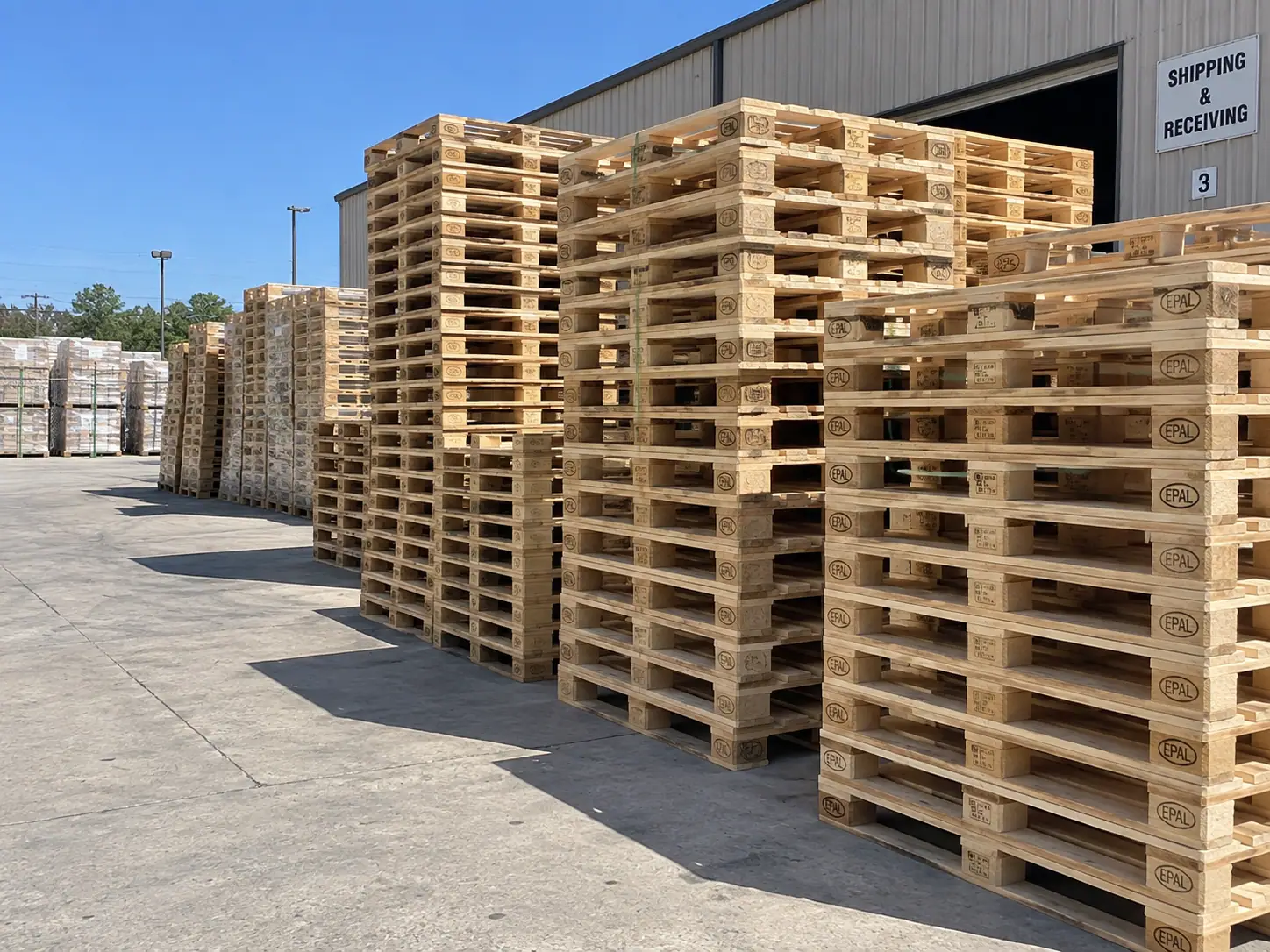
Banded, counted and staged against the door. Stacks of fifteen, double-banded, the way a forklift expects them.
The seasonality problem
The market is tightest exactly when you need it.
Pallet demand in Ohio peaks in April and May — greenhouse shipping, mulch season, produce ramp-up, all at once. That is also when construction restarts and beverage builds inventory. Everyone wants pallets in the same eight weeks.
The result is that growers buying on the spot market in April routinely pay 25 to 40% more than the same stock cost in January, and sometimes cannot get it at all. The fix is boring: book volume in the autumn, take a proportion into storage, and hold the rest against a call-off.
We hold booked seasonal volume in the yard and release it against your schedule. It is not a clever product. It just removes the single largest avoidable cost in agricultural pallet buying.
- Book in autumn, call off through the season
- Buffer stock held in our yard, not on your field edge
- One-way grades for outbound produce, Grade A for returnable systems
- Buy-back on returned stock at season end
- Collar and bulk-bin systems for pick-and-pack operations
What growers actually buy
Four formats that earn their keep on a farm
- 01Grade B 48×40Outbound produce that will not come back. Sound, cheap, and the grade nobody at the receiving end will complain about.
- 02Collared pallet systemsA pallet, four collars and a lid make a returnable bin that folds flat. The return leg is what kills most reusable systems; collars fix it.
- 03Bulk binsFor apples, squash, root crops and anything harvested in volume. We source and repair them alongside pallets.
- 04Mulch and beddingThe other direction: wood fibre from our grinder goes out to growers as bedding and ground cover, often on the same trucks that brought pallets in.
Questions
Agriculture questions
Can pallets be stored outside?
They can, and they will lose a grade doing it. Wood that sits uncovered through an Ohio winter comes out heavier, softer and often mouldy. Under cover on dunnage is the minimum; indoors is meaningfully better.
Do you buy pallets back at the end of the season?
Yes, on whatever comes back sound. That converts a purchase into something closer to a rental and takes the sting out of the seasonal peak. See selling your pallets.
Are your pallets treated with anything?
No chemical treatment in our recycled stock, and we exclude methyl-bromide-marked units from the stream entirely. If you are putting pallets near growing media or edible crops, that matters.
Can you deliver to a field site?
Within reason. We need firm ground and space to turn a 53-foot trailer. Tell us the access in the message field and we will be straight with you about whether our equipment can get in.
Seasonal planning
The agricultural pallet calendar
| Period | What is happening | Market condition | What to do |
|---|---|---|---|
| September – November | Harvest, storage fill | Second peak | Book next spring's volume now |
| December – February | Quiet | Softest of the year | Take delivery into covered storage |
| March – early April | Greenhouse ramp begins | Tightening fast | Call off booked volume |
| Mid April – May | Full season | Tightest of the year | Do not plan to buy on the spot market |
| June – July | Steady shipping | Easing | Sell back returns and surplus |
| August | Pre-harvest build | Firming | Confirm harvest volume |
Field and packhouse
Five practical realities of agricultural pallet use
- 01Ventilation matters for produceDeck gaps that would be a problem for small cases are an advantage under produce, allowing airflow through a cooling stack. Specify the gap deliberately rather than accepting a default.
- 02Field conditions destroy gradeA pallet that spends a season on soil comes back wet, dirty and frequently unsalvageable. Dunnage under field-staged stacks pays for itself in one season.
- 03Bins beat pallets for bulk cropsApples, squash and roots move in bulk bins rather than on pallets. We source and repair those alongside pallets — different product, same conversation.
- 04Collar systems fold flatThe return leg is what kills most reusable programmes in agriculture. Collars cut the return cube by around eighty per cent and repair with a hammer.
- 05Buy-back is worth arranging in advanceSeason-end returns are worth real money if they are dry and sorted. Agreeing the terms in March is much easier than negotiating them in October.
Greenhouse and nursery
The steepest ramp in the business
Greenhouse and nursery operations go from near-zero to full shipping volume in about three weeks, and the entire industry does it simultaneously. There is no supply chain in which that is comfortable.
The operations that handle it well do three things. They book volume in the autumn at a fixed price. They take a proportion into covered storage on site before the season starts. And they are flexible on grade, because Grade B and remanufactured stock is available in April when Grade A is not.
The operations that struggle all do the same thing: they decide in February to wait and see. February is exactly when the market is about to move against them.
Plant material is also heavy, wet and awkward, and it sits on pallets in the sun. Deck spacing, ventilation and moisture tolerance matter more here than the grade letter does.
Questions
More agricultural questions
Can pallets be stored on a field edge?
They can, and they will lose a grade doing it. Under cover on dunnage is the minimum worth bothering with; indoors is materially better. A stack that sits through an Ohio winter uncovered is a removal job by spring.
Do you sell bulk bins?
We source and repair them. Collapsible bins that fold flat for the return leg are usually the better investment over rigid ones, for the same cube reason that makes collars work.
Are your pallets treated with anything?
No chemical treatment in recycled stock, and methyl-bromide-stamped units are excluded entirely. If pallets go near growing media or edible crops, that matters and it is worth confirming with any supplier.
Can you deliver to a farm rather than a packhouse?
Within reason — we need firm ground and room to turn a 53-foot trailer. Describe the access honestly in the message field; a wasted trip costs us both.
What happens to pallets at the end of the season?
Sell back what is sound and dry, and have the rest collected. Both are worth arranging before the season rather than during the clear-up.