Product 07
Upcycled goods, because some boards deserve better than a second pallet.
Ask about upcycled work
Give us the quantity, the size and the ZIP. You'll get a written quote with the grade, the freight and the pickup window — not a sales call.
- Written quotes, usually inside one business day
- Loads from 100 pallets to full 53' trailers
- We buy as readily as we sell — tell us which way it flows
Segregation
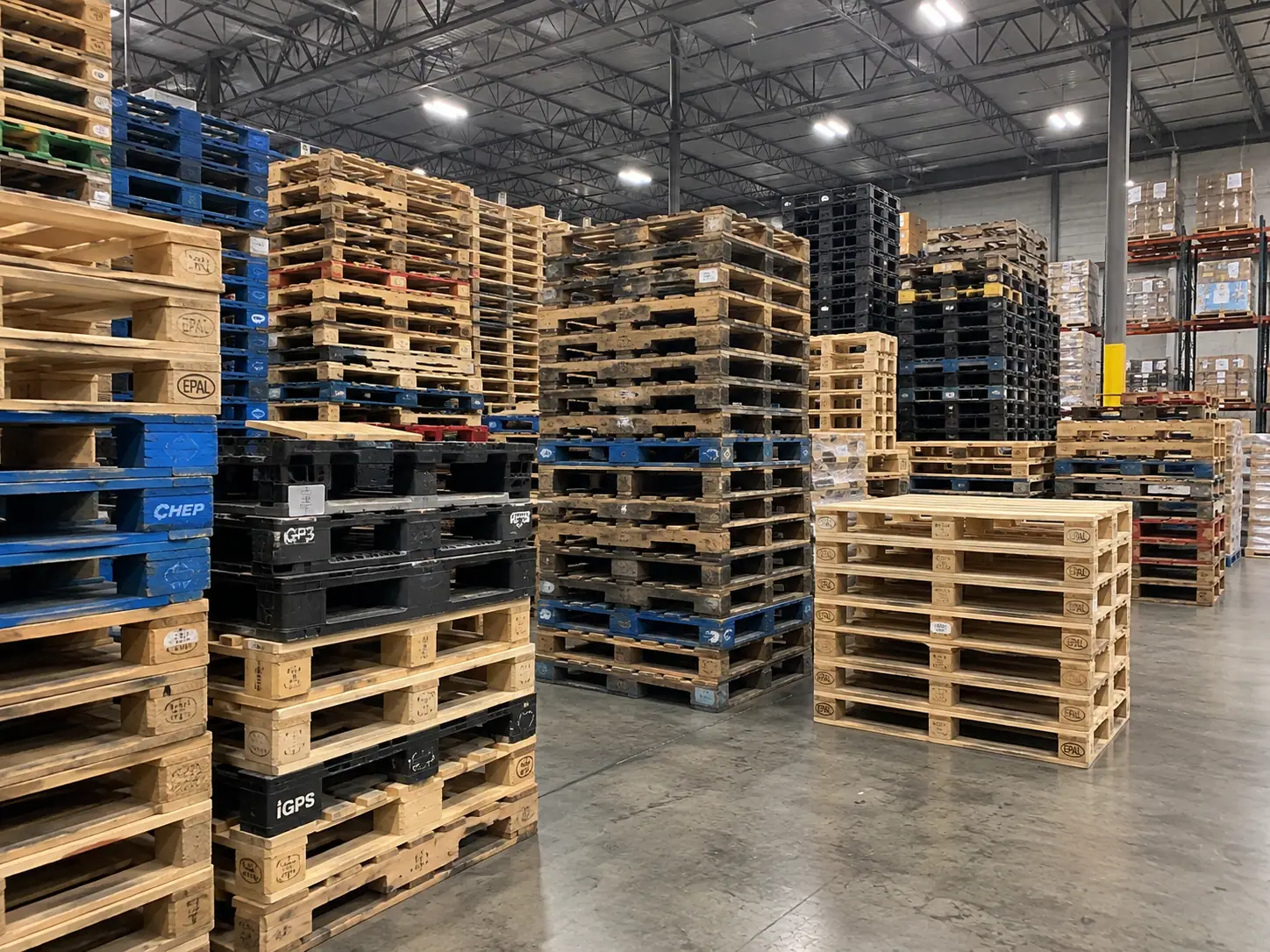
Sorted by type, not by convenience. Pooled units go back to the pool; plastic runs a separate stream entirely.
What we make
Five things this wood is genuinely good at
- 01Retail and hospitality fixturesDisplay tables, shelving backs, counter fronts and menu boards. The material reads as authentic because it is — every board carries the marks of the work it did.
- 02Wall panelling and claddingMixed-width board runs in natural, whitewashed or scorched finishes. Sold by the square foot, kiln-run and de-nailed. The most requested thing we make.
- 03Event and exhibition stagingModular platforms, backdrops and bars that break down flat. Rented as often as bought, and repaired between hires with more of the same wood.
- 04Planters and landscape furnitureRaised beds, trough planters and benches. Untreated hardwood, no chemical carry-over — which matters if anything edible is going in them.
- 05Tabletops and bar topsLaminated hardwood slabs from graded recovered stock, finished in hardwax oil. Heavy, flat, and considerably cheaper than new reclaimed-look material.
An honest caveat
Not all pallet wood belongs in a house
There is a great deal of enthusiasm online for building furniture from any pallet you find behind a shop. Some of that enthusiasm is misplaced.
Pallets carry what they carried. A unit that spent its life under drums of solvent, or that was treated with methyl bromide, has no business becoming a child's bed. We only build from stock we collected ourselves, from sources we know, and we exclude MB-marked, painted, stained and visibly contaminated material entirely.
We also kiln-run everything to under 12% moisture before it goes anywhere indoors. Pallet wood at service moisture will move, split and open joints within a season of being in a heated building. That step is the difference between a piece of furniture and firewood with ambitions.
Questions
Upcycled questions
Can I buy the wood rather than a finished piece?
Yes. De-nailed, kiln-run reclaimed boards are sold by the square foot in mixed widths. Tell us the quantity and the look you want and we will send photos of what is currently on the rack.
How do I know it is safe?
We build only from stock collected on our own routes, with known sources, and we exclude MB-treated, painted and contaminated material. If you have found pallets elsewhere, check the stamp — ISPM-15 explained tells you how to read it.
Do you take commissions?
Small ones, yes, alongside trade work. Send dimensions and a reference image through the form. We are slow — this is a side of the business run around the yard's actual work — but we are careful.
What does it cost?
Panelling runs $7 to $14 per square foot depending on finish. Furniture and fixtures are quoted per piece. Materially cheaper than new reclaimed-look lumber, because ours is actually reclaimed.
What it costs
Indicative pricing for reclaimed work
| Item | Indicative price | Lead time | Notes |
|---|---|---|---|
| De-nailed reclaimed boards | $4.50 – $8.00 per sq ft | 1 – 2 weeks | Kiln-run under 12% moisture, mixed widths |
| Wall panelling, natural | $7 – $10 per sq ft | 2 – 3 weeks | Ready to fix, mixed widths |
| Wall panelling, finished | $9 – $14 per sq ft | 3 – 4 weeks | Whitewashed, scorched or oiled |
| Laminated tabletop / bar top | $95 – $180 per sq ft | 4 – 6 weeks | Hardwax oil finish, made to size |
| Retail display fixture | Quoted per piece | 3 – 6 weeks | To drawing or reference image |
| Raised bed / trough planter | $120 – $340 | 2 – 3 weeks | Untreated hardwood, no chemical carry-over |
| Event staging module | Quoted per project | 4 – 8 weeks | Modular, breaks down flat, hire available |
The material
What makes reclaimed pallet oak different from new lumber
It has already done its moving. Wood shrinks, cups and twists as it dries, and most of that happens in the first few years. Boards that survived eight years of service and are still flat have demonstrated something a fresh board cannot.
The colour is not a finish. Grey-brown weathering, iron staining around nail holes, and the tonal variation between species in the same pallet — none of that can be applied afterwards convincingly, which is why new 'reclaimed-look' lumber never quite reads right.
It is hardwood, mostly. Oak, maple, gum and poplar rather than the softwood most reclaimed material comes from. Harder, heavier, and it takes a finish differently.
It has nail holes. Plenty of them, and they are part of the character rather than a defect. If you want clean stock, this is the wrong material and we will say so.
Everything we build from goes through the kiln to under 12% moisture first. Pallet wood at service moisture will move, split and open joints within a season in a heated building — that step is the difference between furniture and firewood with ambitions.
Safety
What we exclude, and what you should too
- 01Methyl-bromide stamped unitsCheck the treatment code on the IPPC mark — MB means fumigated. Our stamp decoder shows you exactly where to look.
- 02Painted, stained or pressure-treated woodGreen or brown treated timber has no business indoors. Paint is a contamination question rather than a toxicity one, but it fails the same test.
- 03Anything with an odour you cannot account forSolvent, fuel or chemical smell means the unit absorbed something. That does not come out, and a heated room will bring it back.
- 04Visibly stained or greasy unitsOil and grease penetrate deeply and are effectively impossible to remove from a porous surface.
- 05Anything of unknown provenance for a child's furnitureWe only build from stock we collected ourselves on known routes. If you are salvaging independently, apply a stricter standard than you think you need.
Questions
More upcycled questions
Can I choose the boards myself?
For commissions we would rather you did. Ask for a Saturday morning and walk the rack — it takes twenty minutes and the result is always better than a description.
Do you ship reclaimed boards?
Within our normal lanes, yes. Further afield the freight starts to dominate a low-value-per-pound product, and we will be honest about when it stops making sense.
What finishes do you offer?
Natural sanded, hardwax oil, whitewash, and scorched. We do not spray lacquer — it fights the material.
Is this a big part of your business?
No. It is a bench run around the yard's actual work, mostly on Saturdays, and it exists because throwing away eight-year-old oak felt wrong. We are slow and we are careful, and if you need it in a fortnight we are the wrong supplier.
Do you take trade orders?
Yes — retail fixtures and hospitality fit-outs are the largest part of what this bench does. Send drawings or reference images through the form.
Come and pick your boards.
For commissions we would rather you walked the rack and chose the wood yourself. Ask for a Saturday morning.