Interactive tool
The Reclaim Index: what your pallet habit actually weighs.
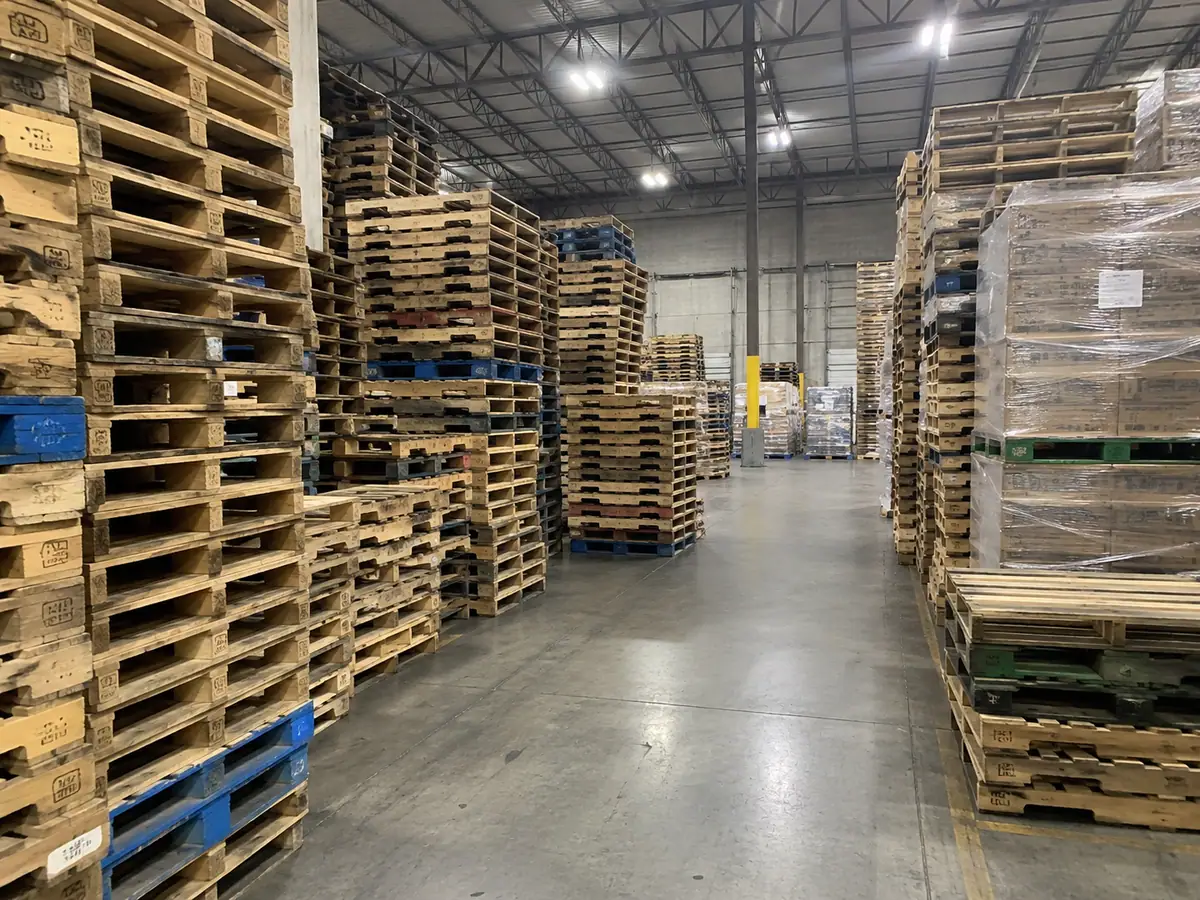
Turn a number into a quote
Once you have a figure you like, this is where it becomes an order. Put the volume from the calculator into the quantity field.
- Written quotes, usually inside one business day
- Loads from 100 pallets to full 53' trailers
- We buy as readily as we sell — tell us which way it flows
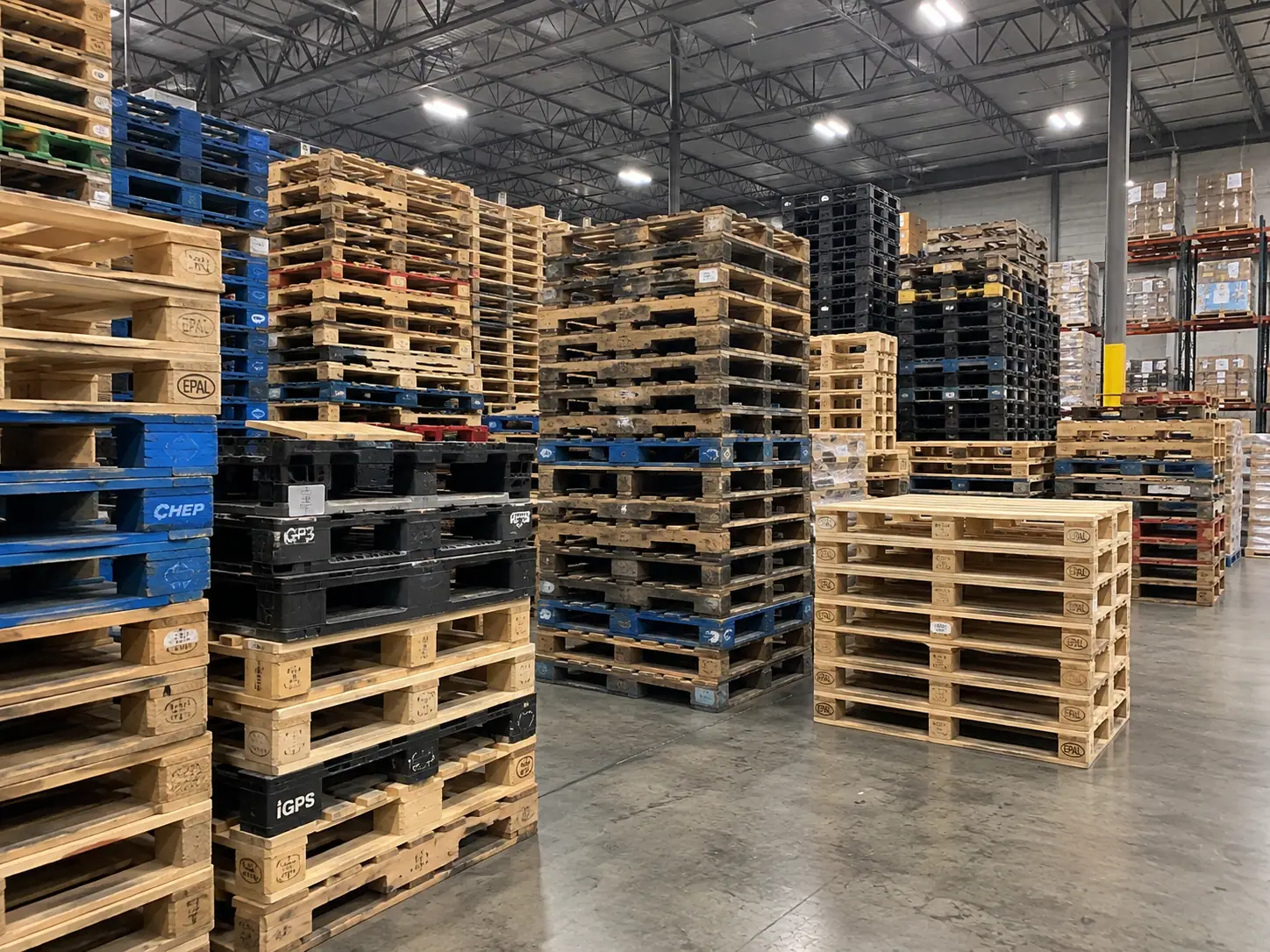
Segregation
Sorted by type, not by convenience. Pooled units go back to the pool; plastic runs a separate stream entirely.
The Reclaim Index
What does your pallet habit actually weigh?
Move the numbers. We’ll show what choosing reclaimed wood over freshly milled lumber does across a year.
That’s 9,000 pallets over twelve months.
138.6
metric tons
CO₂e avoided
202.5
short tons
Kept out of landfill
831
trees
Standing timber spared
$85,500
per year
Not spent on new wood
216,000
board feet
Lumber not milled
385,000
car miles
Equivalent driving avoided
We built this because we kept being asked for “the sustainability numbers” and kept being uncomfortable with the way most companies answer that question — a single impressive figure with no assumptions attached, which is not information.
The Index takes the opposite approach. Everything it computes is a simple multiplication of your volume by a stated coefficient, and every coefficient is listed with its basis and our confidence in it on the methodology page. If you disagree with one of them, you can work out exactly how much the answer changes.
The most uncertain number in the whole thing is trees spared, because board feet per tree varies enormously with species, age and stand quality. We use 260 board feet, which is mid-range for a mature hardwood sawlog. Treat that output as an illustration rather than an inventory.
Questions
About the Index.
What is the counterfactual?
Buying new wood pallets of the same footprint. The figures represent the difference between choosing recycled and choosing new — not against no pallets at all, which would be meaningless.
Does it account for the emissions of recycling?
Yes. The avoided-emissions figure is net: roughly 16.6 kg CO₂e for a new 48×40 minus about 1.2 kg for the collection, sorting and repair of a recycled one, giving the 15.4 kg the calculator uses.
Can I use these figures in a public report?
You can, provided you describe them as modelled estimates and cite the methodology. If you need figures that will survive an audit, use your actual weight tickets and diversion statements instead — see the zero-waste promise.
Why does the cost saving look so large?
Because the price gap between recycled and new pallets is large — roughly $9.50 a unit for a 48×40 in 2025. On 500 pallets a month that is $57,000 a year, which surprises people, and is the main reason recycled stock dominates the market.
Where does the driving comparison come from?
0.36 kg CO₂e per passenger-vehicle mile, a commonly used average. It is there for intuition, not for reporting — the underlying CO₂e figure is the one to use.
What it deliberately excludes
If you want to be stricter