Product 08
Mulch and wood fibre: the last four per cent of every pallet.
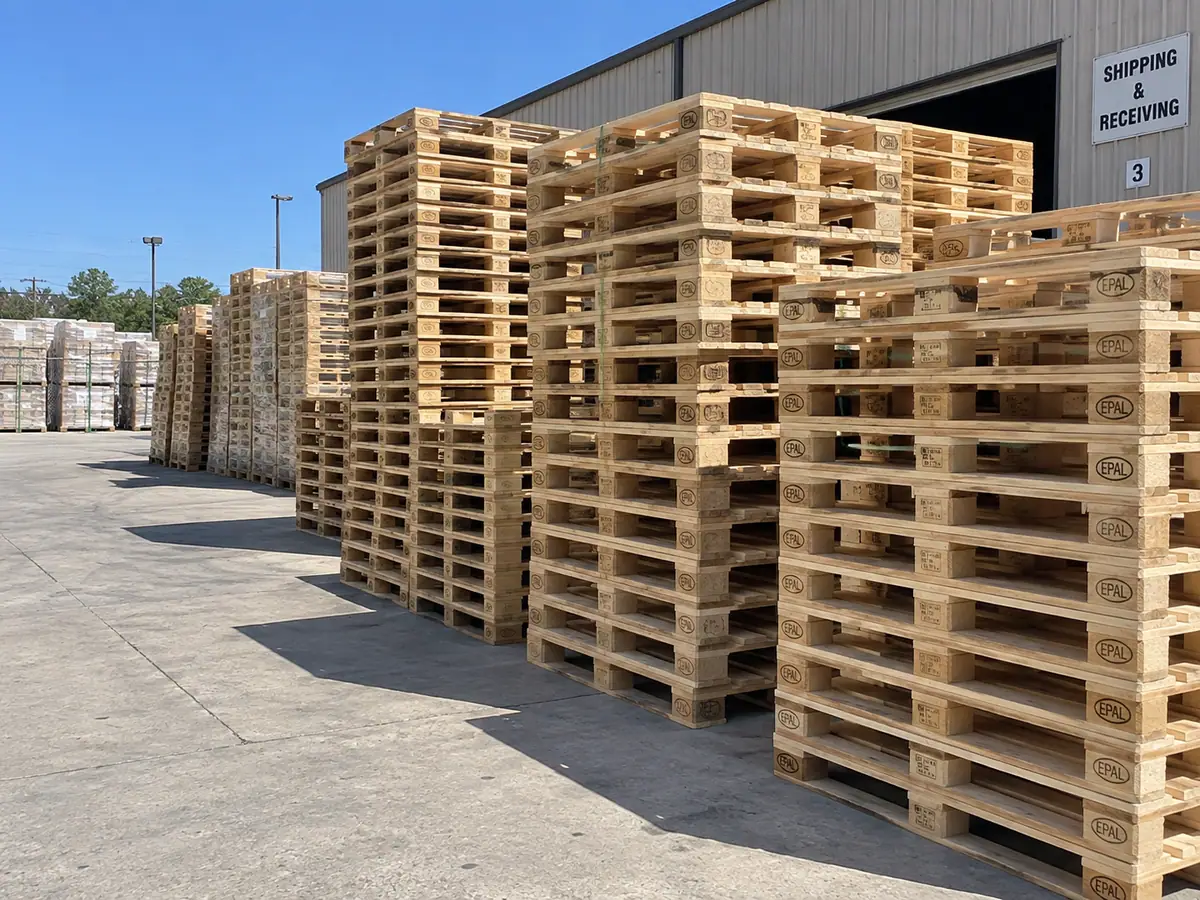
Order bulk mulch or fibre
Give us the quantity, the size and the ZIP. You'll get a written quote with the grade, the freight and the pickup window — not a sales call.
- Written quotes, usually inside one business day
- Loads from 100 pallets to full 53' trailers
- We buy as readily as we sell — tell us which way it flows
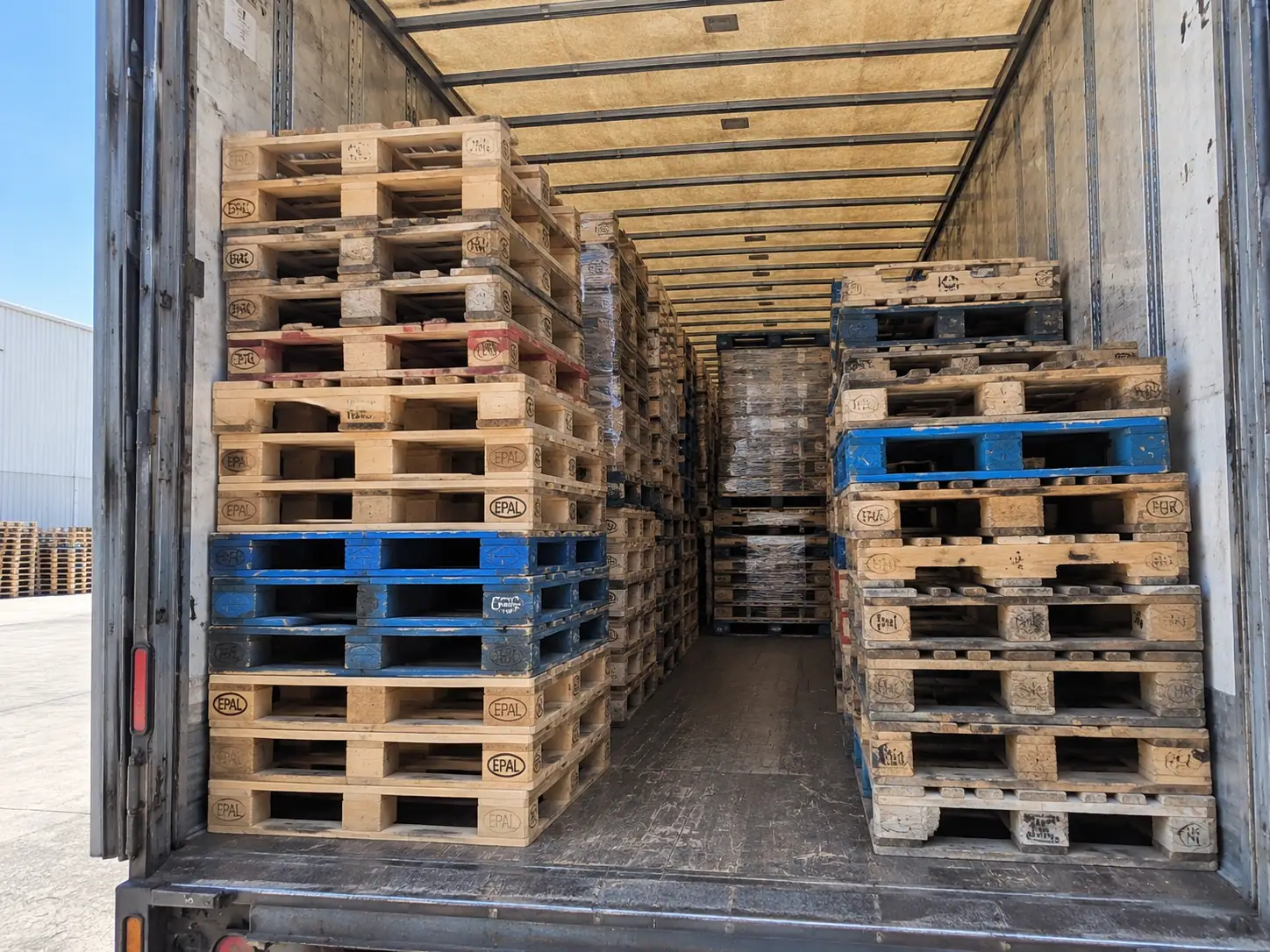
Loaded
About 330 units, two high, roughly 15,000 lb in a trailer rated for three times that. Pallet loads cube out long before they gross out.
The grades
What comes off the screening deck
| Product | Particle size | Sold by | Typical use |
|---|---|---|---|
| Natural hardwood mulch | 0.5″ – 2″ | Cubic yard, bulk | Landscape beds, municipal planting |
| Dyed mulch — black, brown, red | 0.5″ – 2″ | Cubic yard, bulk | Commercial landscaping, retail |
| Playground-grade fibre | Screened, de-fined | Cubic yard, bulk | Play surfaces, trails |
| Animal bedding | Fine, low dust | Cubic yard or tote | Livestock, equine, poultry |
| Boiler fibre / hog fuel | Coarse, mixed | Ton, walking floor | Industrial biomass boilers |
| Ferrous scrap | — | Ton | Scrap metal processors |
A word about dye
Coloured mulch, and what is actually in it.
Dyed mulch has a reputation problem it mostly does not deserve. The colourants used across the industry today are iron oxide for red and brown and carbon black for black — the same pigments used in concrete and cosmetics. They are not solvent-based and they are not, in themselves, a soil contaminant.
The genuine risk in coloured mulch is the feedstock, not the pigment. Mulch ground from construction and demolition debris can carry pressure-treated lumber, and CCA-treated wood in a garden bed is a real problem. Ours is ground from pallet stock we collected ourselves, with treated and painted material removed at the sort deck.
If you are putting it near vegetables, ask us for natural undyed hardwood anyway. It is cheaper and it does the same job.
- Feedstock is our own collected pallet wood, not C&D debris
- Pressure-treated, painted and MB-stamped material removed at sorting
- Iron oxide and carbon black colourants only
- Magnetically de-nailed; playground grade additionally screened
- Bulk delivery across central Ohio; walking-floor loads for contracts
Questions
Mulch questions
How much mulch do I need?
One cubic yard covers about 160 square feet at two inches deep, or 108 square feet at three inches. Most landscape beds want three inches; playground surfacing typically wants nine to twelve.
Is pallet mulch safe around vegetables?
Undyed natural hardwood mulch from our stream, yes. We would still keep any mulch off direct contact with edible crops and use it on paths and around perennials instead — that is general good practice rather than a specific concern about our material.
Do you deliver, and what is the minimum?
Yes, across central Ohio. Minimum is six cubic yards for a delivered load; below that, collection from the yard is more sensible.
Can you supply on a municipal or contract basis?
Yes, including seasonal contracts with scheduled deliveries. Tell us the annual volume and the delivery pattern in the form.
Coverage and ordering
How much you actually need
| Depth | Coverage per cubic yard | Typical use | Notes |
|---|---|---|---|
| 1″ | 324 sq ft | Top-up on established beds | Too thin for weed suppression |
| 2″ | 162 sq ft | Light annual refresh | Minimum for any weed benefit |
| 3″ | 108 sq ft | Standard landscape beds | The usual specification |
| 4″ | 81 sq ft | Heavy weed suppression | Keep clear of stems and trunks |
| 6″ | 54 sq ft | Paths and trails | Compacts to about 4″ in a season |
| 9″ – 12″ | 27 – 36 sq ft | Playground surfacing | Screened, de-fined grade only |
Using it well
Four things that decide whether mulch helps or hurts
Depth. Three inches suppresses weeds and holds moisture. One inch does neither. Six inches on a bed suffocates roots, though it is correct on a path.
Keep it off stems and trunks. Mulch piled against a trunk holds moisture against bark and invites rot and pests. A clear collar of a few inches around every stem, always. This is the single most common mistake in landscape mulching.
Refresh rather than replace. Mulch decomposes, which is the point — it is feeding the soil. Top up annually to depth rather than stripping and starting again.
Match the grade to the job. Coarse natural hardwood on beds, screened de-fined material on play surfaces, fine bedding for livestock. They come off different parts of the same screening deck and they are not interchangeable.
Delivery
What a bulk load needs from you
- 01Six cubic yards minimum for deliveryBelow that, collection from the yard is more sensible — the freight per yard becomes the dominant cost.
- 02Firm ground and turning roomA tipping truck needs space and a stable surface. Wet grass is where trucks get stuck and afternoons get expensive.
- 03A marked tipping spotSomewhere the driver can put it that is not in front of a gate. Sounds obvious; is frequently forgotten.
- 04Overhead clearanceA tipping body needs meaningful height. Cables, branches and canopies are the usual obstacles.
- 05Somebody available, or clear instructionsWe are happy to tip and go with written instructions, but we would rather be told that in advance than work it out on arrival.
Questions
More mulch questions
Will mulch attract termites?
Mulch does not attract termites so much as provide a moist environment they tolerate. The practical control is the same as for rot: keep mulch away from foundations and structural timber, and do not pile it against anything wooden.
Does mulch rob nitrogen from the soil?
At the surface interface, marginally and temporarily, as decomposition consumes nitrogen. Applied as a surface mulch rather than dug in, the effect is small and the moisture and weed benefits dominate.
How long does the colour last on dyed mulch?
Typically a full season, considerably longer than undyed material which greys within months. The pigment binds to the particle surface rather than penetrating.
Can I get playground-grade material certified?
We produce a screened, de-fined grade suitable for play surfacing. Formal certification to a specific playground surfacing standard is a testing exercise we can arrange but do not hold as standard.
Do you supply on municipal contracts?
Yes, including seasonal contracts with scheduled deliveries and walking-floor loads. Tell us the annual volume and the delivery pattern.
Bulk loads, delivered in central Ohio.
Tell us the product, the cubic yards and the delivery address. Seasonal contracts priced separately.