Tool 03 · interactive
The unit price is not where your money goes.
Send us your invoices instead
Twelve months of purchase and removal invoices and we will build the real number for you, free, whether or not you go further with us.
- Written quotes, usually inside one business day
- Loads from 100 pallets to full 53' trailers
- We buy as readily as we sell — tell us which way it flows
The last four per cent
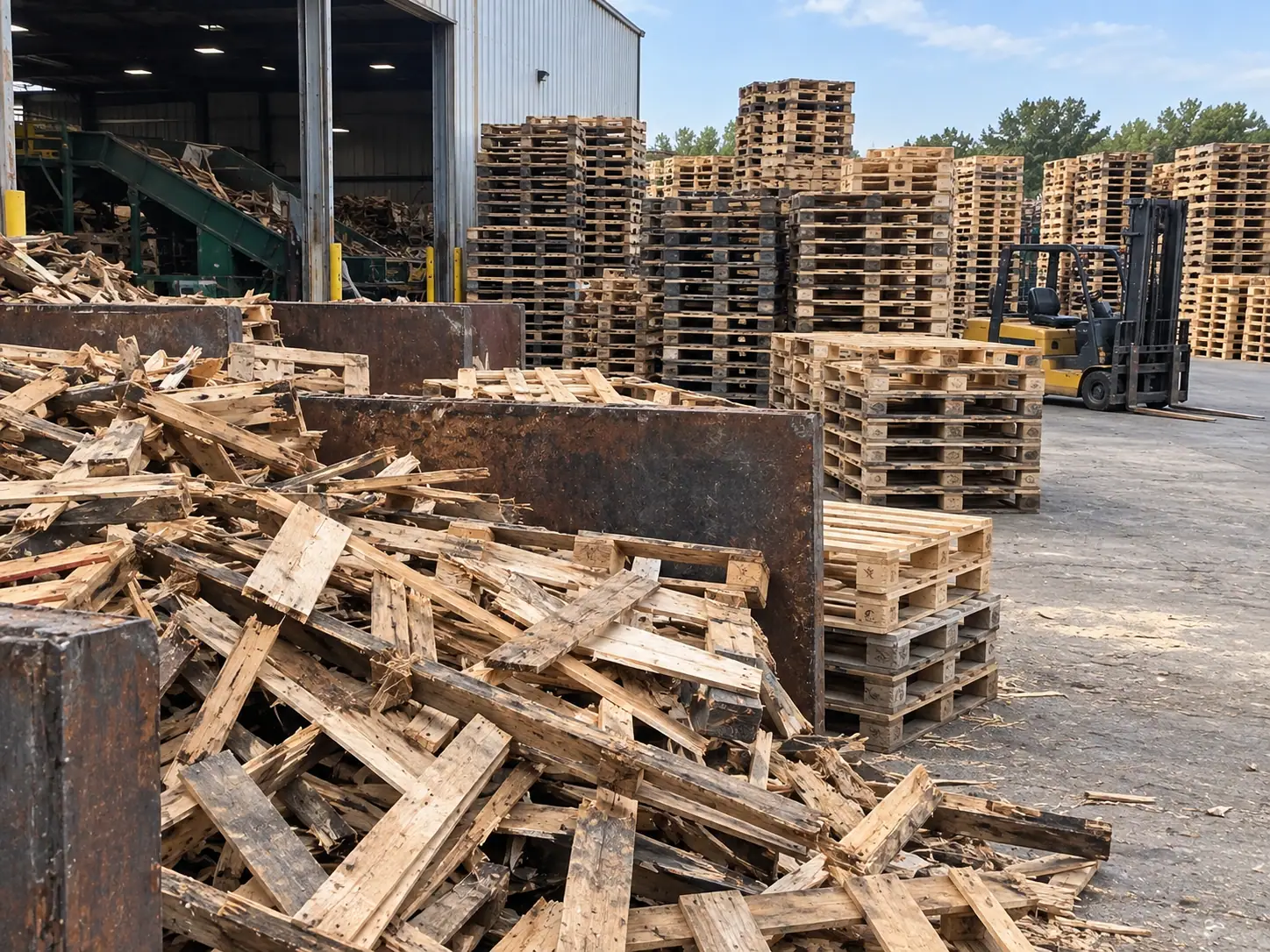
Everything the sort deck rejected, on its way to the grinder. It leaves as mulch, bedding and boiler fibre — not as landfill.
Total cost calculator
What pallets actually cost you.
Unit price is where everyone looks and it is rarely where the money is. Set your own numbers; every assumption is listed below the table.
Annual total, unmanaged
$608,516
$15 per pallet, all in
Managed
$400,239
−34% · $208,278 a year
| Line | Unmanaged | Managed | Change |
|---|---|---|---|
| Pallet purchases | $388,240 | $341,504 | −$46,736 |
| Emergency premium | $20,240 | $0 | −$20,240 |
| Repair programme | $0 | $7,920 | +$7,920 |
| Removal of damaged units | $2,036 | $815 | −$1,222 |
| Core sales credit | $0 | $-49,000 | −$49,000 |
| Handling (forklift time) | $198,000 | $99,000 | −$99,000 |
| Total | $608,516 | $400,239 | −$208,278 |
Notice that the unit price is identical in both columns. Every dollar of the difference comes from eliminating emergency buying, repairing instead of replacing, capturing core value and touching the pallets one fewer time.
Assumptions used in the managed column
- Emergency purchases fall to zero because a buffer covers the gap.
- 60% of damaged units are repaired at $2.75 rather than replaced — 2,880 units at your damage rate.
- 35% of the annual population is sold back as whole cores at the core value you set.
- Removal is $140 per trailer of 330 units for material with no resale value.
- Handling is 2.2 minutes per touch at a loaded forklift cost of $45 an hour, with one and a half touches removed by a fixed collection slot.
- No change to the unit price, because that is not where the money is.
A supplier promising thirty per cent off your unit price is either cutting the grade or pricing to win a first year. Pallet margins are thin and there is not thirty per cent in them.
The costs that do have room in them are operational, which is inconvenient — they are yours to fix rather than your supplier’s — and also good news, because they do not require anyone else’s agreement.
Start with the emergency line. It needs no capital, no process change and no new vendor: just a buffer and an agreement about who watches the count.
Do this before anything else
Then measure your loss rate