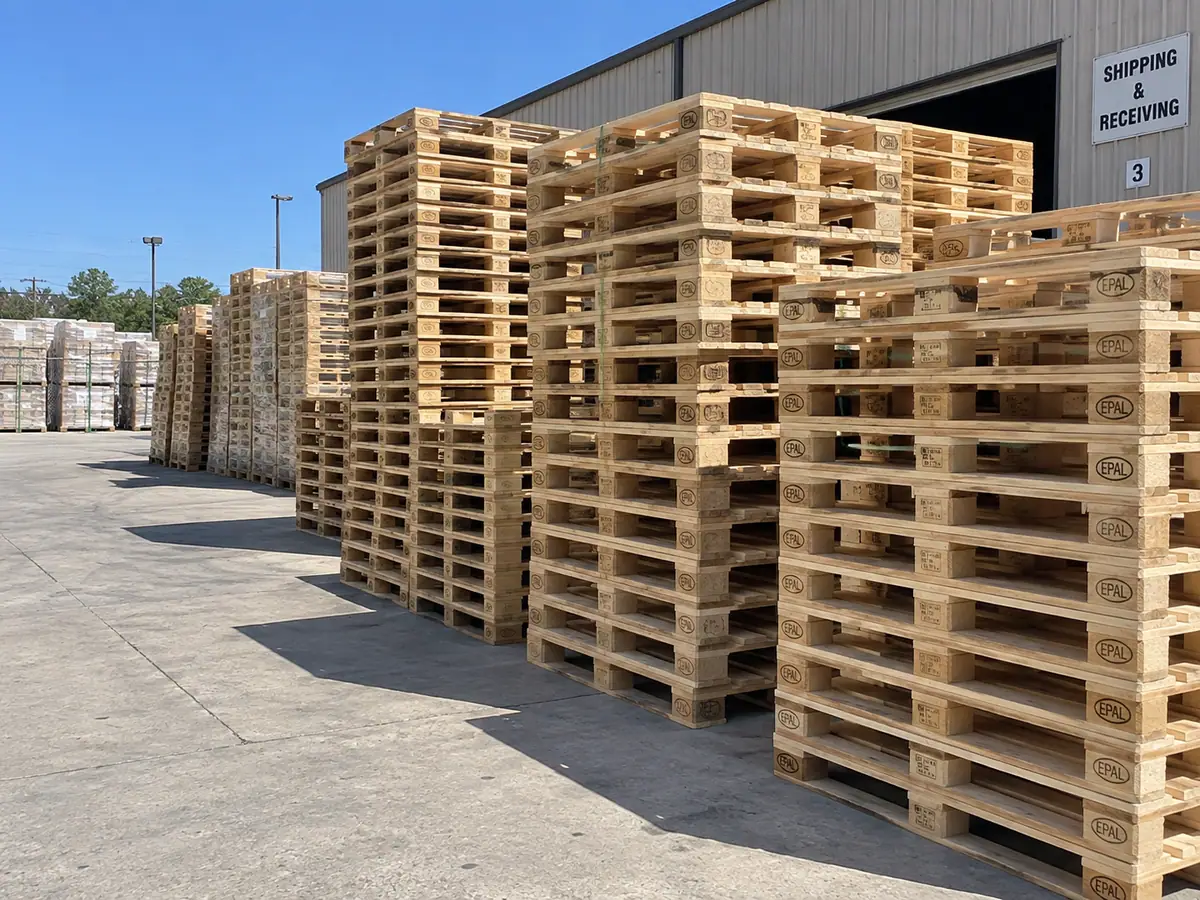
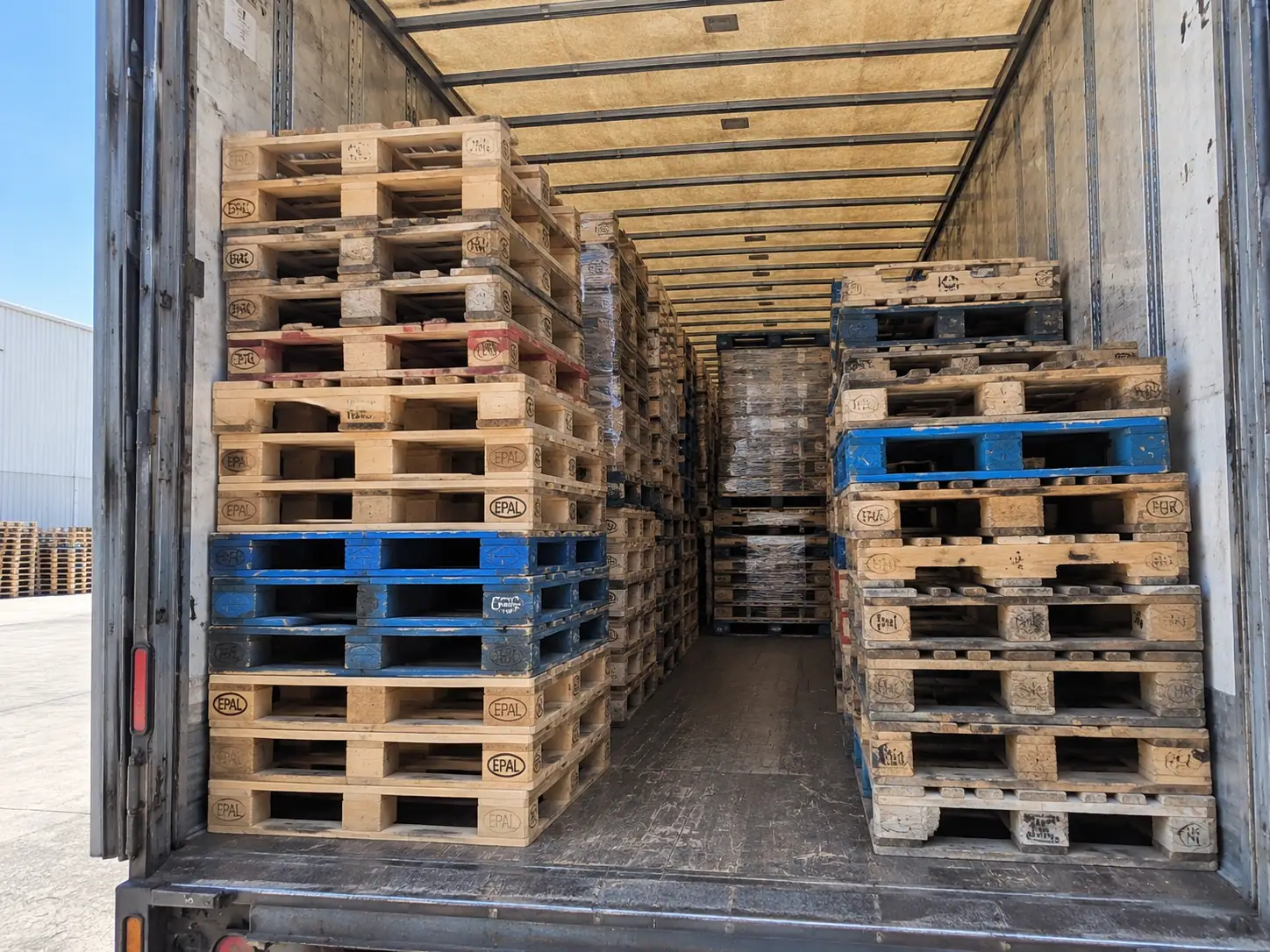
It is 2:40 on a Friday. There are four loads to ship, and the pallet count is short by two hundred. Somebody starts phoning.
What happens next costs somewhere between forty and eighty per cent more per unit than the same pallets would have cost on a Tuesday, and it happens at most sites we deal with somewhere between six and twenty times a year.
Why the price is so bad
You are buying from a position of no alternatives, on the shortest possible notice, in a quantity nobody planned for, requiring a dedicated truck rather than a scheduled run.
Each of those four things costs money independently. Together they are why a $9.20 pallet becomes a $14.50 pallet, and why the freight on two hundred units can approach the cost of the units themselves.
You will also take whatever grade is available rather than the grade you specify, which has downstream consequences that show up as product damage two months later, attributed to something else entirely.
Why nobody notices
Because it never appears as a line called 'emergency purchases'. It appears as a slightly larger invoice from a supplier you do not normally use, in a month with several other slightly larger invoices.
We have run this exercise with a dozen customers: pull twelve months of pallet invoices, sort by unit price, and look at the top decile. It is almost always the same story, and the total almost always surprises the person who authorised every one of them individually.
One distributor we worked with in 2023 was spending $58,000 a year on four thousand emergency units — about 11% of their pallets and 17% of their pallet spend.
| Planned purchase | Emergency purchase | |
|---|---|---|
| Unit price, 48×40 Grade A | $9.20 | $13.50 – $16.00 |
| Freight | On a scheduled run | Dedicated truck |
| Grade received | As specified | Whatever is available |
| Lead time | Days | Hours |
| Who authorises it | Purchasing | Whoever is on the dock |
The fix, which is boring
Hold a buffer. Two to four weeks of usage, either in your own covered storage or held by your supplier against call-offs.
The cost is the carrying cost of that stock — the working capital and the space. The saving is the entire spread between contract and spot pricing, on every unit you would otherwise have bought in a hurry.
For most operations that trade is heavily positive, and it also removes a recurring source of Friday-afternoon stress, which is worth something that does not appear in any spreadsheet.
- Work out your genuine weekly usage, including the bad weeks
- Set the buffer at two to four weeks of that number
- Decide where it lives — your building or your supplier's yard
- Agree a call-off mechanism so it replenishes automatically
- Track emergency purchases as a distinct line so you can see it go to zero
If you cannot hold stock
Plenty of operations genuinely have no space, and buffering in your supplier's yard is the answer. We hold agreed volumes for programme customers and release against call-offs; the stock is identified as theirs in our yard records and priced at the rate agreed for the term.
The other partial fix is simply a longer ordering horizon. A great deal of emergency buying is not caused by demand surprises — it is caused by nobody looking at the pallet count until it is critical. A Wednesday check against a threshold removes most of it for free.