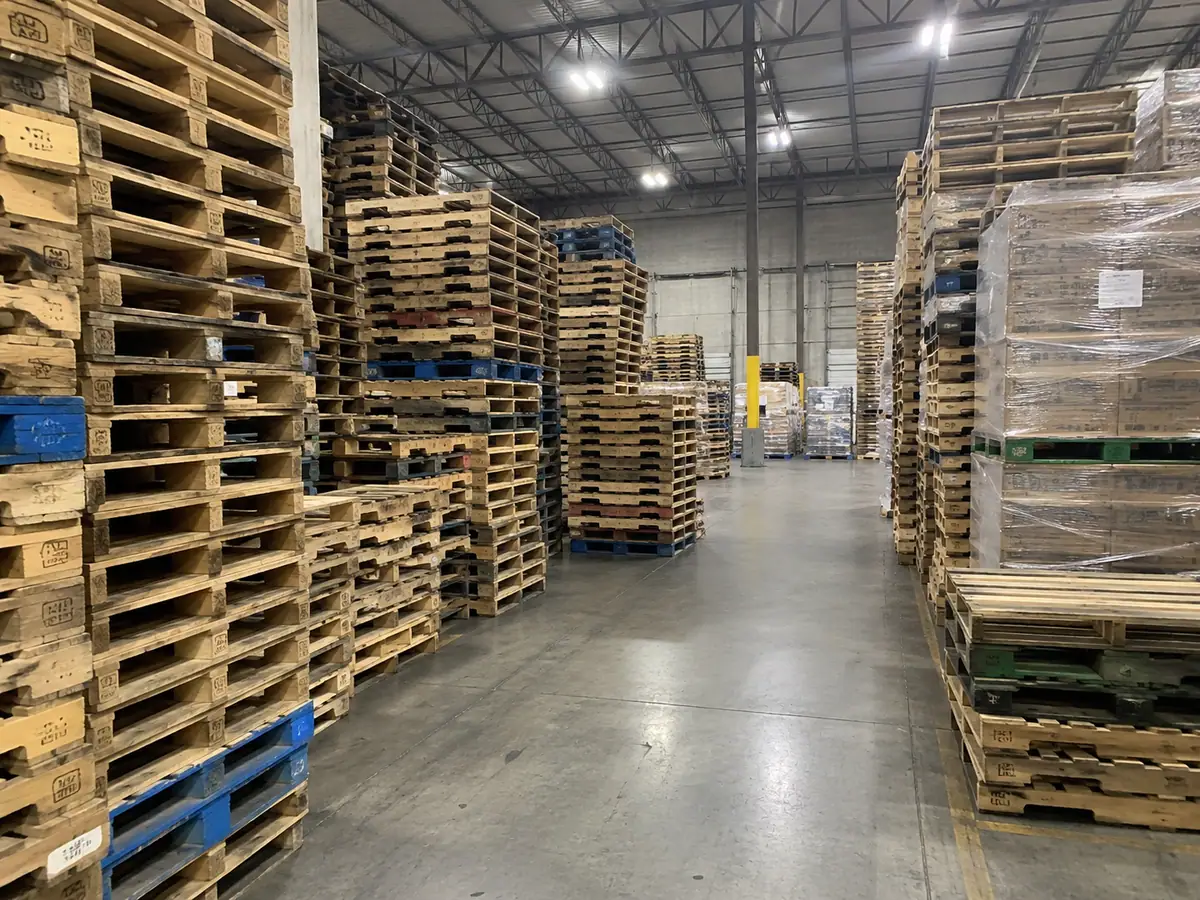
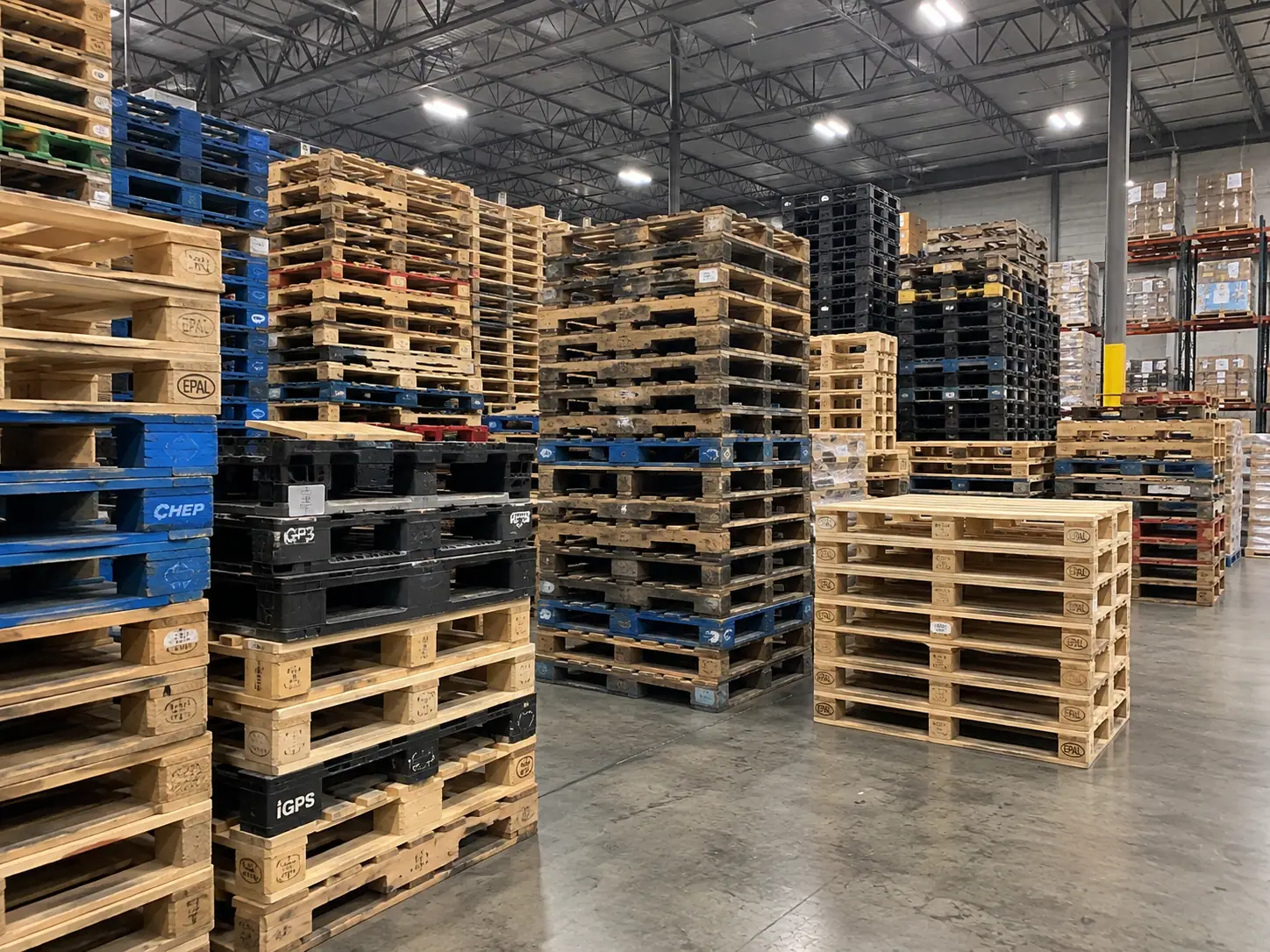
There is no legal definition of a Grade A pallet and no certifying authority. Two suppliers can quote the same description, twenty per cent apart, and both be describing accurately what they intend to ship.
These are the eight questions that resolve it. They take about four minutes on the phone or in an email, and they are the highest-return four minutes available in pallet procurement.
The eight
- Does your Grade A permit a repaired stringer? The single most informative question in the trade. There is no wrong answer — plenty of well-run yards permit it — but it typically explains the largest single price gap between two quotes.
- Are replacement deck boards full length? A full-member replacement and a short board butted across a break are different products that behave differently under a concentrated load.
- Is this price delivered or FOB your yard? Freight is 20 to 35% of delivered cost. Comparing a delivered price against an FOB price compares nothing at all.
- What is your moisture threshold at dispatch, and do you meter? Under 19% is the expected answer. No answer means nobody is checking, and wet stock will cost you a load.
- What is your squareness tolerance? A quarter inch is tight, half an inch is normal, no answer means nobody is measuring. Out-of-square units are what jam racking.
- How is the load presented? Stack height, banding, count sheet. It sounds trivial until you receive a loose load and pay an extra $0.35 a unit in handling to sort it out.
- What happens if a load does not match? Listen to how fast the answer comes. A supplier grading to a standard replaces without argument; one who wants photographs, forms and a site visit is telling you something.
- How much of your capacity is this order? Not rude, and revealing. A yard at the edge of its capacity will deliver late and the late delivery will be a surprise.
Why the grade question dominates
Because it is where the largest legitimate difference in definition sits, and because it is invisible on arrival to anyone not inspecting closely.
A companion-repaired stringer is a perfectly good pallet for floor stacking, one-way shipping and internal movement. It is a different proposition in a rack, where the stringers act as beams and the repair sits exactly where bending stress is highest.
So the question is not 'is their Grade A worse'. It is 'are we comparing the same product', and the answer determines whether a cheaper quote is a saving or a substitution.
| Question | What a good answer sounds like | What a bad answer sounds like |
|---|---|---|
| Stringer repairs in Grade A? | No / yes, with a full-length companion | It depends / what do you mean |
| Full-length replacement boards? | Always | Whatever the repair needs |
| Delivered or FOB? | Delivered, freight included | Ex-works, plus freight, TBC |
| Moisture threshold? | Under 19%, metered at three points | They are dry |
| Squareness tolerance? | Quarter inch, jig-checked | Silence |
| Claims policy? | Five days, photos, we replace | Case by case |
The one that catches people out
Presentation. It is the least glamorous item on the list and it produces real cost.
A load delivered in banded stacks of fifteen with a count sheet unloads in twenty-five minutes. The same units loose in a trailer take an hour, need sorting, and someone has to count them. We reckon that difference at around $0.35 a unit in handling, which on a 330-unit load is more than most people negotiate off the unit price.
Ask. And if you are selling, band your stacks — it is the cheapest thing you can do to increase what a load is worth.