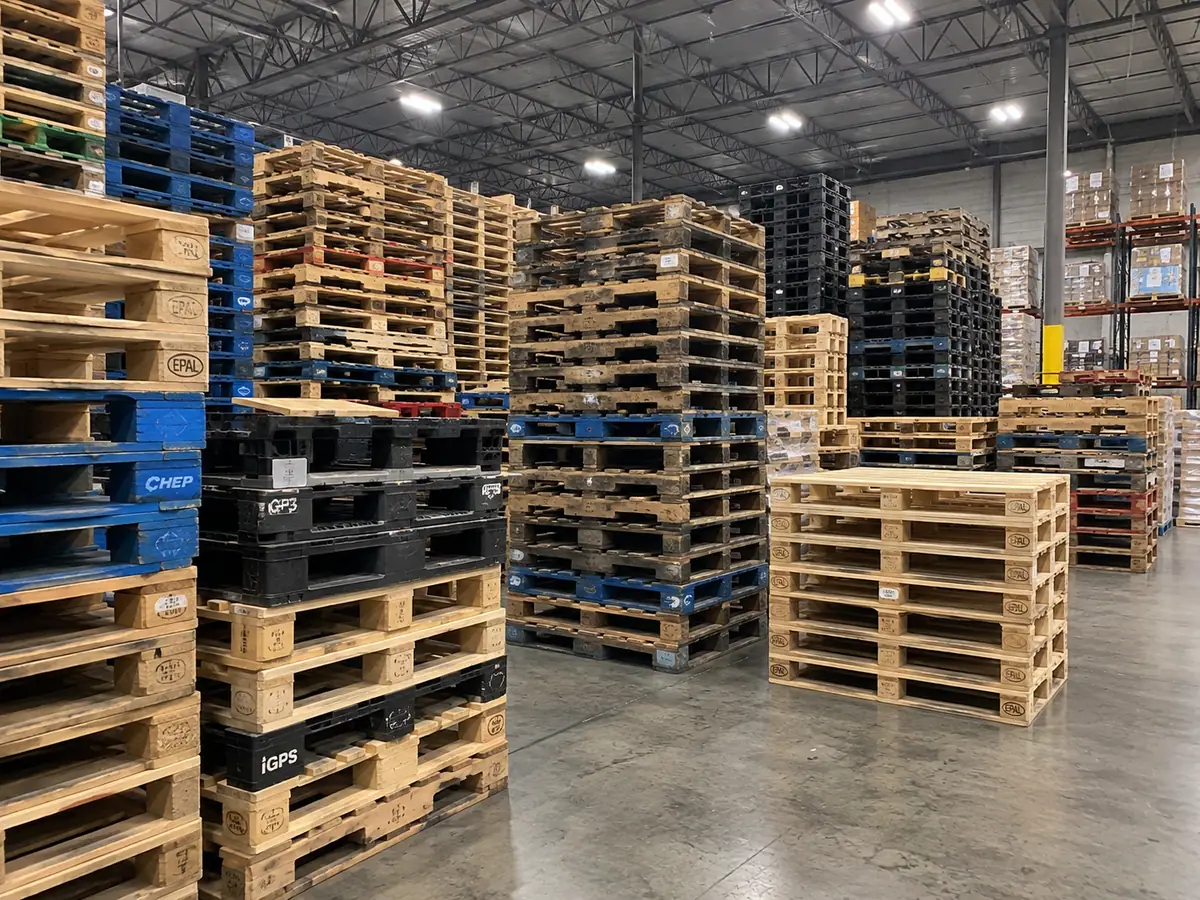
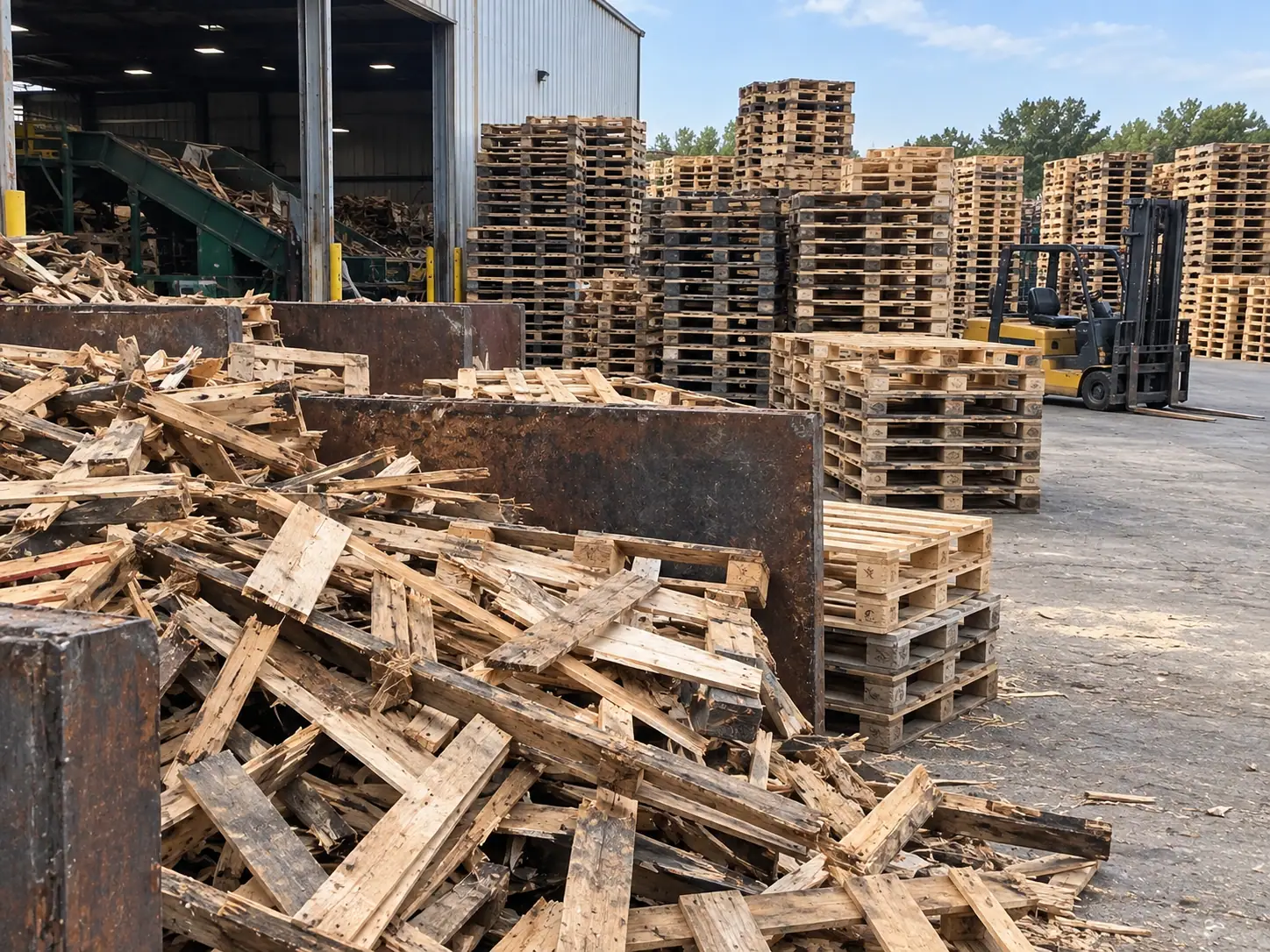
We are not safety consultants and this is not a safety programme. But we get asked to look at pallets after racking incidents perhaps three or four times a year, and there are patterns worth writing down.
The consistent finding is that the pallet is almost never the sole cause and is almost always a contributing one.
Pattern one: loaded the wrong way round
A stringer pallet is strong along the stringers and weak across them. Racked with the stringers spanning the beams, it works as designed. Racked the other way, with deck boards spanning, capacity collapses — the deck boards are 5/8-inch material doing a job intended for 3½-inch stringers.
This happens more than it should, usually in operations that run more than one footprint, or where a forklift driver has approached from the convenient side rather than the correct one.
It is free to check and free to fix. Walk a rack aisle and look at which way the stringers run. If some loads differ from others, you have found something.
Pattern two: a repaired stringer at mid-span
In a rack, the stringers act as beams. Bending stress is highest in the bottom fibre at mid-span, and that is exactly where a crack or a repair is a discontinuity.
A properly executed companion stringer restores most of the capacity and is a legitimate repair — but 'properly executed' means full length, glued and nailed. A short piece across the break looks similar from three feet and behaves like a hinge.
This is why our Grade A excludes stringer repairs entirely. It is stricter than much of the trade, it costs us margin, and this failure pattern is the whole reason.
Pattern three: a concentrated load on a rating that assumed distribution
Published racked capacities assume a uniformly distributed load. Four drums, a machine base, or a partial load pushed to one end of the pallet is not that.
We have looked at pallets under drum loads rated for 2,100 lb racked that were carrying 2,400 lb concentrated on four chime rings. The pallet was within its nominal rating and well outside its actual capability.
Derate for concentrated loads. There is no neat factor, but halving the published figure for a four-drum load is a defensible starting point and it is what we would use.
| Contributor | How often we see it | Cost to prevent |
|---|---|---|
| Loaded across the wrong axis | Most common | Free — a walk and a briefing |
| Repaired stringer in a rack | Common | Grade specification |
| Concentrated load on a distributed rating | Common in industrial | Derating, or heavier stock |
| Moisture above 19% | Occasional, seasonal | Storage discipline |
| Out-of-square unit fouling the beam | Occasional | Grade specification |
The intervention that works best
Wire decking. It supports the whole pallet rather than just the ends, which moves the load case back toward the static condition and dramatically increases what marginal stock will carry.
For anyone racking recycled pallets at volume it is among the better investments available — cheaper than upgrading an entire fleet to a higher grade, and it addresses several of the patterns above simultaneously rather than one.
It does not fix the wrong-axis problem, because that is a handling issue rather than a support issue. Nothing except a briefing fixes that one.