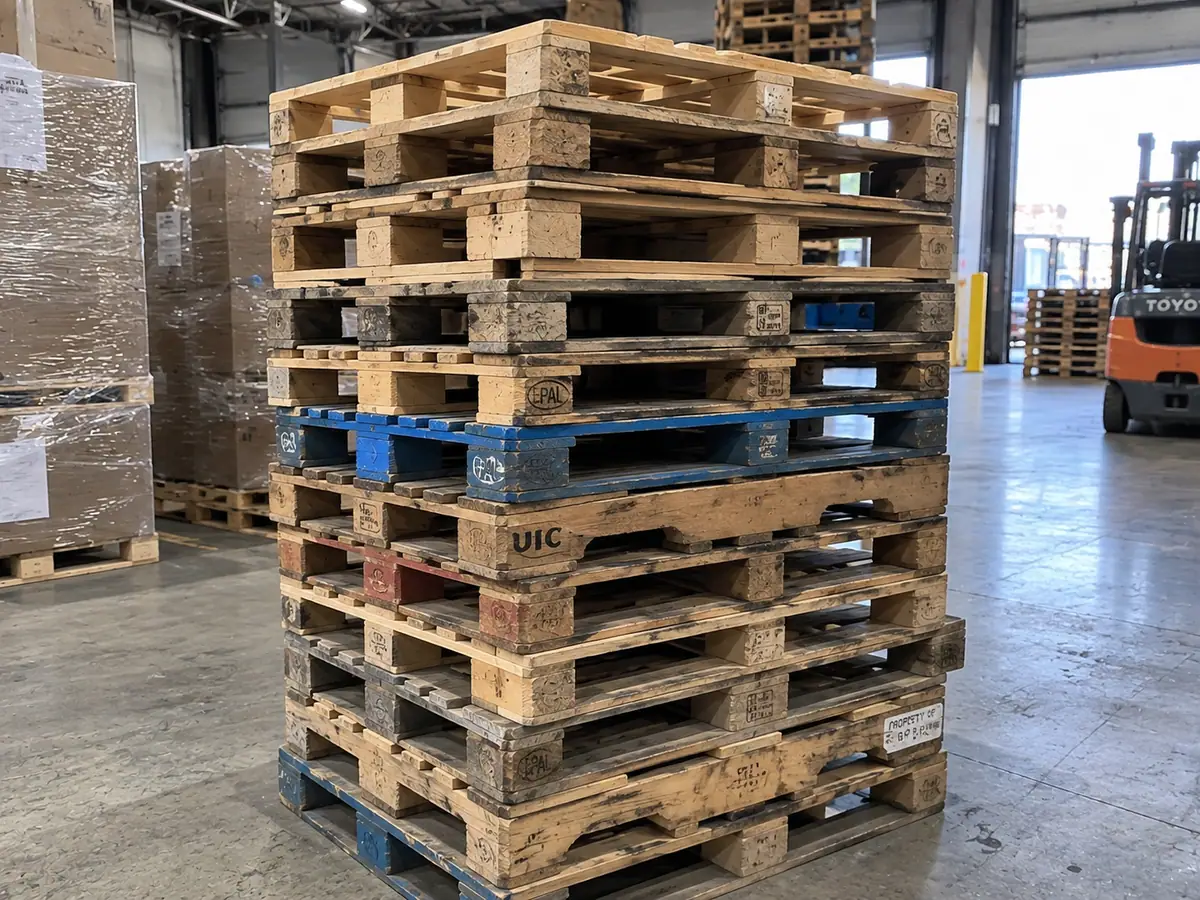
A loaded forklift — machine, fuel or power, maintenance, and the person driving it — runs somewhere around $45 an hour at most sites. That is 75 cents a minute.
An empty pallet gets touched two to four times between coming off a load and leaving the building. At two and a bit minutes a touch, that is $3.30 to $6.60 of handling on a pallet you paid $9 for.
Counting the touches
Follow one empty pallet through your building and count every time a forklift picks it up. In most sites the sequence looks something like this:
It comes off a delivery and goes to wherever there is room. Later somebody moves it because that space is needed. Later still it moves again to be near the door for collection. Then it is loaded.
That is four touches, and three of them exist only because there was no designated place for it in the first place.
- Touch one: off the incoming load. Unavoidable.
- Touch two: moved because it is in the way. Avoidable.
- Touch three: moved again to consolidate for collection. Avoidable.
- Touch four: loaded out. Unavoidable.
What that costs
| Touches per pallet | Minutes | Cost at $45/hr | On 40,000 pallets/yr |
|---|---|---|---|
| 2 (best case) | 4.4 | $3.30 | $132,000 |
| 3 (typical) | 6.6 | $4.95 | $198,000 |
| 4 (common) | 8.8 | $6.60 | $264,000 |
| 5+ (bad) | 11.0 | $8.25 | $330,000 |
The four changes that remove most of it
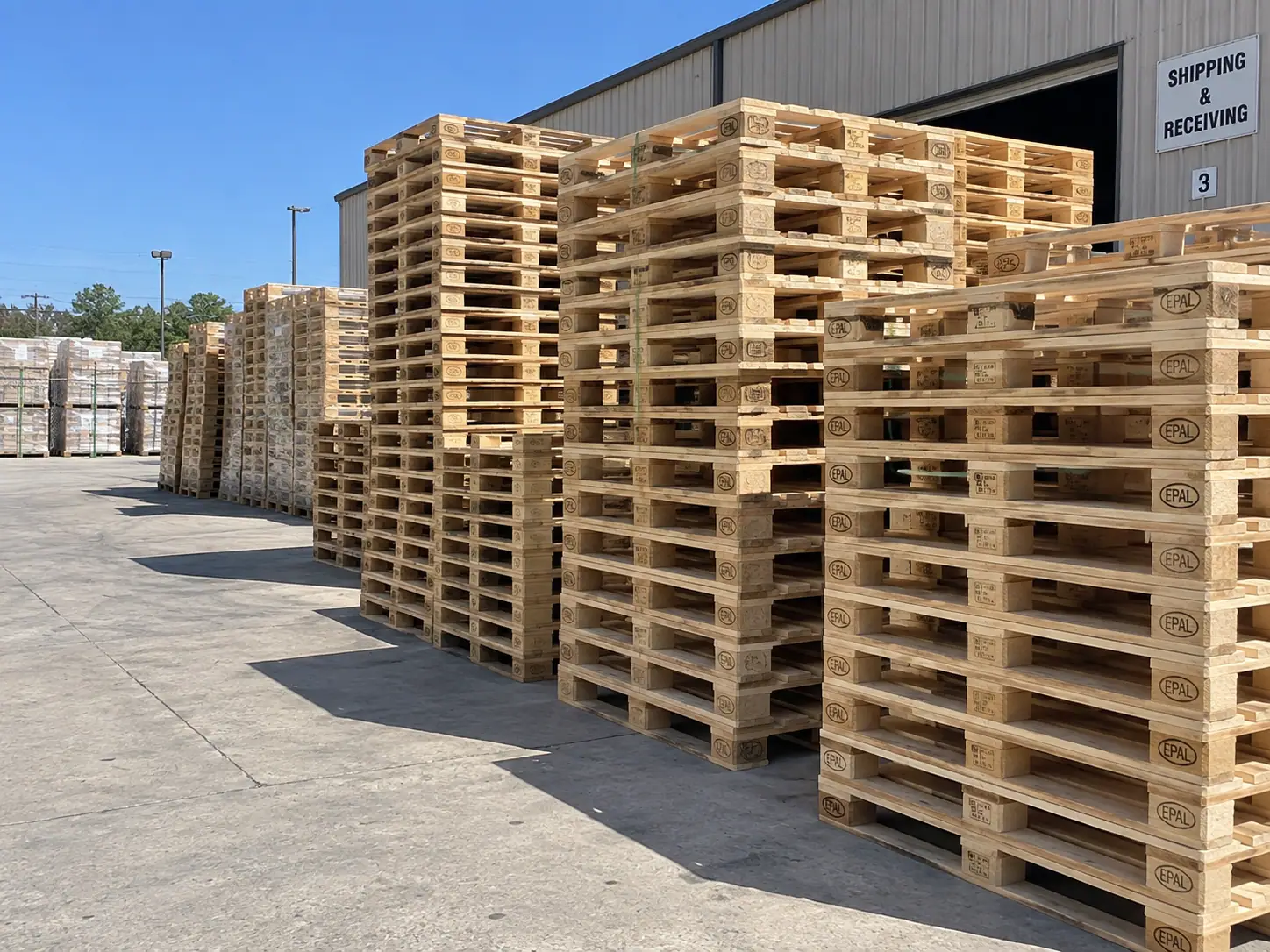
- A designated staging area. Marked, in a place that does not need to be cleared. Half of the avoidable touches exist because the pallets are somewhere they should not be.
- A fixed collection slot. A pile that never grows beyond two days does not need consolidating. This is the single biggest lever and it costs nothing.
- A drop trailer. For anyone generating more than a trailer a fortnight, the accumulation happens inside a trailer instead of on your floor, and touches two and three disappear entirely.
- Stack discipline. Fifteen high, banded, square. A tidy stack moves in one lift; a sprawl moves in three.
Why nobody manages this
Because it does not appear anywhere. There is no invoice for forklift minutes, no line in the pallet budget, and no report that shows it. It is absorbed into general warehouse labour and becomes invisible.
Which means the conversation about pallet cost stays fixed on the unit price — the one number that does appear on an invoice — while a larger number sits unexamined next to it.
Spend an afternoon following one pallet. It is the cheapest piece of analysis available in this whole business and it usually produces a change that pays for itself within a quarter.