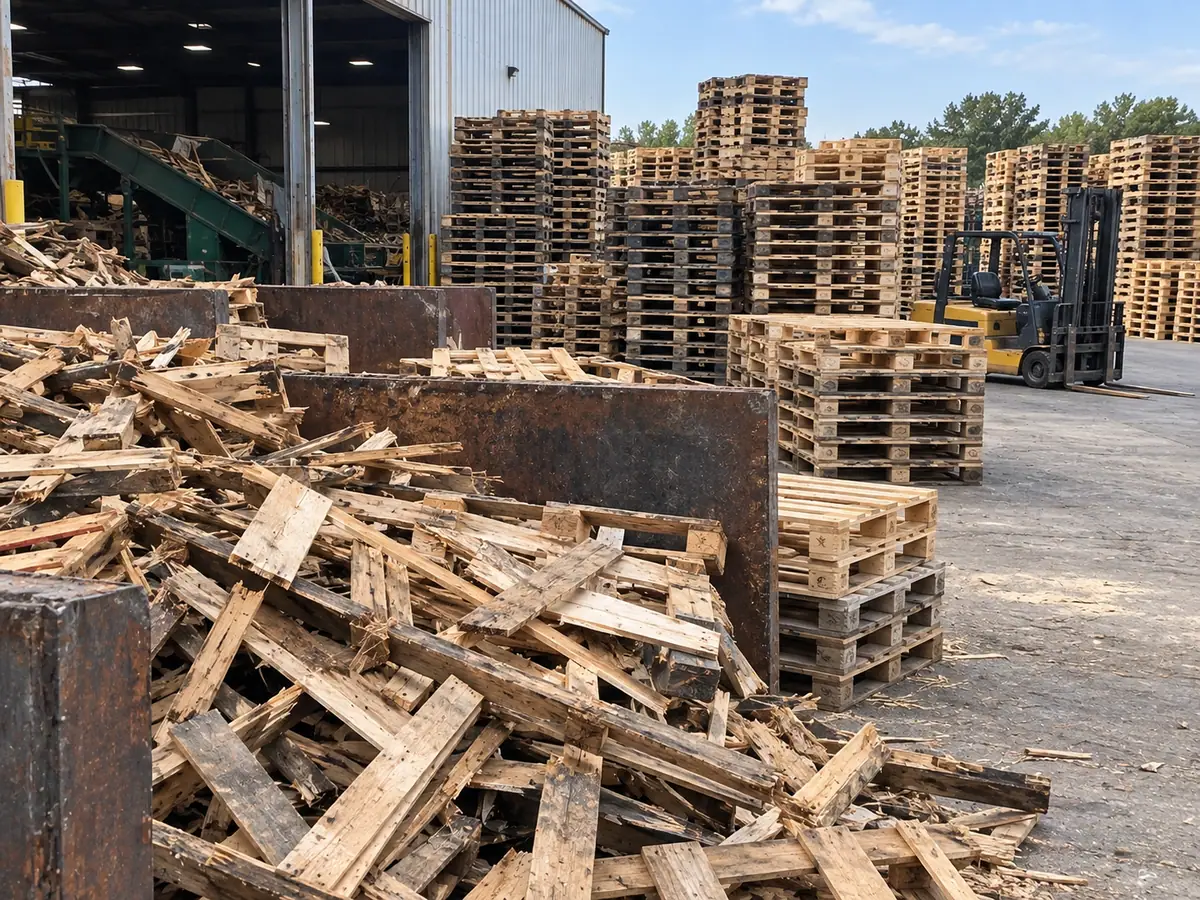
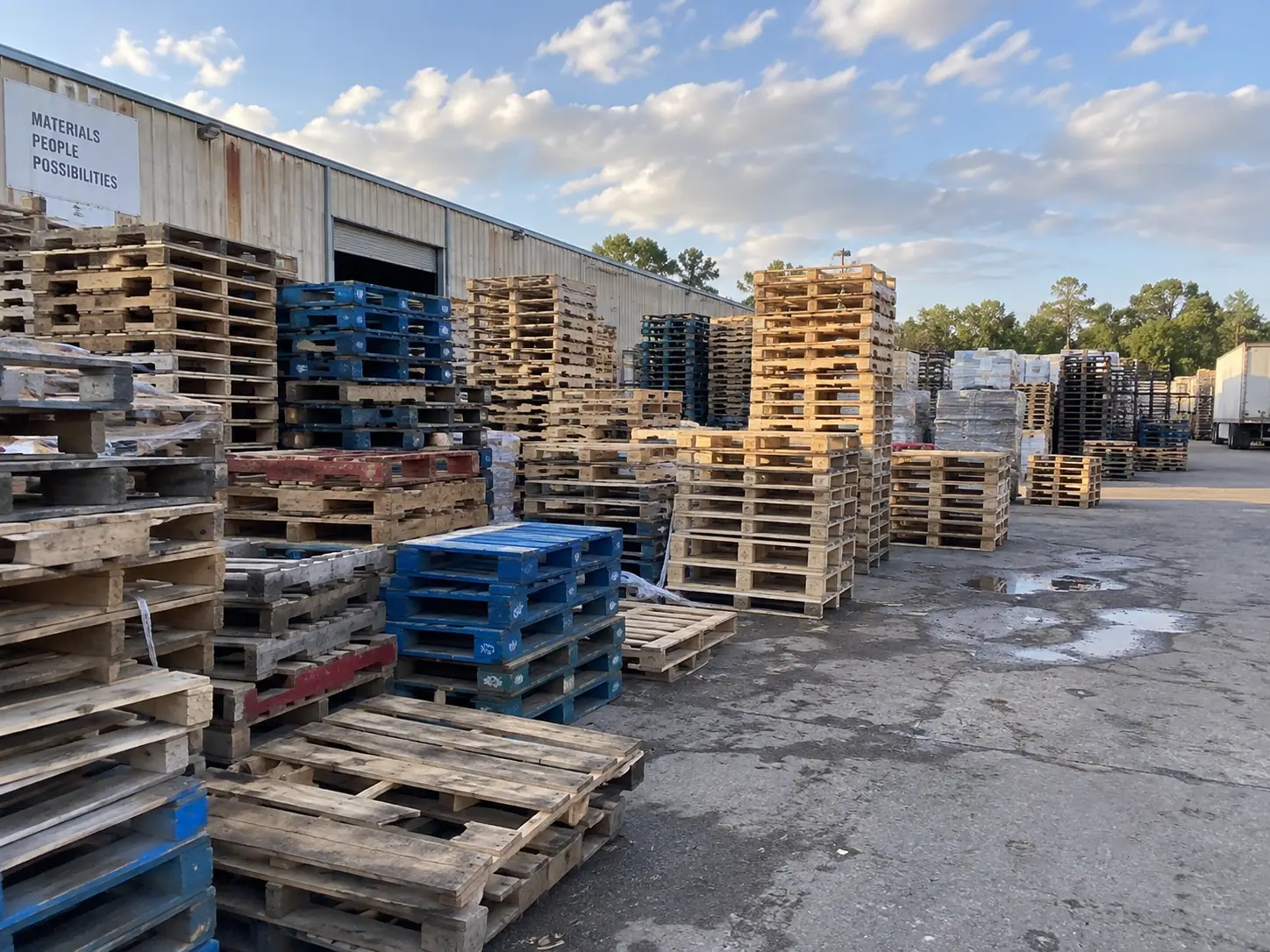
A third-party warehouse handles pallets it does not own, for customers who each have different requirements, under contracts that end.
That is a genuinely harder problem than either a manufacturer's or a distributor's, and the standard pallet conversation does not address it at all.
The three populations
Almost every 3PL site has three distinct pallet populations sitting in the same building, and the trouble starts when they are treated as one.
Customer-owned fleets. Returnable pallets belonging to a specific client, frequently on a non-standard footprint, sometimes marked and sometimes not.
Pooled units. Belonging to a pool operator, in transit through your site, and never yours to sell or scrap.
Your own consumable stock. Bought by you for outbound shipping where no client fleet applies.
Physical separation and clear marking of all three is the single highest-value housekeeping measure available in a 3PL warehouse, and it is rarely done.
The contract questions
- Who owns the pallets under this client's inventory? Get it in writing at contract start, not at contract end.
- Who pays for damage? Pallet damage in a 3PL is nearly always attributed after the fact and rarely defined before it.
- What happens to the fleet when the contract ends? Returned, sold, or left with you. All three happen; only one of them should be a surprise.
- What grade does this client require? Their receiving standards apply to loads leaving your building under their name.
- Who supplies? You buying and rebilling, or the client supplying, changes both the cash flow and the accountability.
Orphaned fleets
When a contract moves, the pallet fleet frequently does not. What is left is a population of a footprint nobody else in the building uses, in a quantity too large to ignore and too specific to redeploy.
The reflex is to scrap it. That is usually wrong. Remanufacturing converts an orphan footprint into a standard one — cut down, rebuilt with recovered boards, re-decked — typically at $3.50 to $6.00 a unit against $9.50 for replacement stock.
A meaningful share of our Indianapolis and Columbus core volume arrives exactly this way, and the operations that call us before scrapping do considerably better than the ones that call afterwards.
| Situation | Reflex | Usually better | Difference per unit |
|---|---|---|---|
| Orphaned non-standard fleet | Scrap it | Remanufacture to 48×40 | ≈ $3.50 – $6.00 saved |
| Damaged client fleet | Replace | Repair with recovered lumber | ≈ $6.75 saved |
| Mixed accumulated empties | Removal fee | Sort and sell whole cores | $4 – $6 gained per core |
| Pooled units in the pile | Sell with the rest | Segregate and return | Avoids a legal problem |
What a good supplier offers a 3PL specifically
- Multi-footprint capability, because you will never run just one.
- Remanufacturing, because orphaned fleets are a recurring event rather than an exception.
- Segregation discipline, so pooled units come back to you counted rather than disappearing.
- Flexible volume, because your demand moves with contracts rather than with seasons.
- Documentation per client, because your customers increasingly want the diversion figures for their own reporting rather than yours.