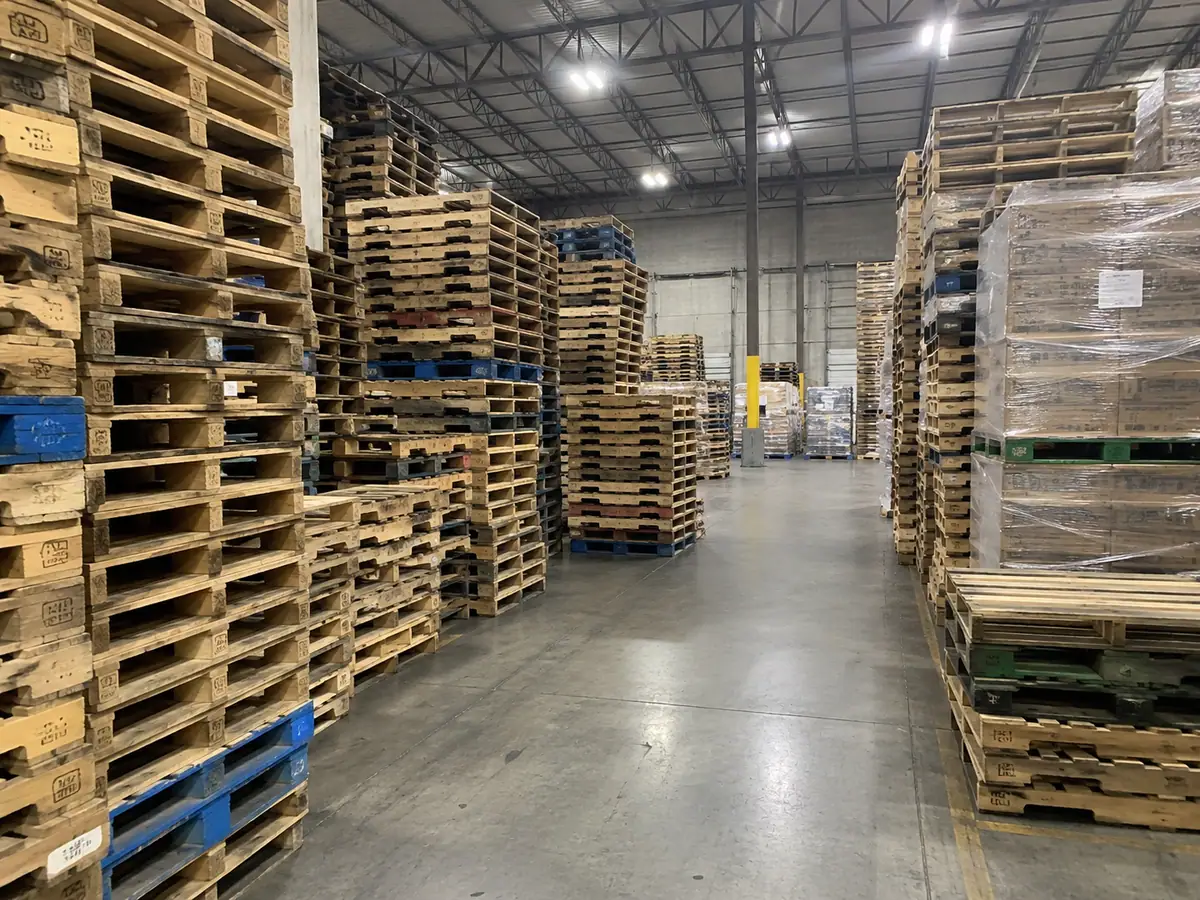
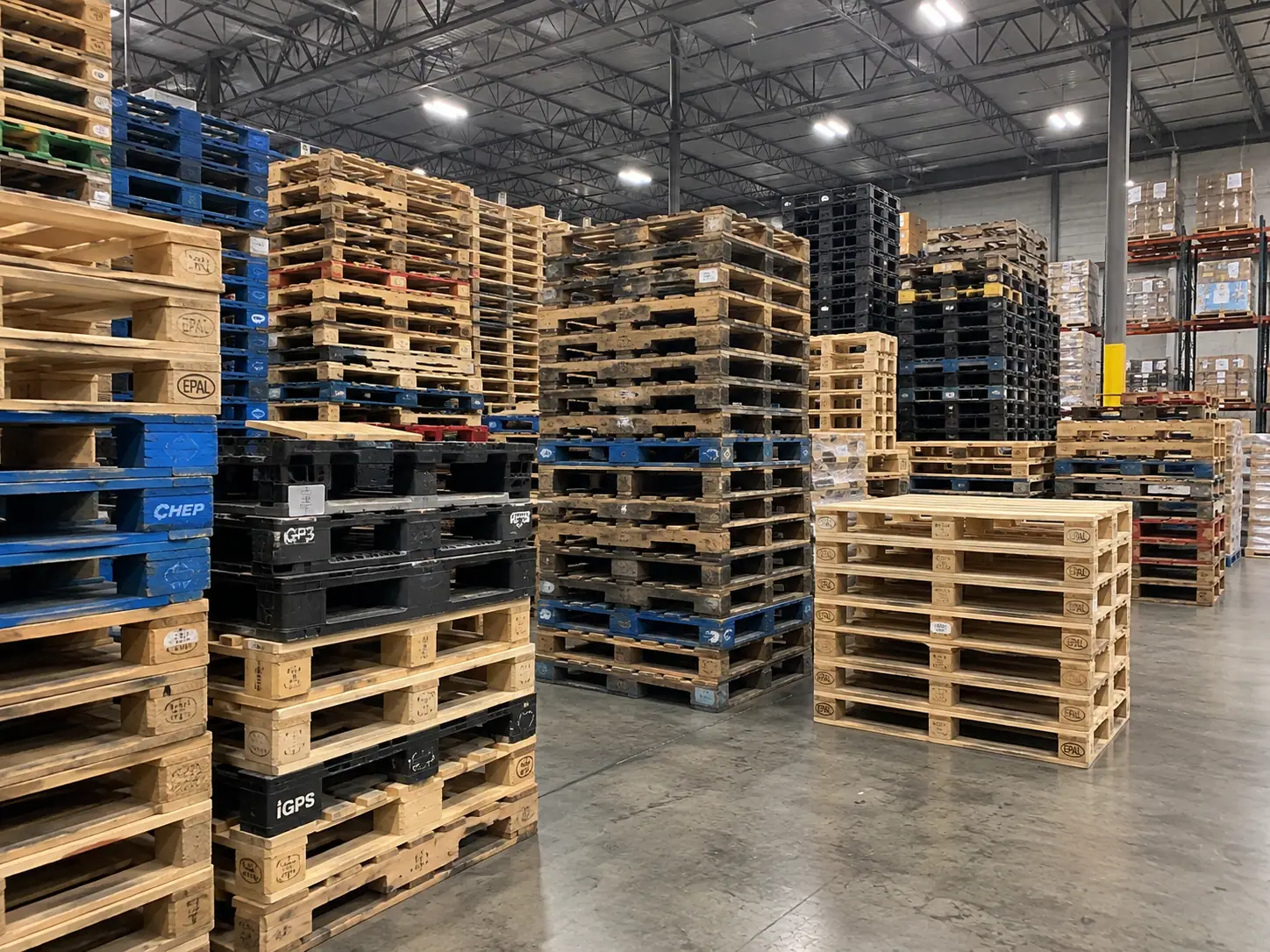
The environmental case for recycled pallets is usually presented as being about avoided manufacturing, and it mostly is. But there is a second variable that gets almost no attention and can quietly undo a large share of the benefit.
It is how far the pallet travelled to be recycled.
The arithmetic
A recycled 48×40 leaving our yard carries roughly 1.2 kg CO₂e of collection, sorting and repair emissions. Of that, collection freight is the largest single component.
A 330-unit trailer covering 78 miles each way burns roughly 26 gallons of diesel, which is about 265 kg CO₂e, or 0.8 kg per pallet across the round trip. Stretch that to a 400-mile collection and the same trailer produces about 4.1 kg per pallet.
Against an avoided manufacturing figure of roughly 16.6 kg, a 400-mile haul has consumed a quarter of the benefit before the pallet has done anything useful. It is still a large net win — but a materially smaller one than the headline suggests.
| Collection distance | kg CO₂e per pallet | Share of the 16.6 kg benefit |
|---|---|---|
| 40 miles | ≈ 0.4 | 2.4% |
| 78 miles (our median) | ≈ 0.8 | 4.8% |
| 190 miles (our 90th percentile) | ≈ 2.0 | 12% |
| 400 miles | ≈ 4.1 | 25% |
| 600 miles | ≈ 6.2 | 37% |
Which is why we are a regional business
It would be commercially possible to collect cores from a much wider radius. Plenty of operations do, and there is nothing improper about it.
But it would make our published carbon figures worse while making our marketing identical, and that combination is precisely the thing this website is trying not to do.
So we run fixed lanes across six states, we concentrate collection inside a day's drive of Columbus, and when someone 500 miles away asks us to collect, we usually refer them to a yard closer to them. That referral costs us revenue and it is the correct answer.
Where the cores actually come from
- Franklin County and the Rickenbacker cluster — roughly 41% of intake, most of it inside 25 miles.
- The I-70 and I-71 corridors out to Dayton, Cincinnati and Cleveland — about 34%.
- Longer regional lanes into Indiana, Kentucky, Michigan, Pennsylvania and West Virginia — about 22%.
- Everything else — about 3%, mostly one-off clean-outs we agreed to because a truck was already routed nearby.
The backhaul argument
The most effective single thing we do about collection carbon is not driving less; it is driving less empty.
A trailer delivering graded stock to a customer in Dayton and returning empty has produced the emissions of a round trip for one movement. The same trailer collecting a load of cores on the way back has halved the per-pallet figure for both movements.
That is why we push customers who both buy and generate pallets toward combined runs, and why our fixed-lane schedule exists at all. It is a scheduling problem rather than an engineering one, and scheduling problems are cheap to solve.