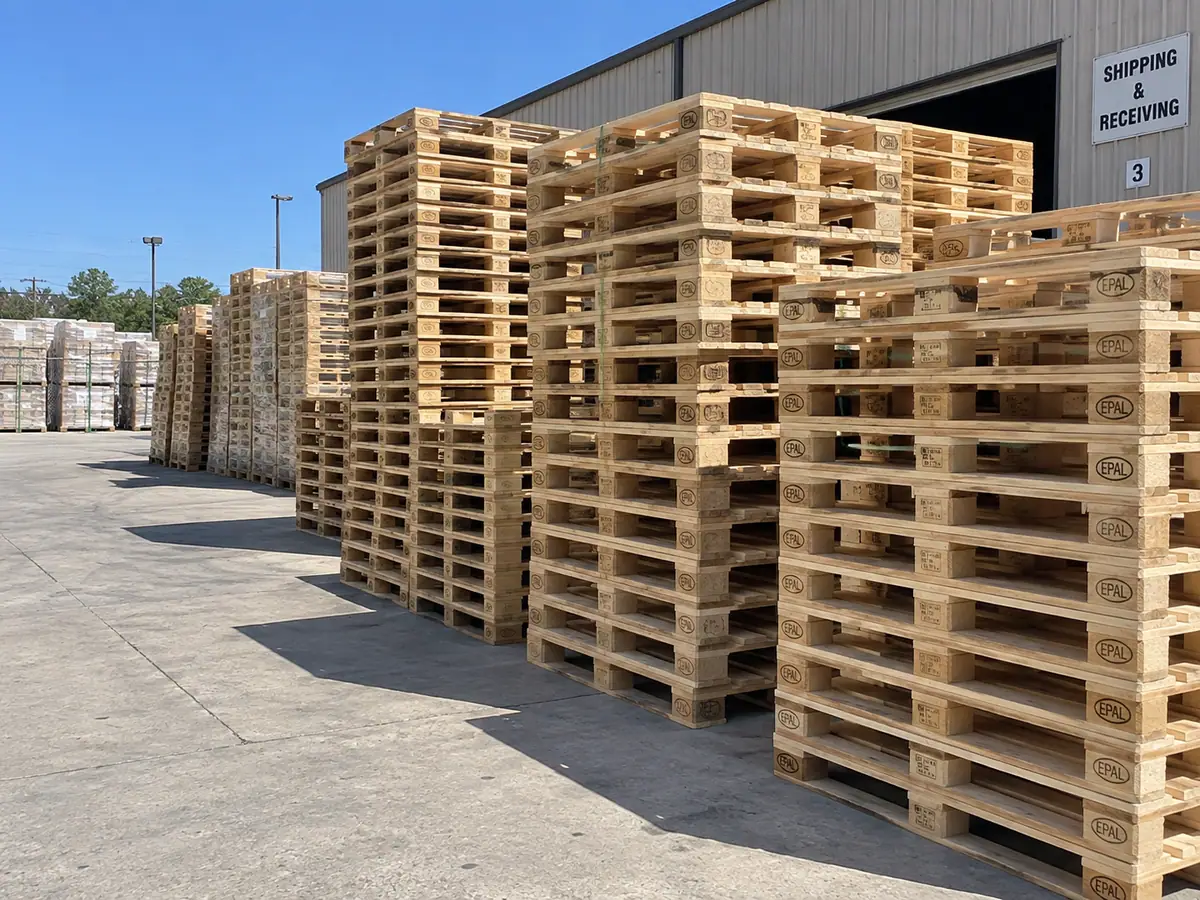
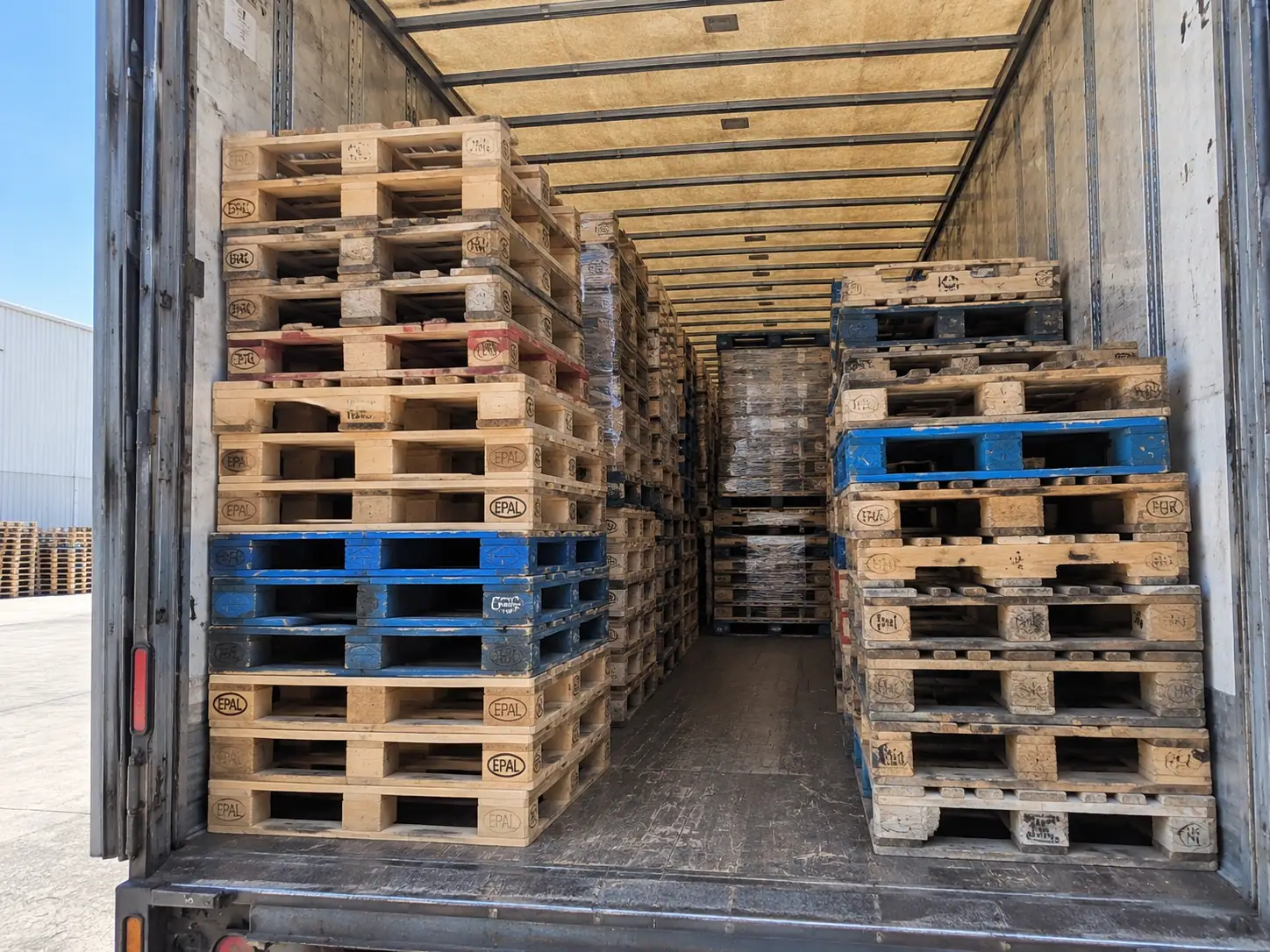
Wood is roughly fifty per cent carbon by dry mass. That figure is uncontroversial across forestry literature and it is the basis of every serious claim about timber and climate.
A 45-pound recycled hardwood pallet, at maybe 85% dry mass, is holding something in the region of 17 kg of dry wood — call it 8.5 kg of carbon, which corresponds to about 31 kg of carbon dioxide that is not in the atmosphere while the pallet exists.
The storage argument, and its limits
While the pallet exists, that carbon is not in the air. Extend the pallet's life and you extend the storage.
This is a real effect and it is routinely overstated. Storage in a pallet is temporary — the carbon is released whenever the wood eventually decomposes or burns — so it is a delay rather than a removal.
Which is why we do not count carbon storage in any figure we publish. Our numbers are about avoided manufacturing emissions, which are permanent, rather than about storage, which is a loan.
Where the real saving is
Not in the wood. In the energy that would have been spent making a new pallet.
Harvesting, hauling, sawing, drying and fastening a new 48×40 costs roughly 15 to 17 kg CO₂e depending on species, drying method and transport distance. Collecting, sorting and repairing a used one costs about 1.2 kg.
The difference — around 15.4 kg per unit — is permanent, uncontroversial and an order of magnitude larger than anything the storage argument contributes.
| Outcome | What happens to the stored carbon | Avoided emissions | Net position |
|---|---|---|---|
| Reuse as-is | Stays stored | ≈ 16.2 kg CO₂e | Best available |
| Repair with recovered lumber | Stays stored | ≈ 15.4 kg CO₂e | Nearly as good |
| Remanufacture | Stays stored | ≈ 14 kg CO₂e | Good |
| Grind to mulch | Released over a few years | Displaces virgin mulch | Modest benefit |
| Boiler fuel | Released immediately | Displaces fossil fuel | Depends on what it displaces |
| Landfill | Released slowly, some as methane | None | Worst |
Why we do not call mulch sequestration
Because it is not. Ground wood spread on a garden bed decomposes over a few years and releases its carbon. Some fraction becomes stable soil organic matter, but the majority does not.
The industry says this constantly and it is straightforwardly wrong. Mulch is a good outcome for other reasons — it displaces virgin material, it reduces irrigation, it keeps the wood out of a landfill — and calling it carbon storage undermines the claims that are actually defensible.
The same applies to boiler fibre. It displaces fossil fuel, which is genuinely useful, and it releases the stored carbon immediately. Both things are true and both belong in the accounting.
What this means for a buyer
The environmental case for recycled pallets does not depend on any contested accounting. It is that making a new pallet is energy-intensive and reusing an old one is not, and the gap is about tenfold.
You do not need to believe anything about biogenic carbon, storage duration or landfill methane to accept that. Which is precisely why it is the argument we lead with, and why our published figures exclude everything else.
Run your own volumes through the Reclaim Index. Every coefficient it uses is listed, sourced and dated, and where the research disagrees we use the conservative end.