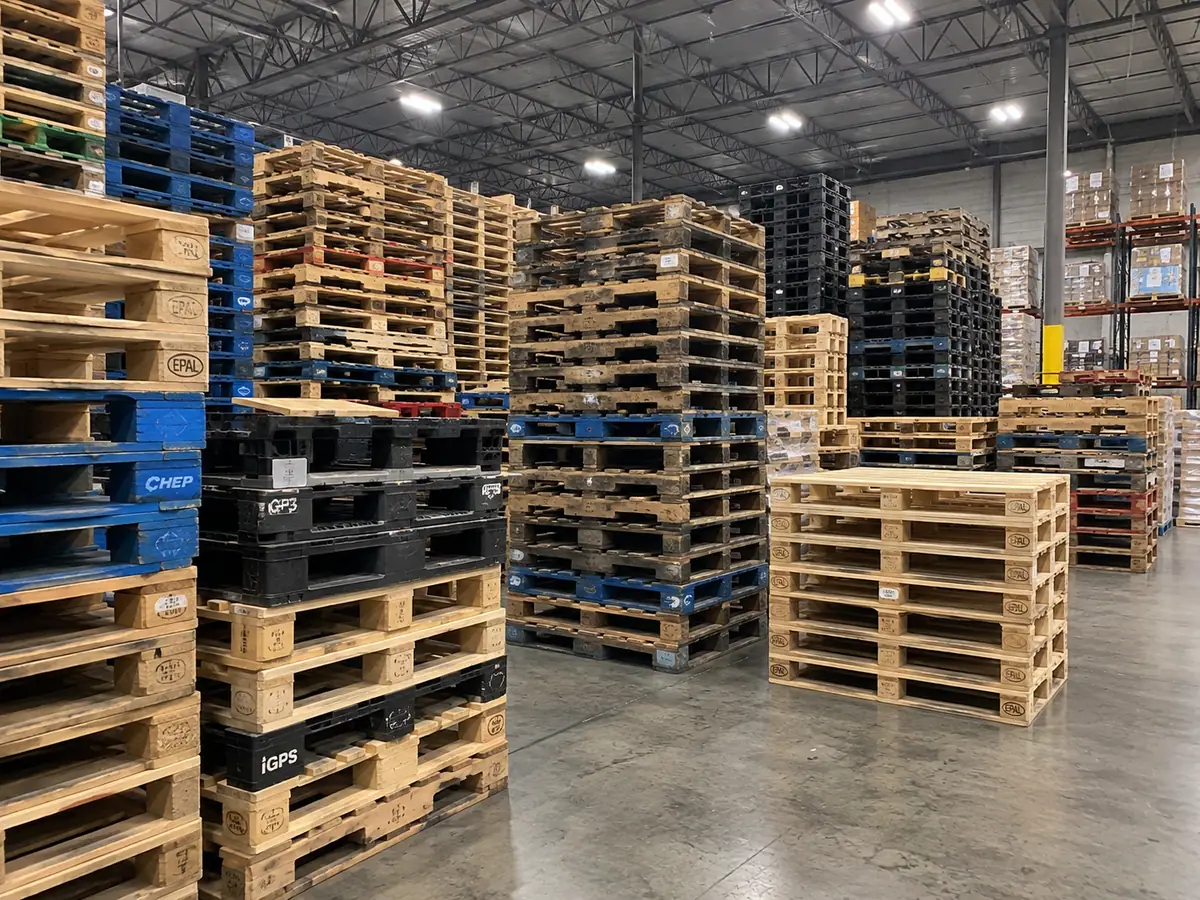

A 48×40 in a distribution centre is a piece of infrastructure. The same pallet parked in a supermarket aisle is a piece of retail furniture that a shopper walks past forty times a week.
That single difference changes almost everything about what you should be buying.
The formats
| Format | Footprint | Fits | Typical use |
|---|---|---|---|
| Full GMA | 48" × 40" | Standard rack bay | Backroom, DC movement |
| Beverage square | 36" × 36" | Promotional aisle | Floor displays, club stores |
| Half pallet | 24" × 40" | Half a rack position | In-store displays, small format |
| Quarter / narrow | 20" × 48" | Against a shelf run | Aisle-end promotions |
| Display long | 36" × 48" | Down an aisle | Seasonal builds |
Why the small formats exist at all
Aisle width. A 48-inch pallet dropped in a promotional aisle leaves too little room for two carts to pass, and a store that cannot move shoppers through an aisle does not sell what is in it.
Display density is the other reason. A full pallet of a promotional item is frequently more stock than a single store will sell in the promotion window, and product sitting on a display for six weeks looks like product nobody wants. A half pallet holds a sensible quantity and looks full while doing it.
The economics follow: two half pallets fill one rack position and one trailer slot, so the distribution cost is unchanged while the store-level presentation improves.
Display grade, which nobody supplies by default
Standard Grade A is a structural sort: full members, sound stringers, correct footprint, dry wood. It says nothing at all about whether the deck is three different shades of brown or carries a previous owner's stencil.
Display grade adds an appearance pass — uniform deck colour, no visible top-deck repairs, no paint marks or heavy staining, consistent board width for a clean edge line. It costs roughly a dollar a unit more than standard Grade A.
Nobody supplies it unless you ask for it by name. If your pallets end up in front of shoppers, this is the specification you actually want, and the difference between a merchandiser accepting a build and a store manager pulling it.
Handling on the shop floor
Small formats get moved by hand more often than anything else in the pallet world, which puts different demands on them. Weight matters — a 36×36 at 34 lb is manageable, a 48×40 at 55 lb is not. Splinters and protruding fasteners matter enormously, because someone is going to touch it.
Racking capacity, conversely, barely matters. A display pallet almost never sees a rack, and specifying Grade A racking capability for a unit that will sit on a shop floor is paying for structural margin nobody will use.
So the display specification is genuinely different from the distribution one: tighter on appearance and handling, looser on load rating.
What happens to them afterwards
This is where a lot of value leaks. Display pallets accumulate in store backrooms, where nobody has a process for them, and they either get thrown out or sit until a fire inspection forces the question.
For a chain of any size that is a meaningful volume of recoverable material. Store-level collection is awkward — small quantities, tight access, no dock at many locations — but for a regional cluster it is entirely workable and usually revenue-positive rather than a cost.