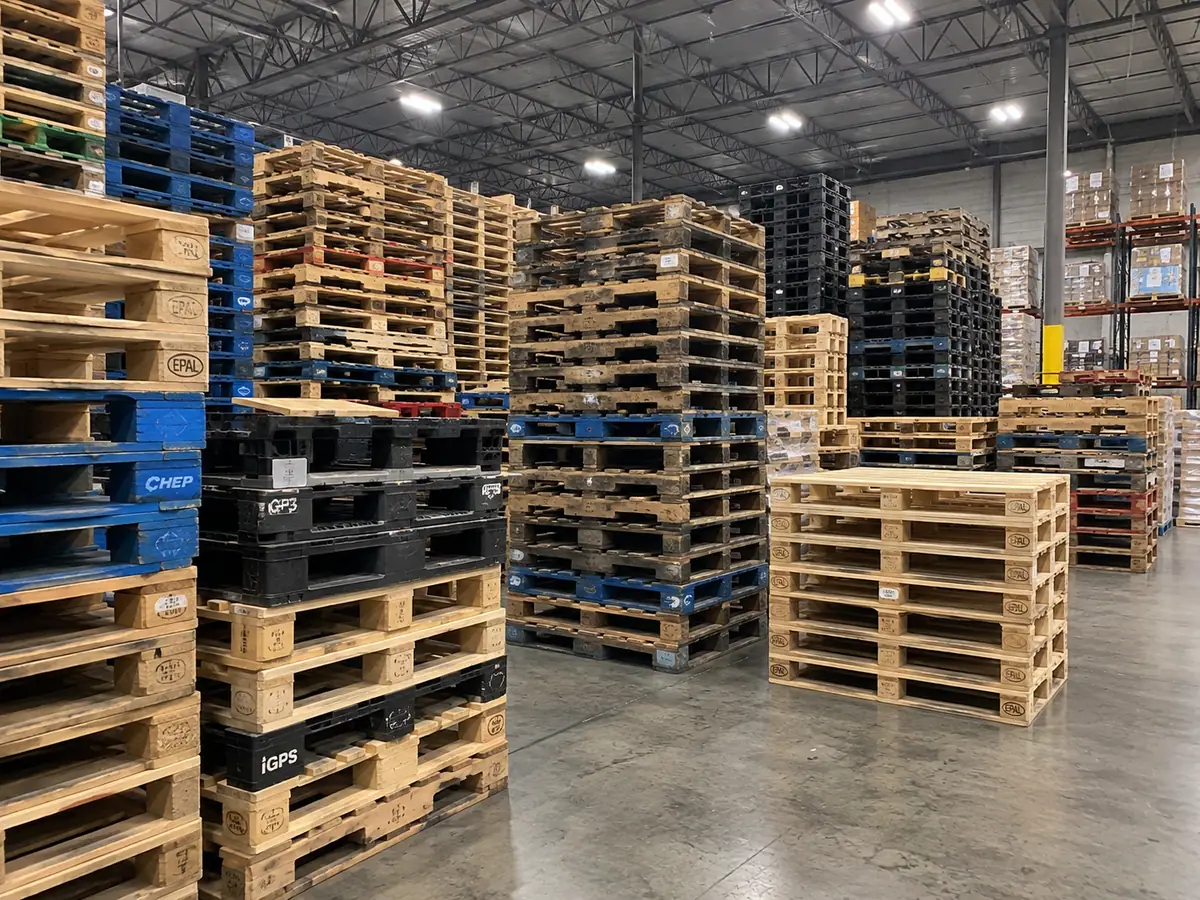
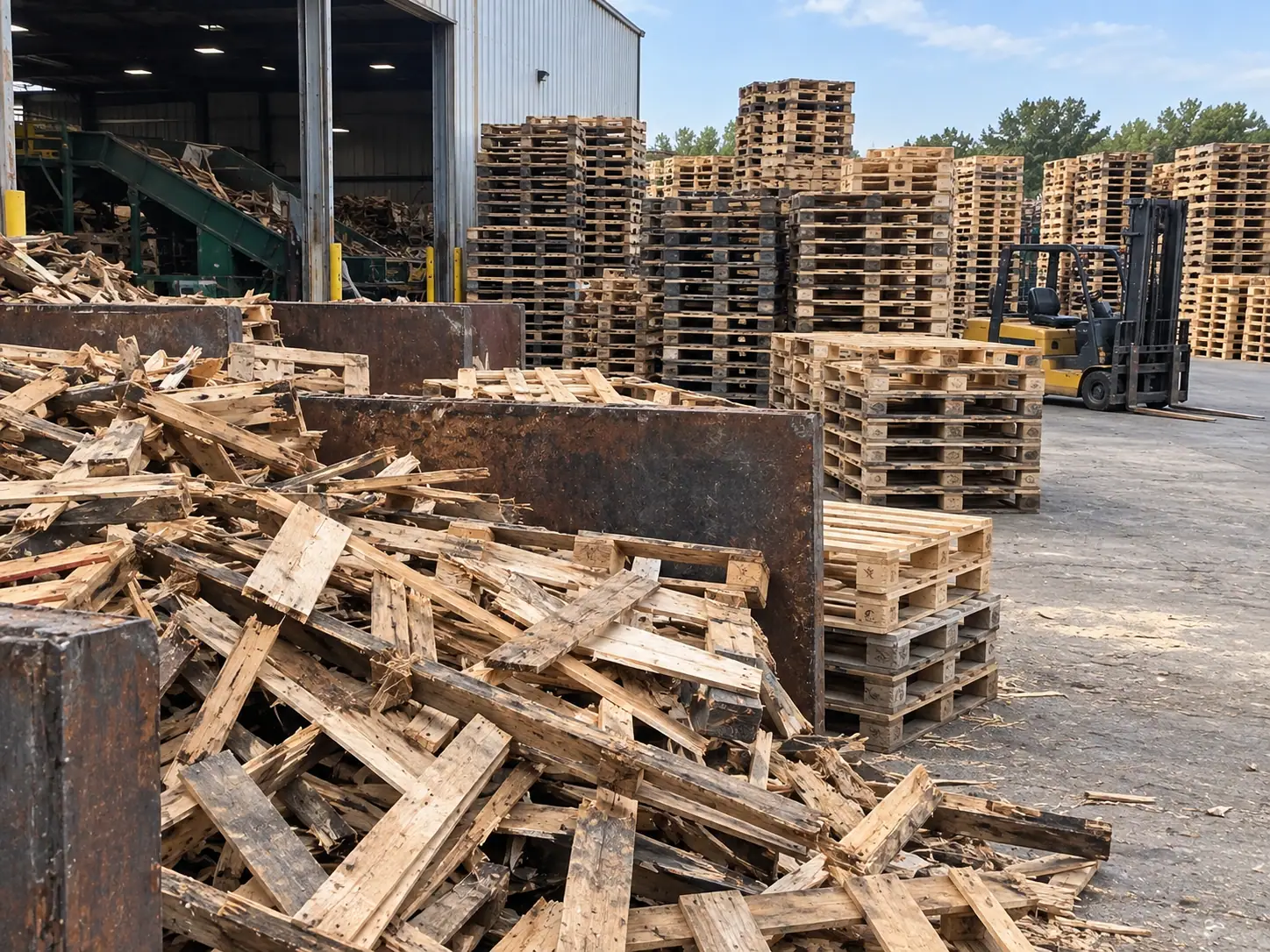
A 53-foot dry van can legally carry around 45,000 lb of payload. Load it with empty 48×40 pallets stacked two high and you will get about 330 units on, weighing roughly 15,000 lb.
You have filled the trailer and used a third of its capacity. The rest is air, and you are paying to move it.
Cube out, gross out
Freight people talk about a load cubing out or grossing out. Cubing out means you ran out of space before you ran out of weight allowance. Grossing out is the reverse.
Dense freight — liquids, metal, paper — grosses out. You fill half the trailer and you are at the axle limit. Light bulky freight — insulation, packaging, empty pallets — cubes out, and every mile you drive, you are moving a substantial volume of nothing.
There is no clever way around this. You cannot compress a pallet. Stacking three high helps if the receiver will take it and the trailer has the interior height, but most operations run stacks of fifteen units at 5½ inches, and two of those is about 165 inches against a 110-inch interior. Two high is what fits.
Which is why distance is the whole game
Because a load of pallets is priced by the mile rather than by the pound, the freight component of a delivered pallet is close to linear in distance. In our lanes it typically runs 20 to 35% of the delivered cost.
Work that through. A yard forty miles away quoting $8.50 a unit delivered will beat a yard three hundred miles away quoting $7.25, comfortably, every time. We have lost bids on unit price and won them on delivered cost more often than we can count, which is why we quote delivered by default.
It is also why we are candid about our own range. Past about 350 miles on our own equipment the arithmetic stops working in our favour and we will say so rather than quote a number that only works on paper.
| Equipment | Usable deck | 48×40 two high | Approx. weight |
|---|---|---|---|
| 53′ dry van | 630″ × 98″ | ≈ 330 units | ≈ 15,000 lb |
| 48′ dry van | 570″ × 98″ | ≈ 300 units | ≈ 13,600 lb |
| 40′ container | 474″ × 92″ | ≈ 240 units | ≈ 10,900 lb |
| 20′ container | 232″ × 92″ | ≈ 120 units | ≈ 5,400 lb |
| Flatbed, tarped | 624″ × 102″ | ≈ 340 units | ≈ 15,400 lb |
The two things that actually reduce it
Fixed lanes. A truck already routed past your door costs a fraction of a truck dispatched for your load. This is why we run a repeating weekly pattern rather than dispatching on request, and why a customer who accepts our Tuesday slot pays less than one who insists on Thursday.
Backhaul. The trailer that delivers your graded stock can take your empties away on the same run. Two movements become one. It is the single most effective thing available to anyone who both buys and generates pallets, and it does not happen automatically — you have to ask for it.
- Take the scheduled slot rather than requesting a specific day
- Combine delivery and collection on one movement
- Order in trailer-sized quantities where your storage allows
- Always compare delivered prices, never FOB against delivered
Why stacking three high is not the answer
It comes up in every conversation about this, and it works less often than people expect. Interior height on a standard dry van gives you room, but the practical constraints are elsewhere: forklift mast height at both ends, the stability of a 22-foot stack of pallets in transit, and whether the receiving dock will accept it.
Where all three line up — usually a customer with high-mast equipment and their own yard — three high is a genuine saving and we will do it. Where they do not, a stack that tips in transit costs far more than the freight it saved.