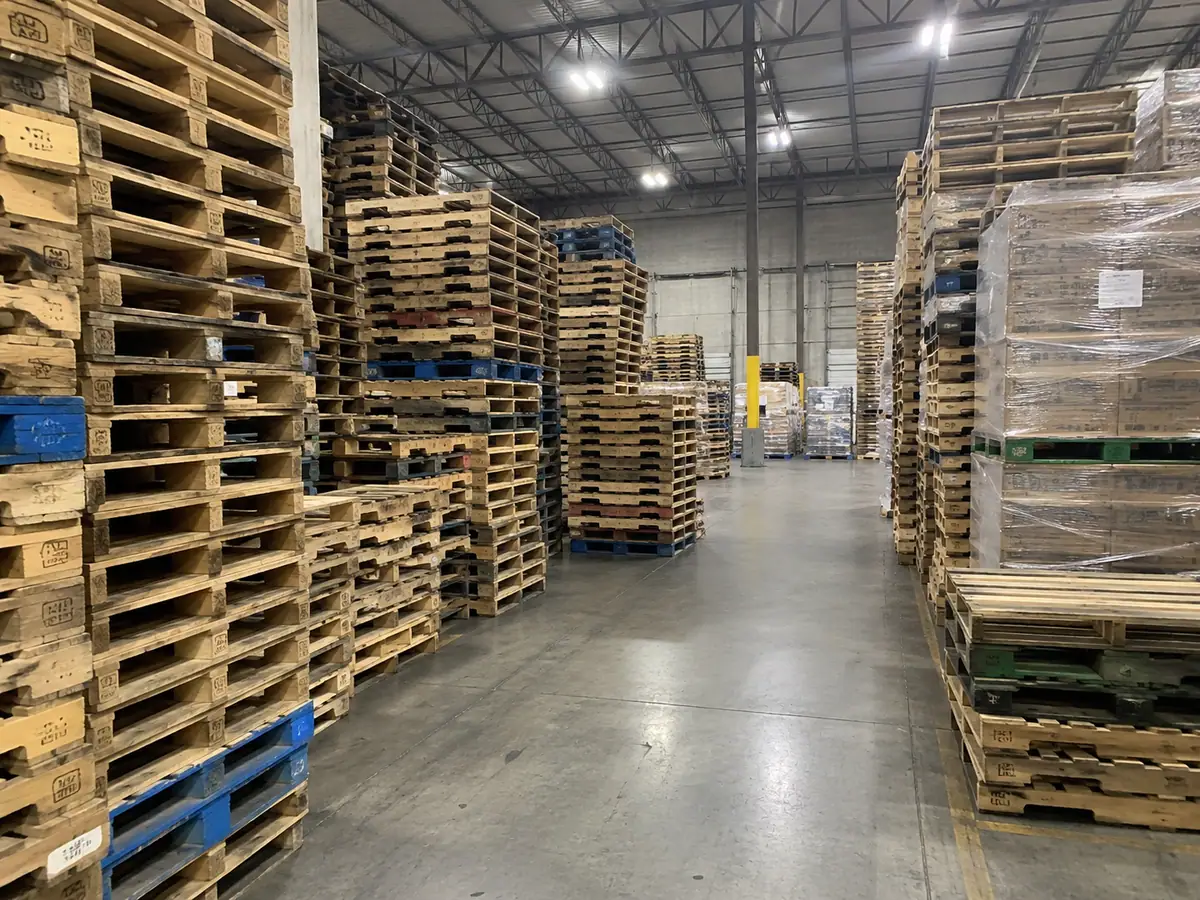
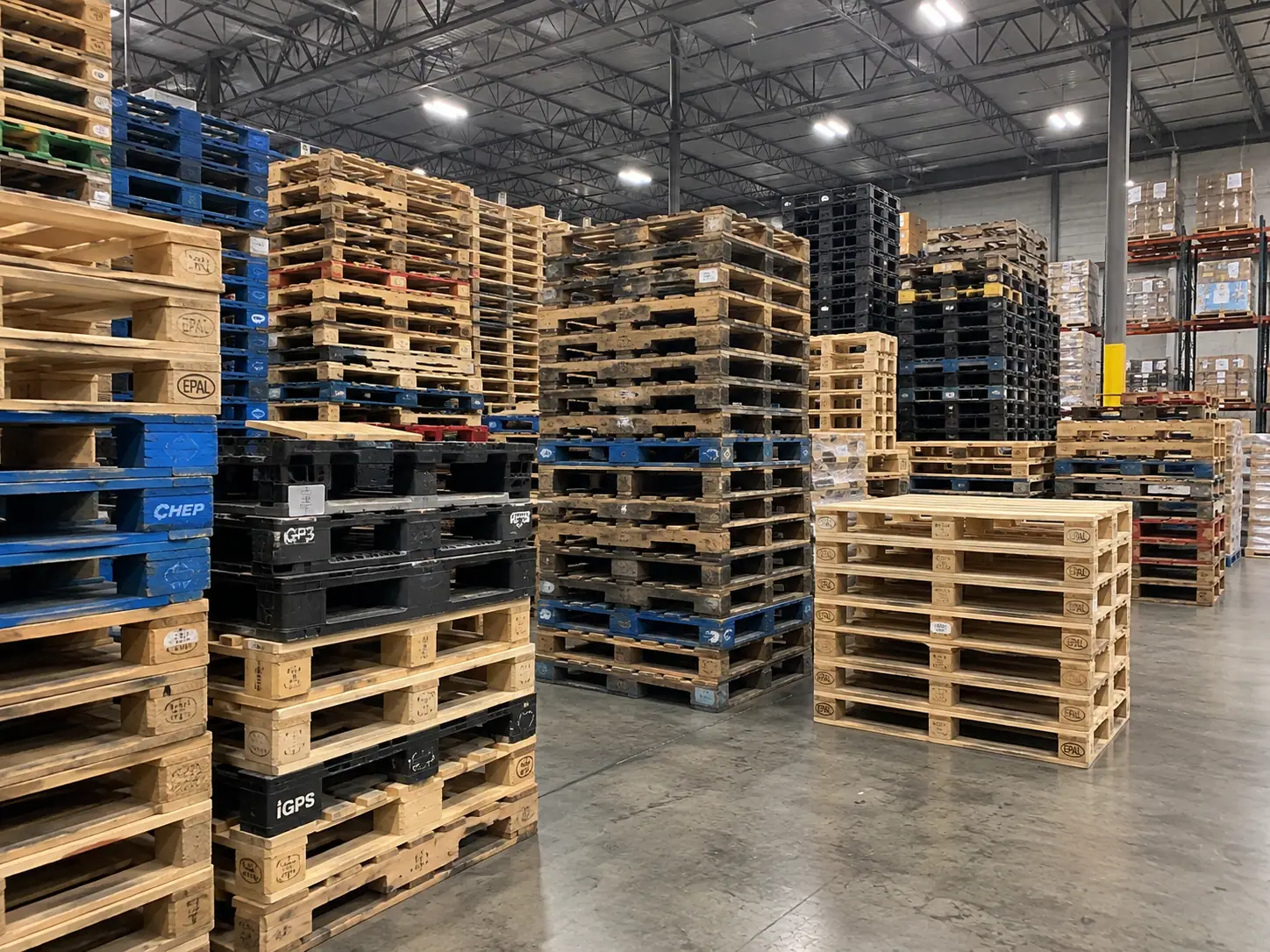
A 48×40 GMA pallet has ten deck boards. When one of them breaks, most people's mental model stops there — the pallet is broken, it goes somewhere, presumably a skip.
Here is what actually happens, in order, to a single snapped top deck board that arrived on a Tuesday morning.
It comes off in one piece, or it does not
The first decision is made by whoever is on the repair bench, and it is about the rest of the board rather than the break. A top deck board that has snapped near one end still has thirty inches of sound hardwood in it. One that has split along its length is finished.
Removal is done with a pallet buster — a long lever with a forked head that lifts the board off the stringer without tearing it apart. Done properly, the nails come with the board. Done impatiently, the board splinters and you have converted a recoverable component into fibre.
That distinction — patience at the bench — is worth more to a recycling yard's economics than most equipment purchases.
If it is long enough, it becomes a shorter board
A thirty-inch sound section is not a 48×40 deck board any more, but it is a perfectly good deck board for a smaller footprint. It goes to the docking saw, gets cut back past the break to clean wood, and lands in the recovered-lumber rack sorted by length.
That rack is the raw material for two things: repairs on smaller footprints, and remanufactured pallets built from recovered stock. Roughly forty per cent of the repairs we make on any given day use lumber that was recovered on the same day.
This is the loop that makes recycled pallets both cheap and genuinely low-carbon. The repair bench is not buying new lumber; it is being fed by the dismantling line ten metres away.
If it is not, it goes to the grinder
Splintered, split along the grain, soaked, or too short to be useful — it goes into the grind bunker with everything else the sort deck rejected.
The grinder is a horizontal machine that reduces wood to a coarse fibre. Output crosses a magnetic separator that pulls the nails, then a screening deck that splits the stream by particle size into three products: landscape mulch at the coarse end, animal bedding in the middle, and boiler fibre from the rest.
Nothing is lost at this stage except a little moisture. Our nails — around 0.4% of everything that enters the yard by weight — go to a scrap processor and come back as steel.
| Outcome | Condition of the board | Where it ends up |
|---|---|---|
| Recovered full length | Sound, removed cleanly | Repair stock for the same footprint |
| Docked and shortened | Break near one end | Repair stock for smaller footprints, crates |
| Ground, coarse | Split, splintered | Landscape mulch, natural or dyed |
| Ground, fine | Dry, clean fibre | Animal bedding |
| Ground, mixed | Wet or contaminated with fines | Boiler fibre |
| Segregated | Painted, treated or chemically stained | Permitted disposal |
The one place it does not go
Landfill, unless it is contaminated. Across 2025, 99.4% of everything that entered the yard by weight left as a product. The residual six-tenths of a per cent is methyl-bromide-treated, pressure-treated, painted or chemically contaminated wood that we are not permitted to process and would not want in a mulch stream anyway.
We publish that number, including the bad part of it, because a recycler claiming a hundred per cent is either not handling difficult material or is not counting it.