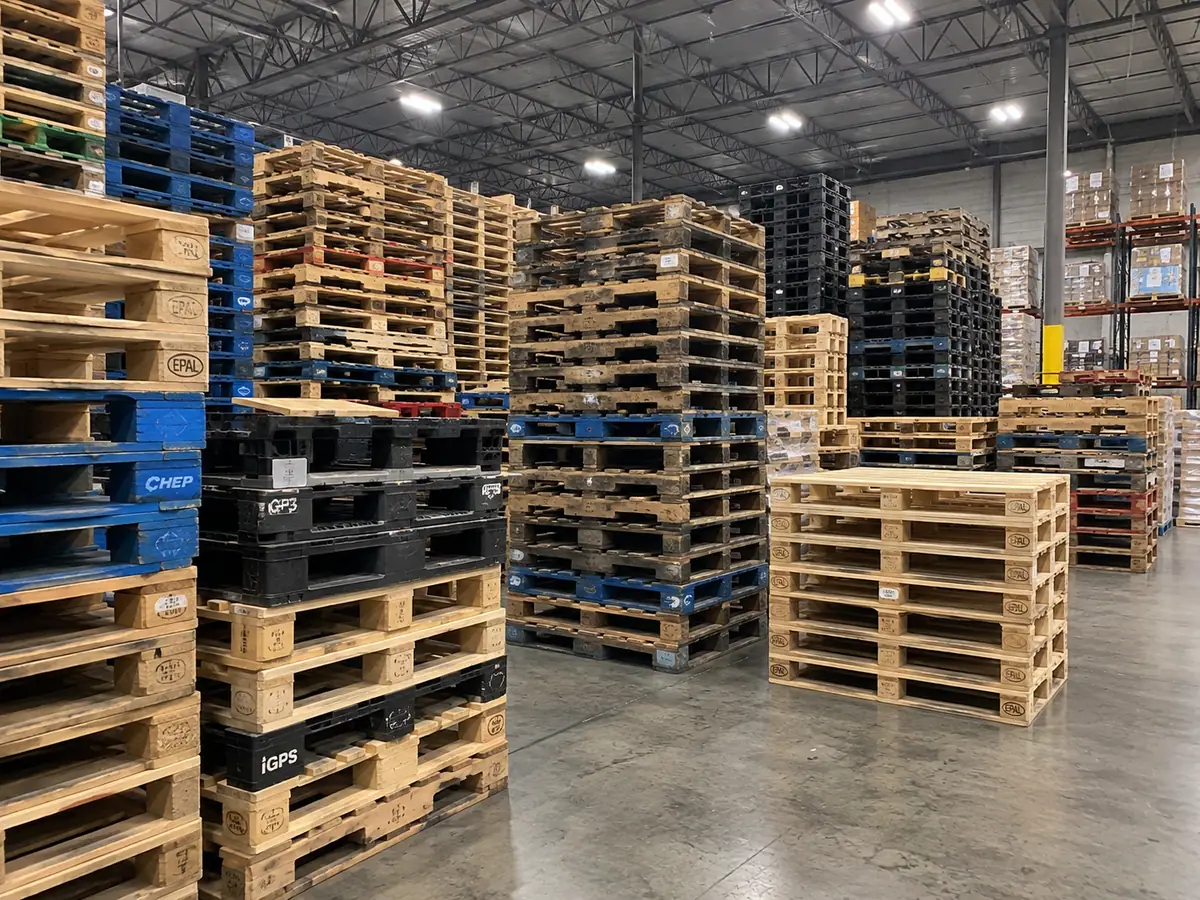
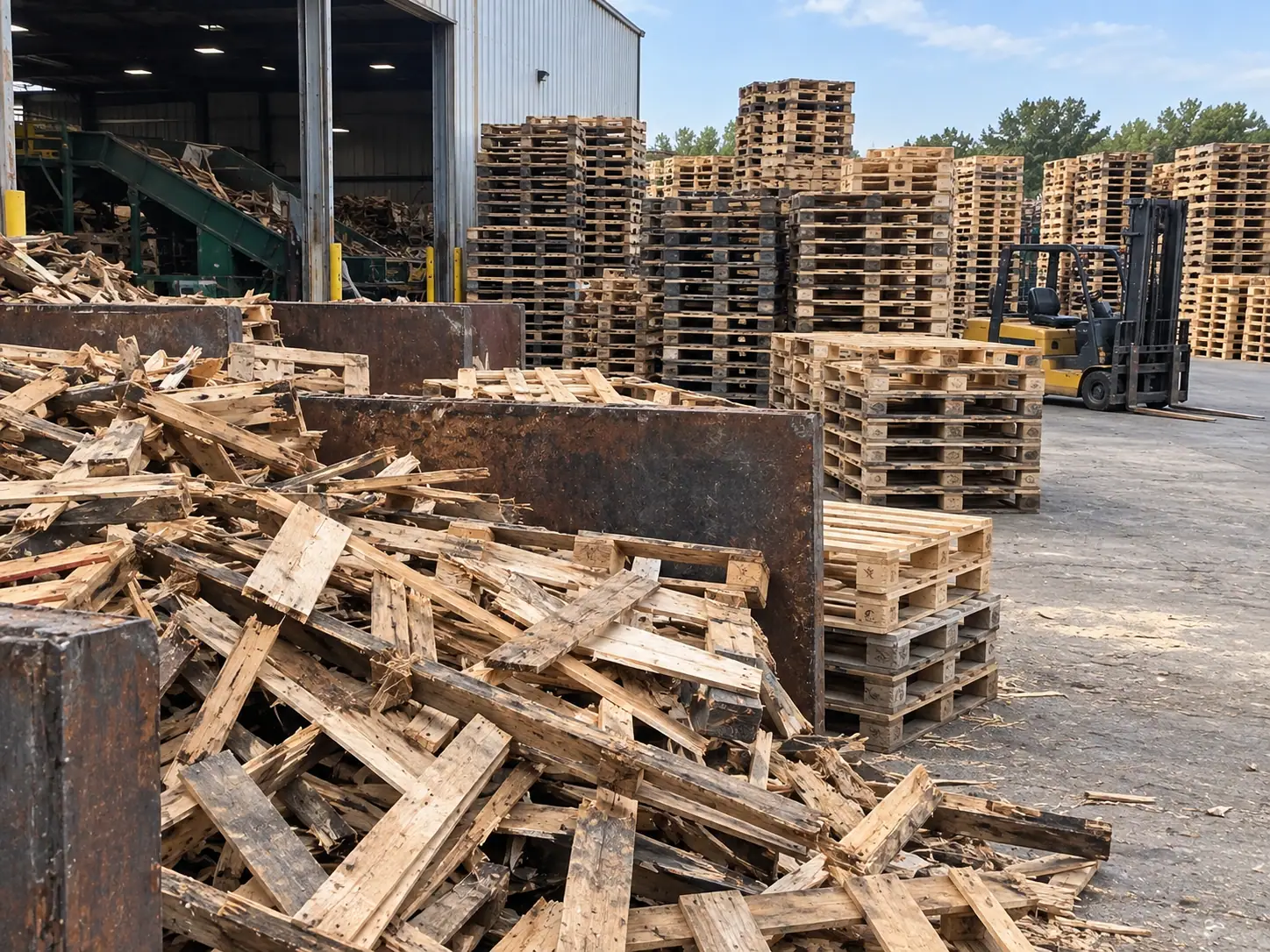
There is a stack of empty pallets against the outside wall of a building near you right now, four or five high, within arm's reach of a loading door. It has been there long enough that nobody sees it any more.
It is also one of the more specifically regulated things on the site, and it is the first thing a fire inspector with a clipboard will walk toward.
Why pallets specifically
Idle pallets burn unusually well. A stack of wood pallets is essentially a chimney of dry fuel with enormous surface area and air gaps engineered into it. Fire tests going back decades put pallet stacks among the more demanding storage commodities for sprinkler design.
Which is why NFPA 13 and most adopted local codes address idle pallet storage explicitly rather than treating it as generic combustible storage. Limits apply to stack height, pile size, separation from other storage, and separation from the building itself.
Plastic is treated considerably more restrictively than wood, which surprises operations that switched fleets for hygiene reasons and did not revisit their storage arrangements.
What inspectors actually look at
- Stack height, both indoors and outdoors, against the limits for the commodity and the protection provided.
- Distance from the building. An outdoor pile hard against a wall, under an eave or beside a door is the classic finding.
- Blocked exits and access routes. Pallet stacks migrate into aisles. This is how they become an egress problem as well as a fuel one.
- Sprinkler clearance where storage is indoors — the gap between the top of the pile and the sprinkler heads.
- Mixed storage, where pallets have crept in among other combustible material and changed the effective commodity classification.
The practical version
We are not fire protection engineers and this is not advice on your specific building — the actual limits depend on your local code, your occupancy, your sprinkler design and whether the storage is inside or out. Get that from someone qualified.
What we can tell you is what changes the situation in practice, because we collect from several hundred sites and the ones with no problem all do the same things.
They keep the pile small by collecting frequently rather than letting it grow to a wall. They put it in a designated, marked area away from the building rather than wherever there is room this week. And somebody owns it, so it does not migrate.
The other reasons the pile costs you
Fire code is the one that generates paperwork, but it is not the only cost of letting empties accumulate.
A stack of fifteen 48×40 pallets occupies about 13 square feet of floor and stands roughly seven feet high. Forty stacks is a truck bay you are not using. In a building where space is the binding constraint, that is a real number.
Outdoor storage destroys value. Wood that sits uncovered through an Ohio autumn comes back heavier, softer and frequently mouldy, and a load that would have been worth $4 a unit as cores becomes a removal fee. The pile is not free storage; it is a depreciating asset.
And piles grow into aisles. Narrowed forklift routes are where near-misses happen, and near-misses are the leading indicator every safety team actually watches.
What we do about it
Standing weekly or biweekly collections on a fixed slot, with a named driver, so the pile has a ceiling. For sites that generate more than a trailer a fortnight, we drop an empty trailer and swap it — the accumulation happens inside a trailer on your yard rather than in a heap against your wall.
Where the material has resale value, we pay for it, which turns a compliance problem into a small revenue line. Where it does not, removal in central Ohio runs $95 to $180 per trailer, which is still well below landfill tipping plus your own freight.