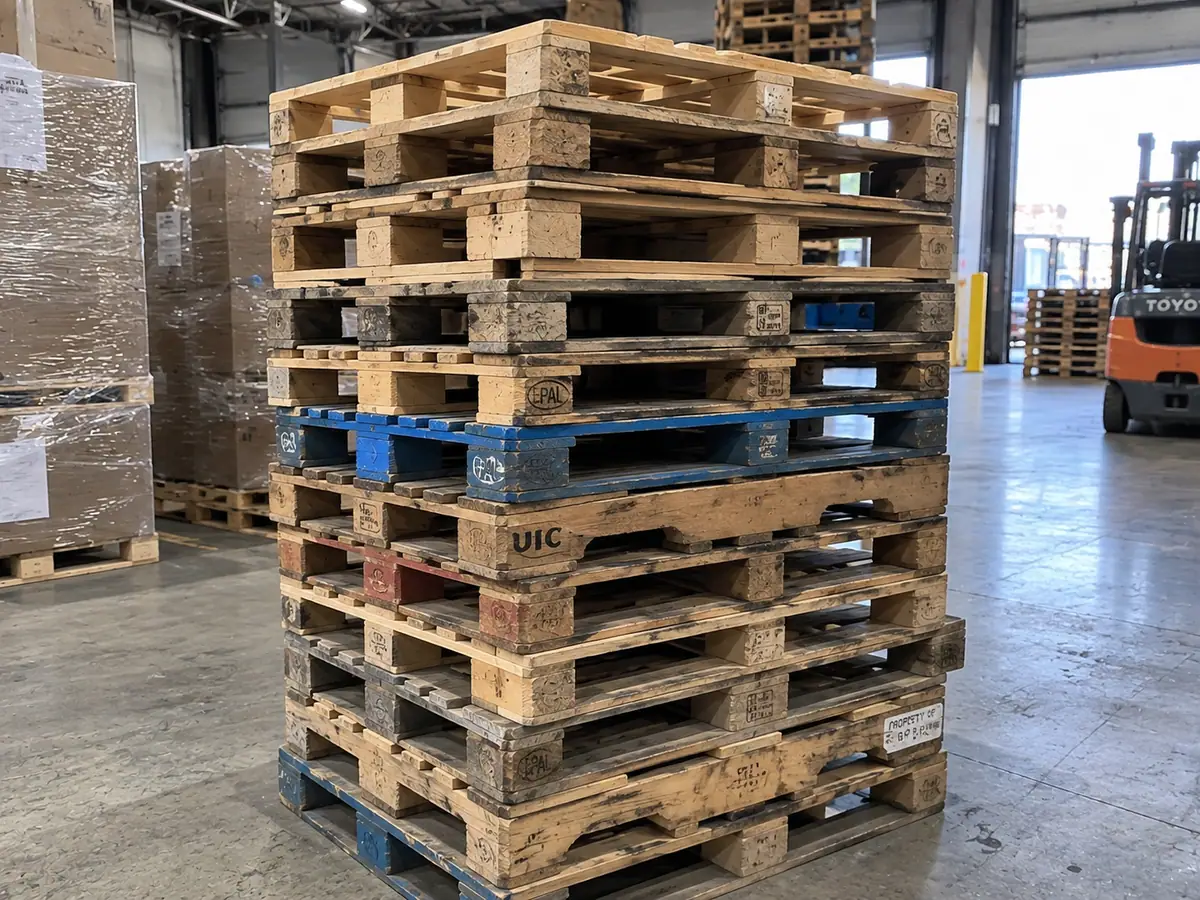
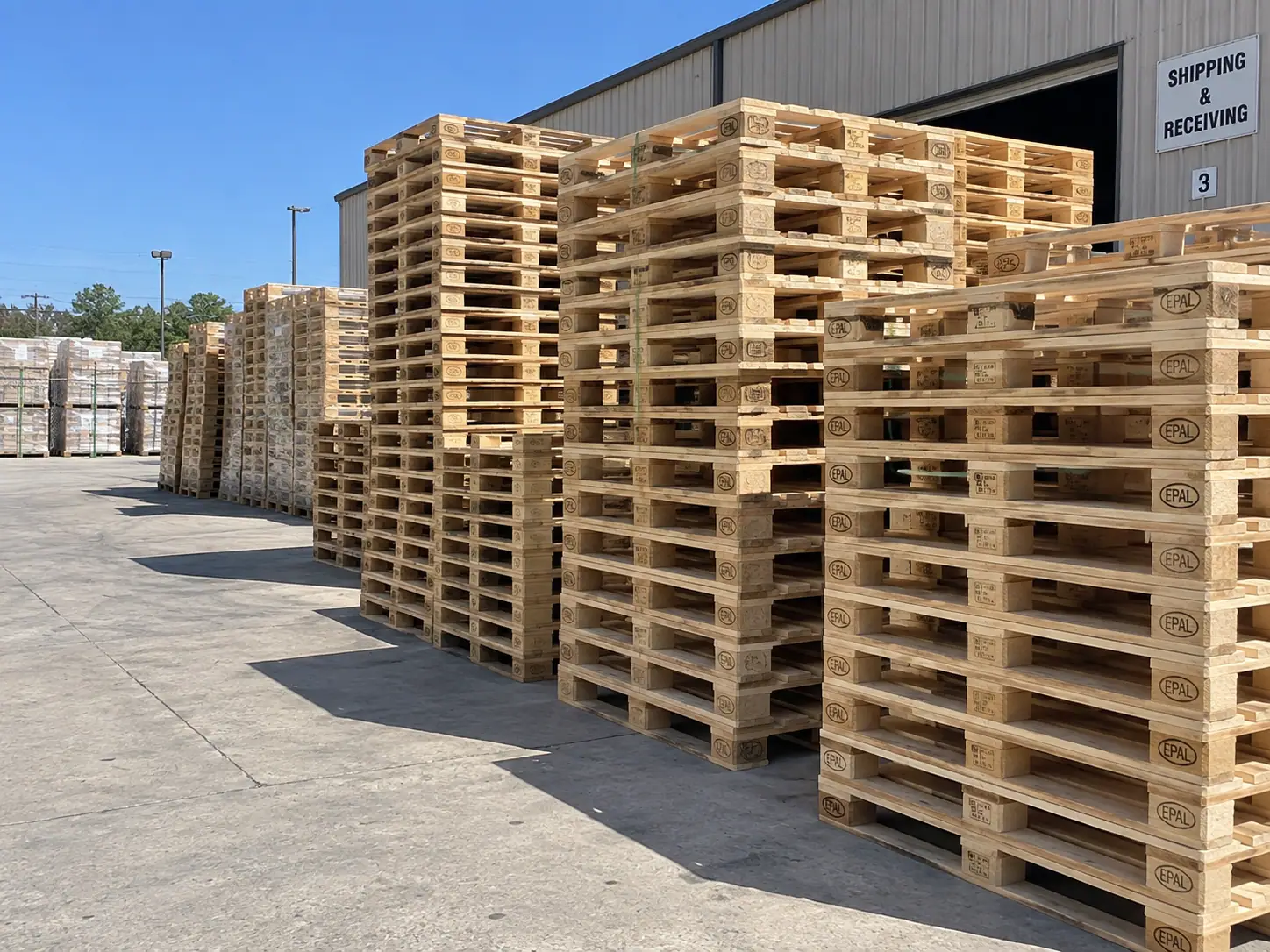
A pallet comes back damaged. Repair it, or replace it? The question sounds like it should have a rule of thumb, and it does — but the rule most operations use is either 'always replace' or 'always repair', and both are wrong most of the time.
Here is the actual arithmetic, with our internal numbers.
The three numbers you need
Repair makes sense when repair cost divided by cycles bought is less than replacement cost divided by the cycles a replacement would deliver. That is the whole calculation and it is the third number that people never estimate.
- Repair cost for the specific damage, including labour.
- Replacement cost for an equivalent unit, delivered.
- Cycles bought — how many further service cycles the repaired unit will realistically complete.
Our numbers, by damage type
| Damage | Repair cost | Cycles bought | Cost per cycle | Decision |
|---|---|---|---|---|
| One broken deck board | $1.75 – $2.25 | 3 – 5 | $0.44 – $0.75 | Repair |
| Two or three deck boards | $2.50 – $3.50 | 3 – 4 | $0.63 – $1.17 | Repair |
| One cracked stringer | $2.75 – $3.75 | 2 – 3 | $0.92 – $1.88 | Repair, grades B |
| Two cracked stringers | $5.00+ | 1 – 2 | $2.50 – $5.00 | Dismantle |
| Wet or mouldy | Not repairable | 0 | — | Grind |
| Wrong footprint | $3.50 – $6.00 | 5 – 8 | $0.44 – $1.20 | Remanufacture |
Why 'cycles bought' is lower than people assume
A repaired pallet is not a new pallet. The members you did not replace are the same age as they were, the nail holes in the stringers are the same nail holes, and the unit has already demonstrated that it lives in an environment that damages pallets.
In practice a deck board repair buys three to five further cycles on a unit that had five or six left before it was damaged. A stringer repair buys two or three and drops the grade, which restricts where the unit can go.
Assuming a repair resets the clock is the most common error in this arithmetic and it makes repair look better than it is — which, given that repair is usually still the right answer, is an odd thing to have to say.
The bit that changes everything
Our repair costs are low because our repair lumber is recovered from units we dismantled the same week. We are not buying boards; the dismantling line feeds the bench.
An operation repairing its own pallets with purchased lumber faces a materially different calculation — typically $1.50 to $2.50 more per repair, which pushes several of the rows above into 'replace' territory.
This is why in-house pallet repair usually makes less sense than it looks like it should. The economics depend on having a dismantling operation running alongside it, and that only works at volume.
The environmental version of the same sum
A repair using recovered lumber is roughly 1.2 kg CO₂e. A replacement Grade A recycled pallet is roughly the same, because it also came out of a repair or reuse loop. A new pallet is around 16.6 kg.
So the environmental case for repair over replacement-with-recycled is real but modest. The environmental case for either of them over buying new is enormous.
That ordering matters if you are making decisions on carbon as well as cost: the big win is not repairing rather than replacing. It is not buying new.