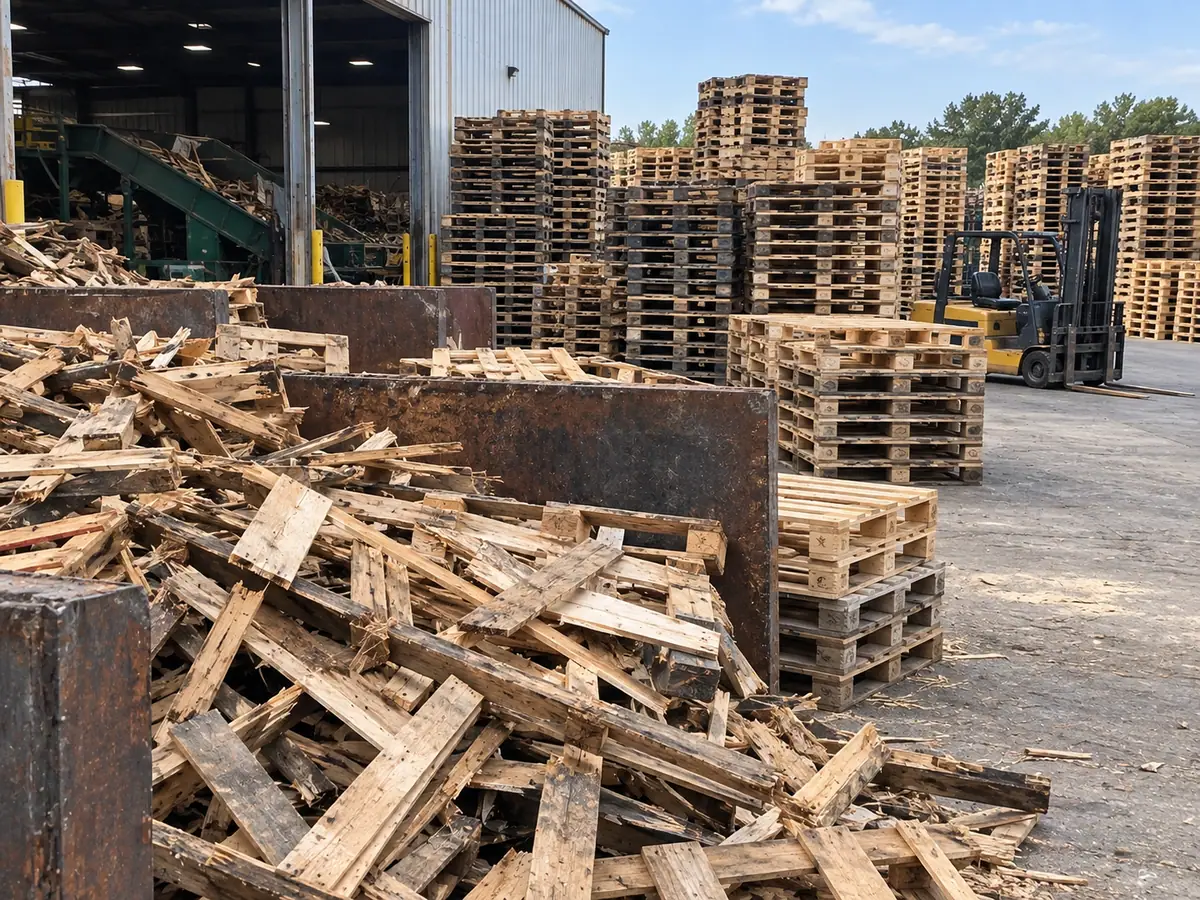
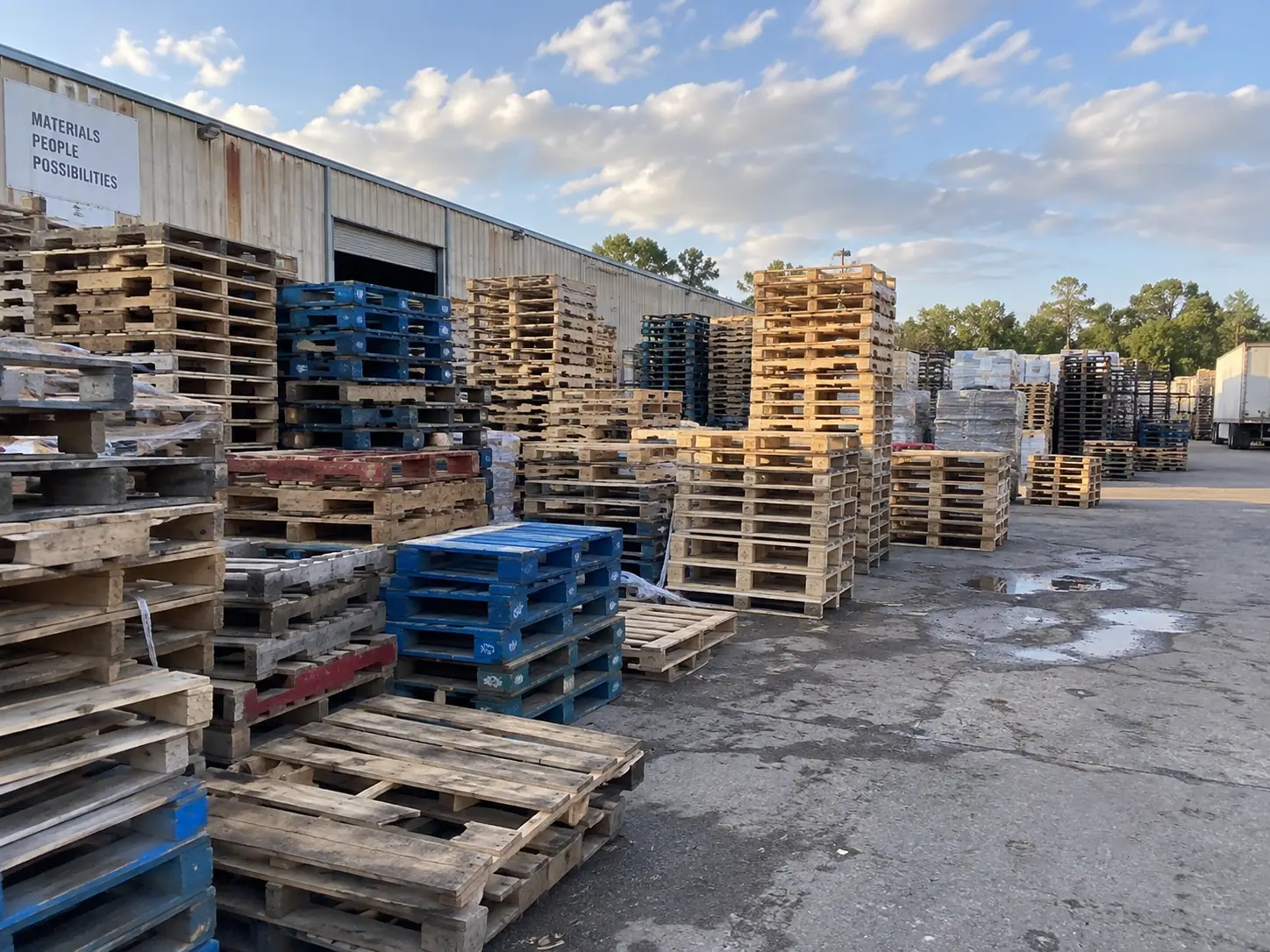
We dye mulch. Black, brown and red, on a colour line that runs a few hours a day through the season, from wood that was a pallet a fortnight earlier.
It is also the product we get asked the most sceptical questions about, and most of the scepticism is pointed in the wrong direction.
What the pigment is
Brown and red come from iron oxide. Black comes from carbon black. Both are mineral pigments, both are used across the construction and cosmetics industries, and neither is solvent-based.
They are applied as a water-based slurry as the fibre passes through the colour line, and they bind to the surface of the particle. There is no impregnation and no chemical reaction with the wood.
Are they a soil contaminant? Iron oxide is, essentially, rust. Carbon black is elemental carbon. Neither is inert in the sense of doing nothing at all, but neither is the thing you should be worried about.
What you should actually ask about
The feedstock. What was the wood before it was mulch?
A significant volume of coloured mulch in this country is ground from construction and demolition debris. C&D wood can and does contain pressure-treated lumber, and CCA-treated wood ground into a product that goes onto a garden bed is a genuine problem — that is arsenic-bearing material, and it does not stop being arsenic-bearing because it has been dyed brown.
That is the risk. Not the pigment. And it is almost never what people ask about, because 'what is in the dye' is an easier question to think of than 'where did the wood come from'.
Where ours comes from
Pallets we collected ourselves, on our own routes, from sites we know. Everything passes a manual sort deck before it goes anywhere near a grinder, and the sort deck pulls out anything painted, stained, pressure-treated or carrying a methyl bromide stamp.
That material — about 0.6% of everything that enters the yard by weight — goes to permitted disposal rather than into a product. We publish that number, and this is one of the reasons it exists.
The output crosses a magnetic separator that pulls nails and banding, then a screening deck. Playground-grade material gets an additional screening pass to remove fines and sharps.
| Grade | Particle size | Colour | Typical use |
|---|---|---|---|
| Natural hardwood | 0.5″ – 2″ | Undyed | Beds, vegetable gardens, general landscape |
| Dyed brown | 0.5″ – 2″ | Iron oxide | Commercial landscaping |
| Dyed black | 0.5″ – 2″ | Carbon black | Contrast planting, retail |
| Dyed red | 0.5″ – 2″ | Iron oxide | Municipal and commercial |
| Playground grade | Screened, de-fined | Undyed | Play surfaces, trails |
Our own advice
If it is going anywhere near edible crops, buy undyed natural hardwood. Not because the dye is dangerous, but because it is cheaper and it does exactly the same job. The colour is an aesthetic choice and there is no reason to pay for it in a vegetable bed.
For commercial landscaping where appearance is part of the specification, dyed is fine and the colour holds considerably better than undyed material, which greys within a season.
And keep any mulch off direct contact with stems and trunks — that is general good practice about moisture and rot rather than anything to do with what the mulch is made of.